A 93-second patient consent video reimagined in three brand-agnostic directions. Each style ships with its own palette, type, illustration system, voice signature, and 15 keyframe variants per scene — designed to be portable across the six US Fertility sub-brands.
Contemporary editorial medical illustration — anatomically honest, human-present, emotionally held — every form carries the confidence of a knowledgeable hand and the warmth of genuine care.
NPR-quiet, ~12% slower than clinical baseline. Mid-register chest voice; calm without sedation, warm without performance. Reference: Krista Tippett × reproductive endocrinologist on a follow-up call.
Read full voice prompt →The frozen embryo transfer.
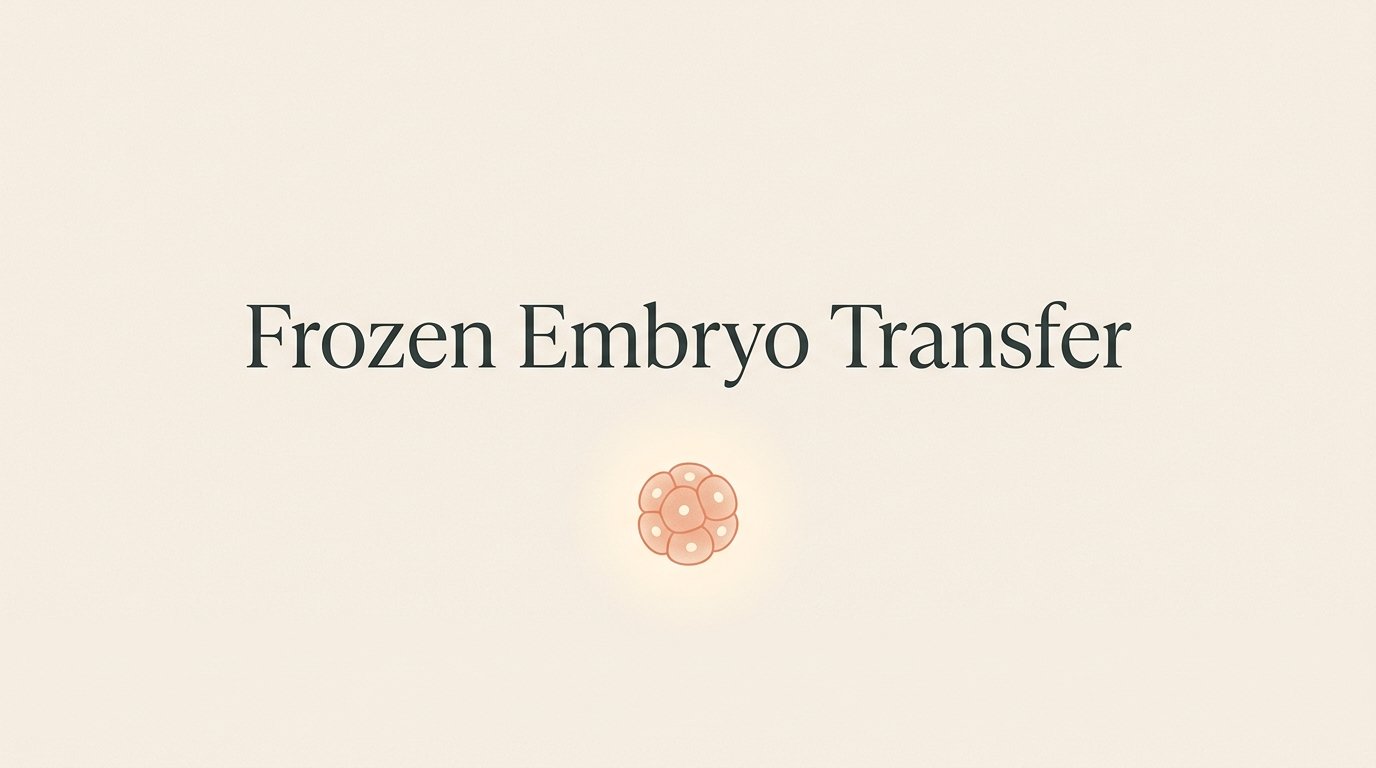
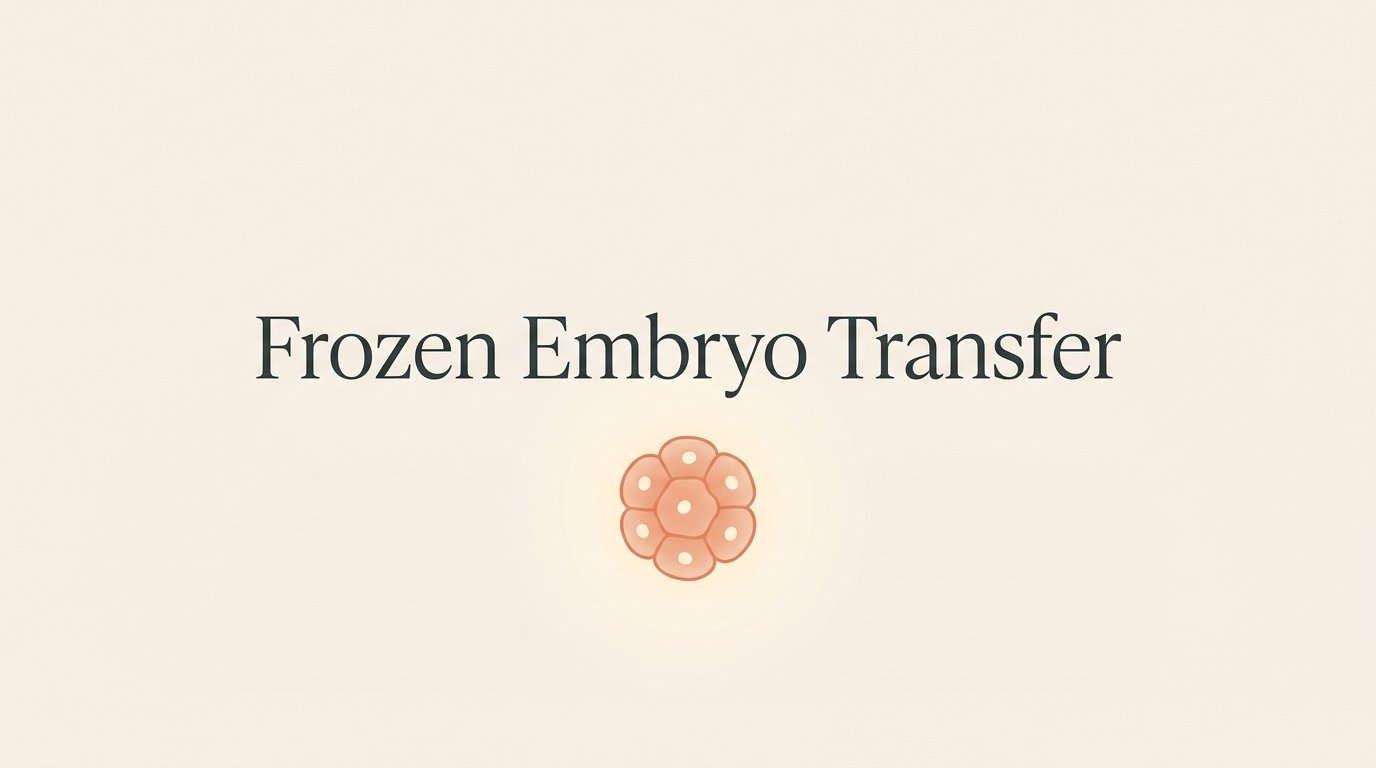
Dead-center title opener on bare Warm Parchment — the embryo asset and a refined serif heading, nothing else, maximum breathing room.
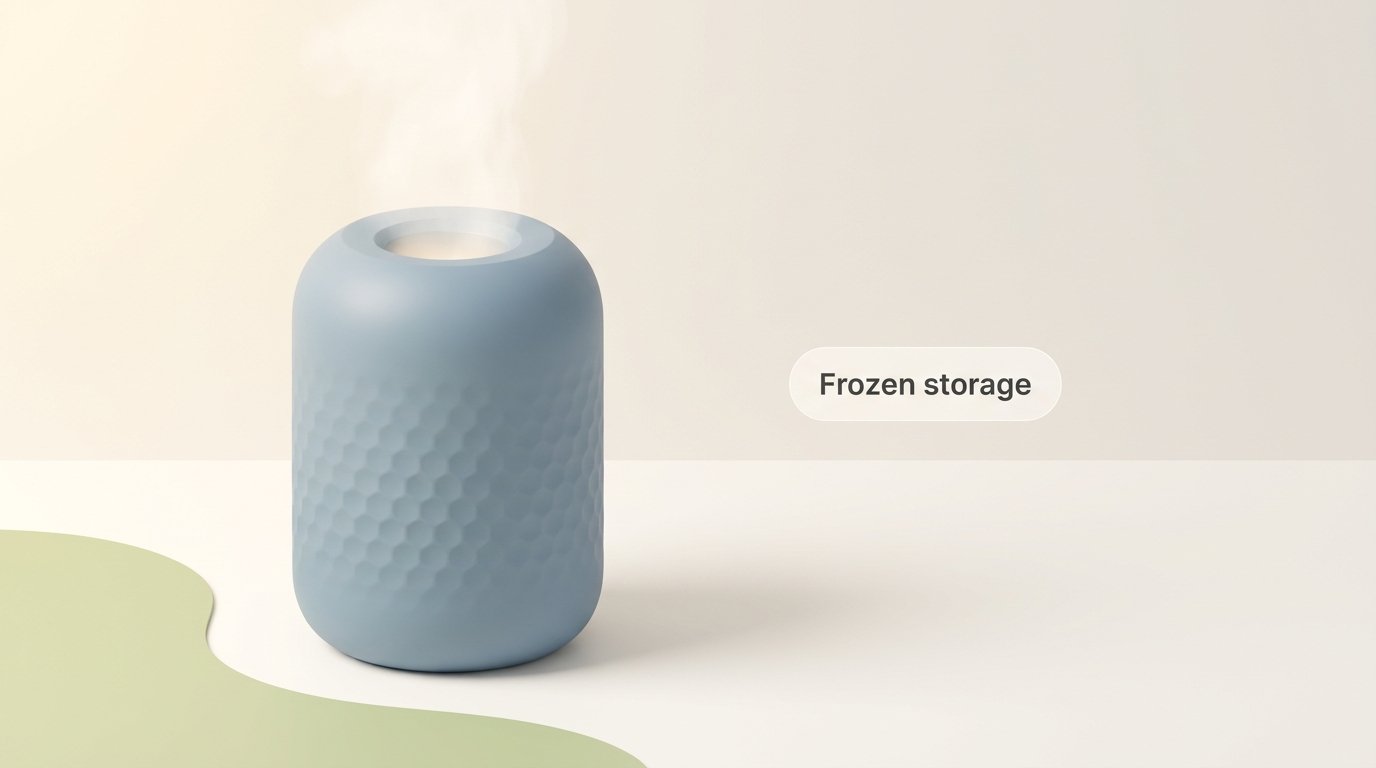
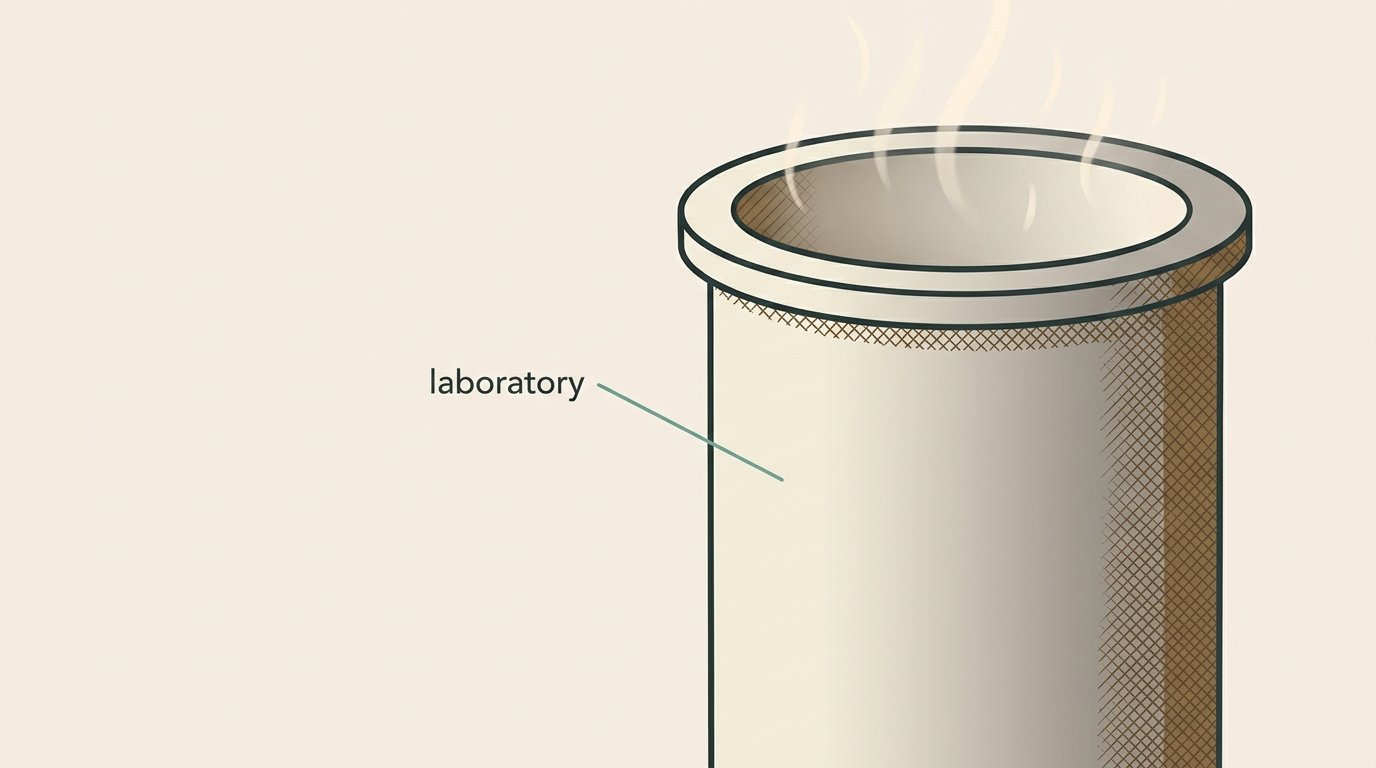
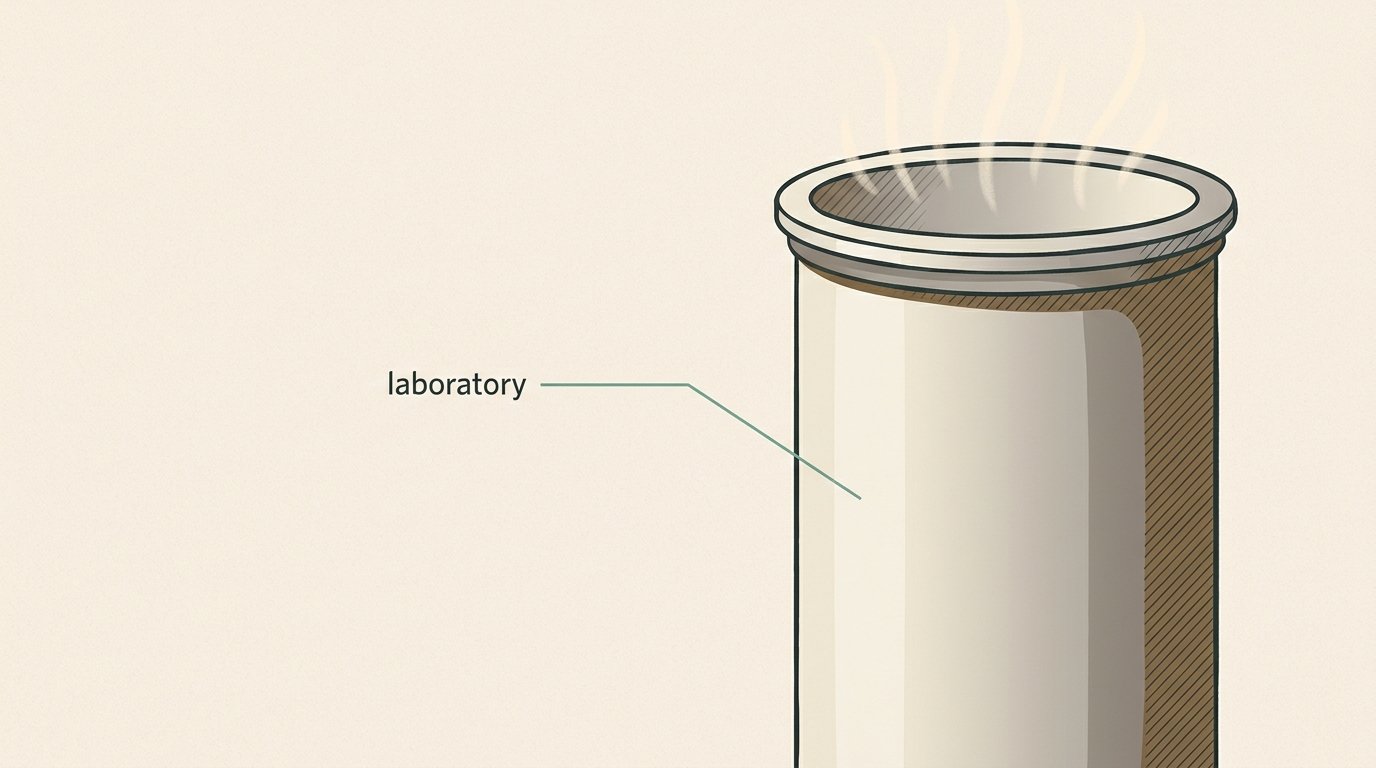
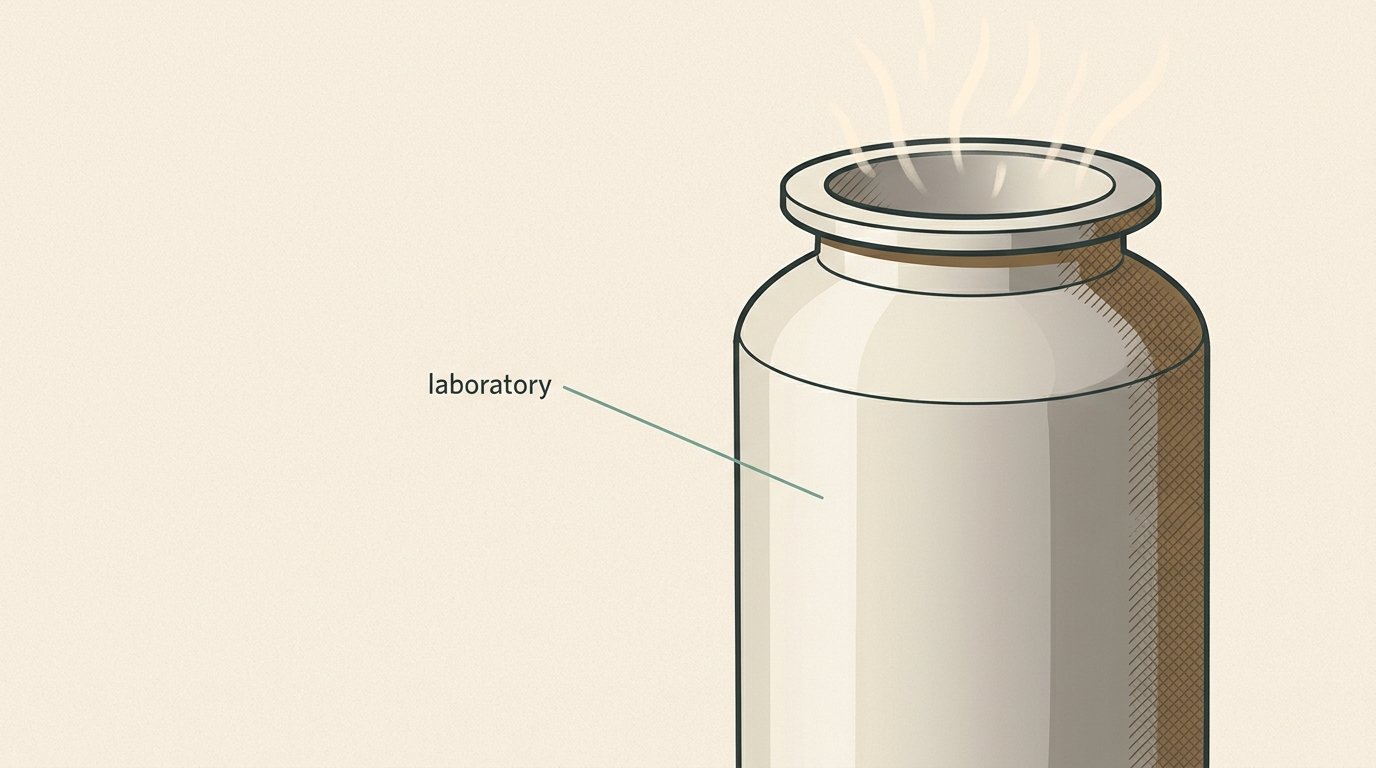
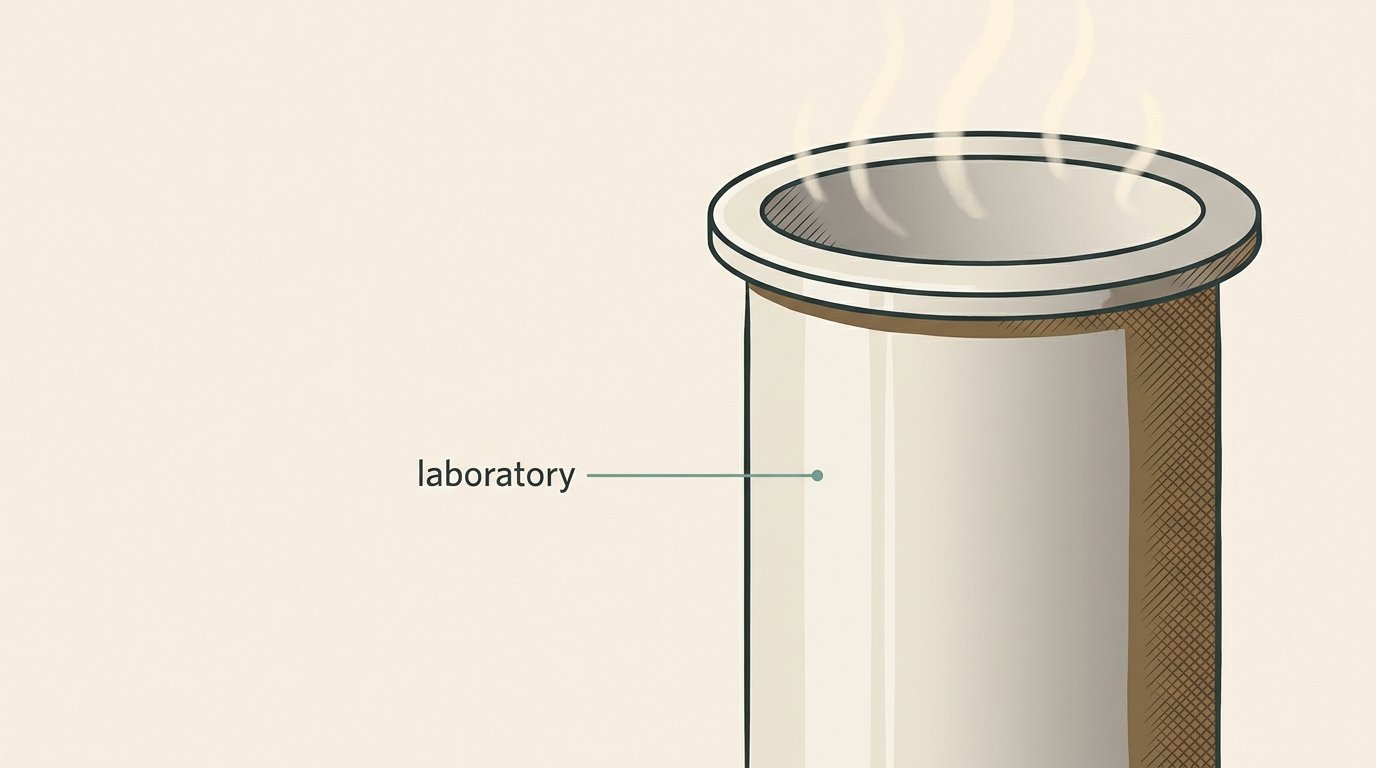
On the day of your transfer, your frozen embryo or embryos will be thawed in the laboratory.
Cryogenic dewar at right two-thirds, intentionally cool-gray against warm background, vapor wisps, single callout label at left.
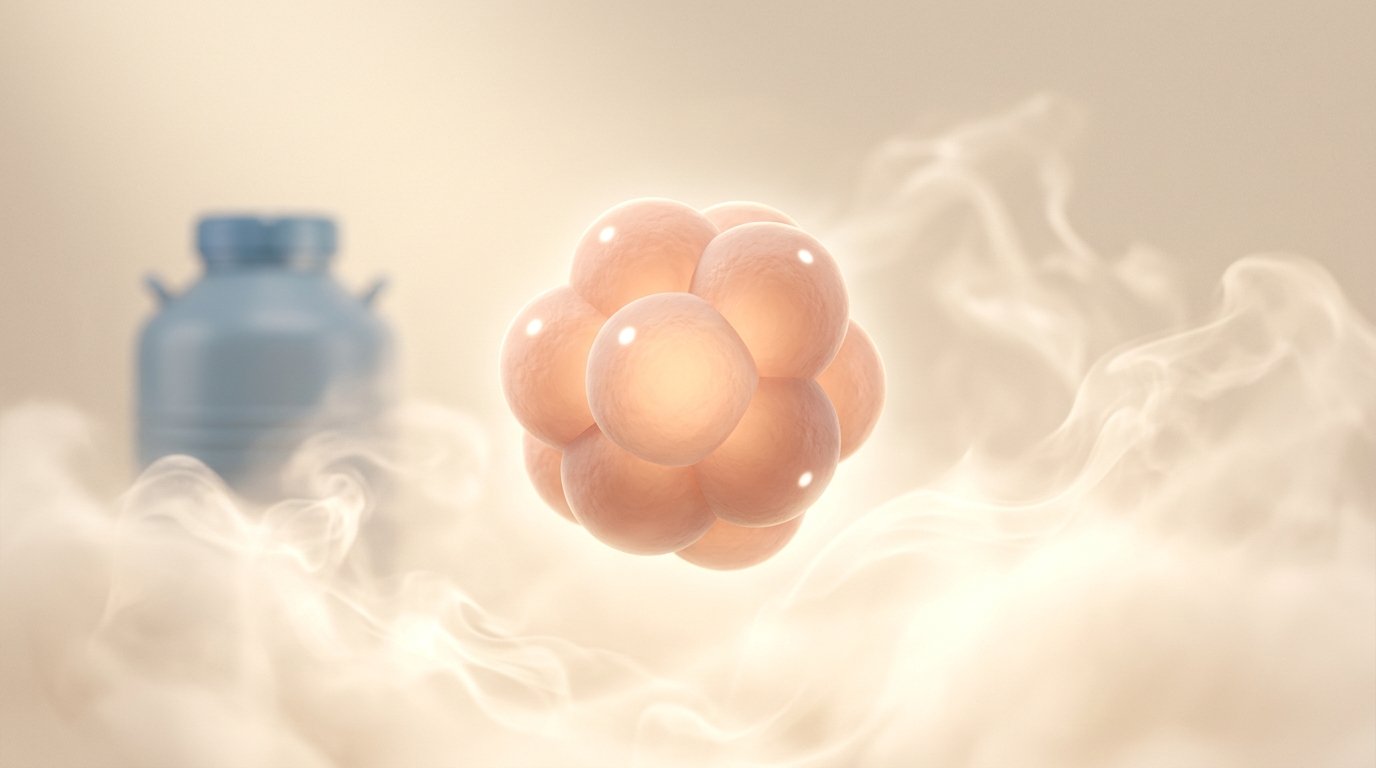
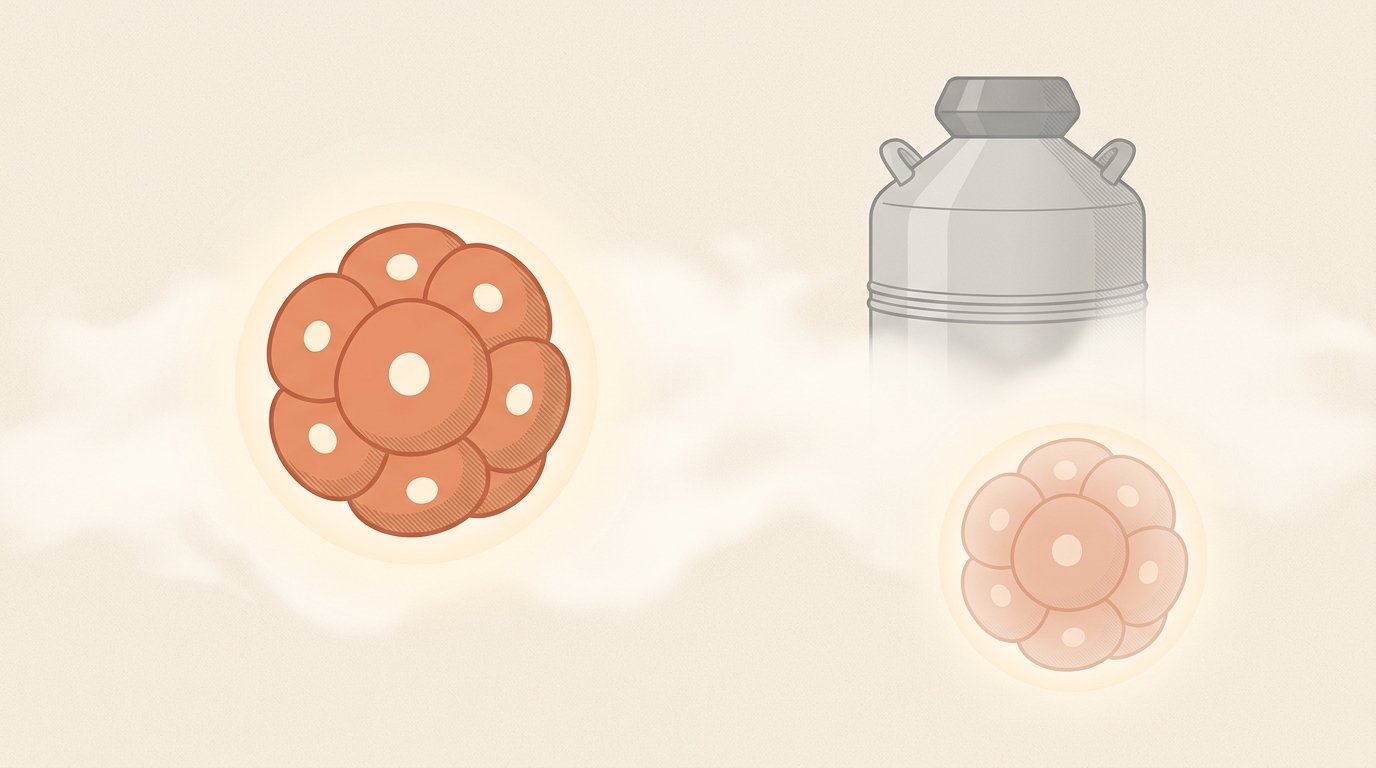
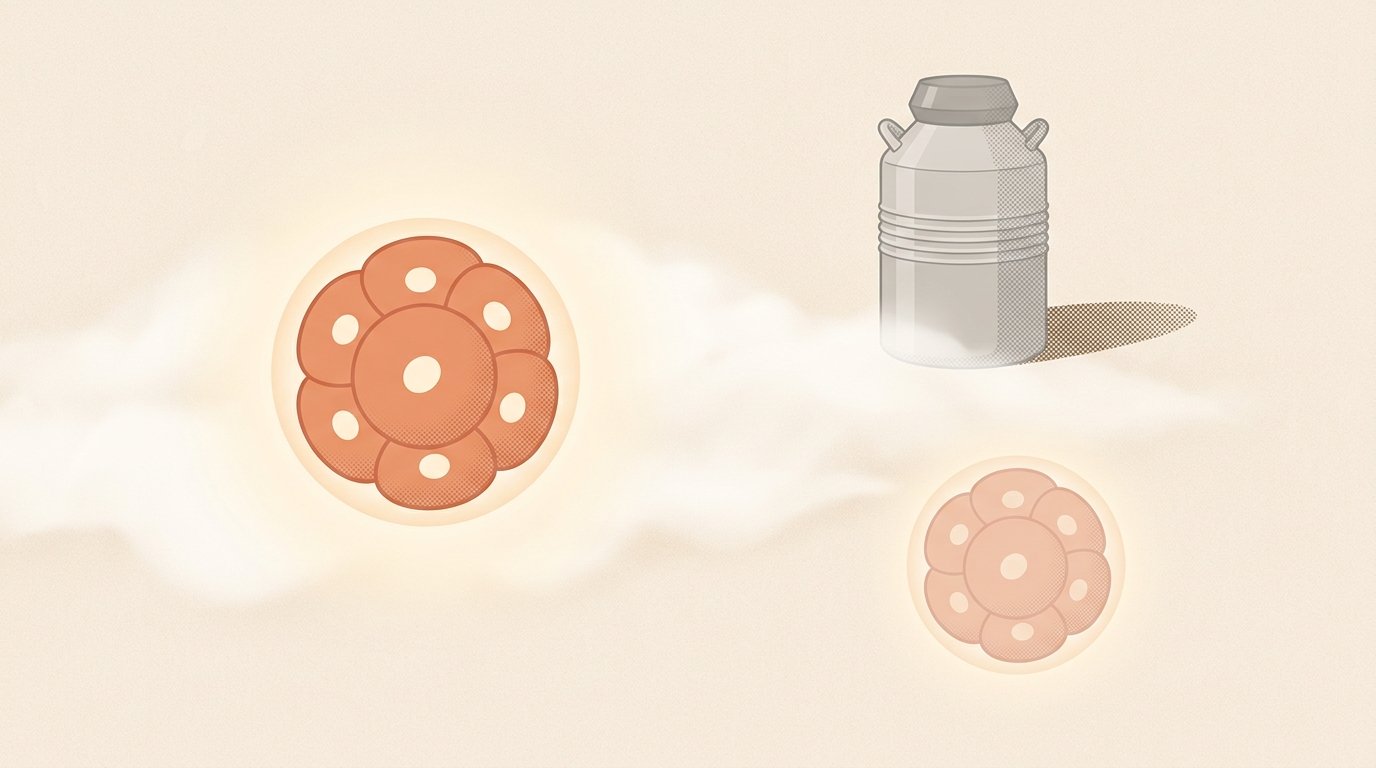
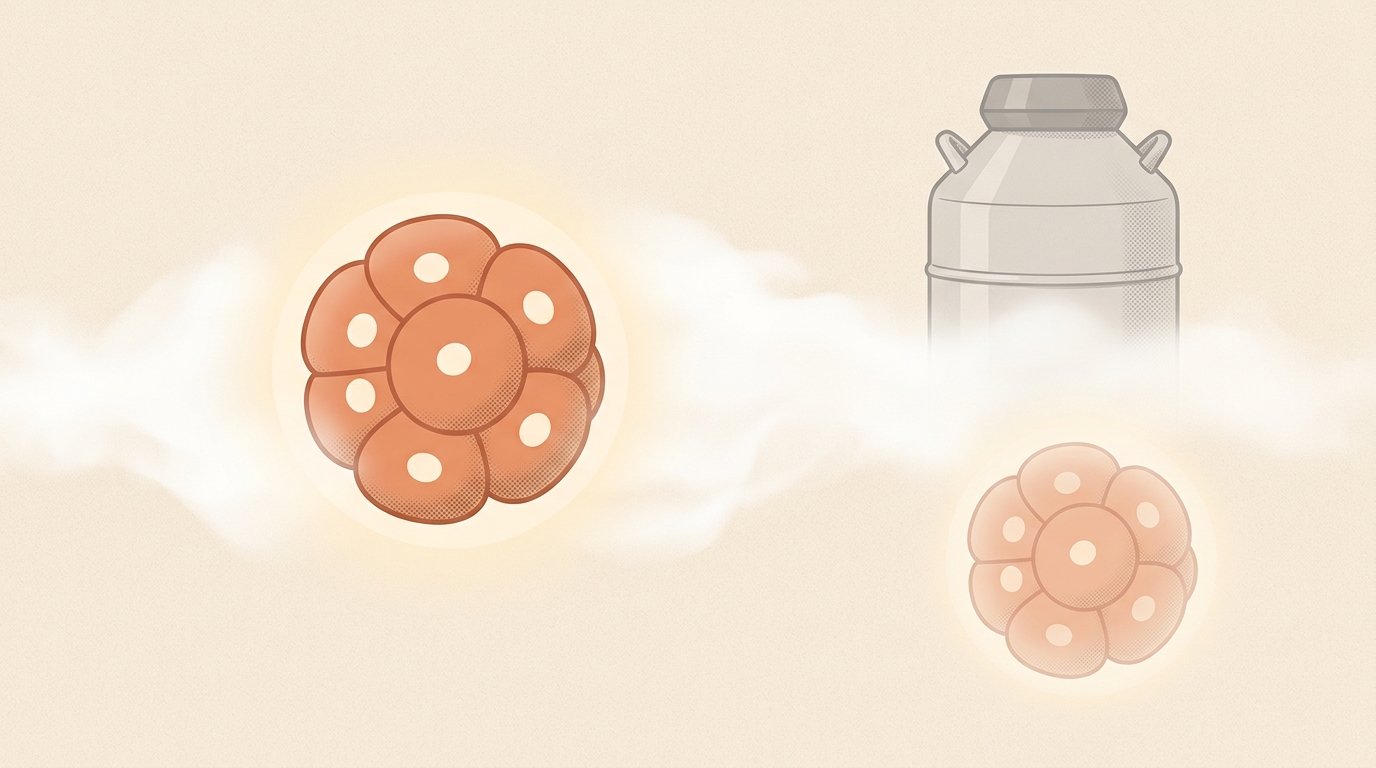
Freezing and thawing technology has improved significantly, but there's still a risk that the embryo will not survive the thaw.
Risk disclosure — primary embryo emerging from vapor at left-center, secondary ghost embryo at lower-right acknowledging risk without drama; dewar recedes to background.
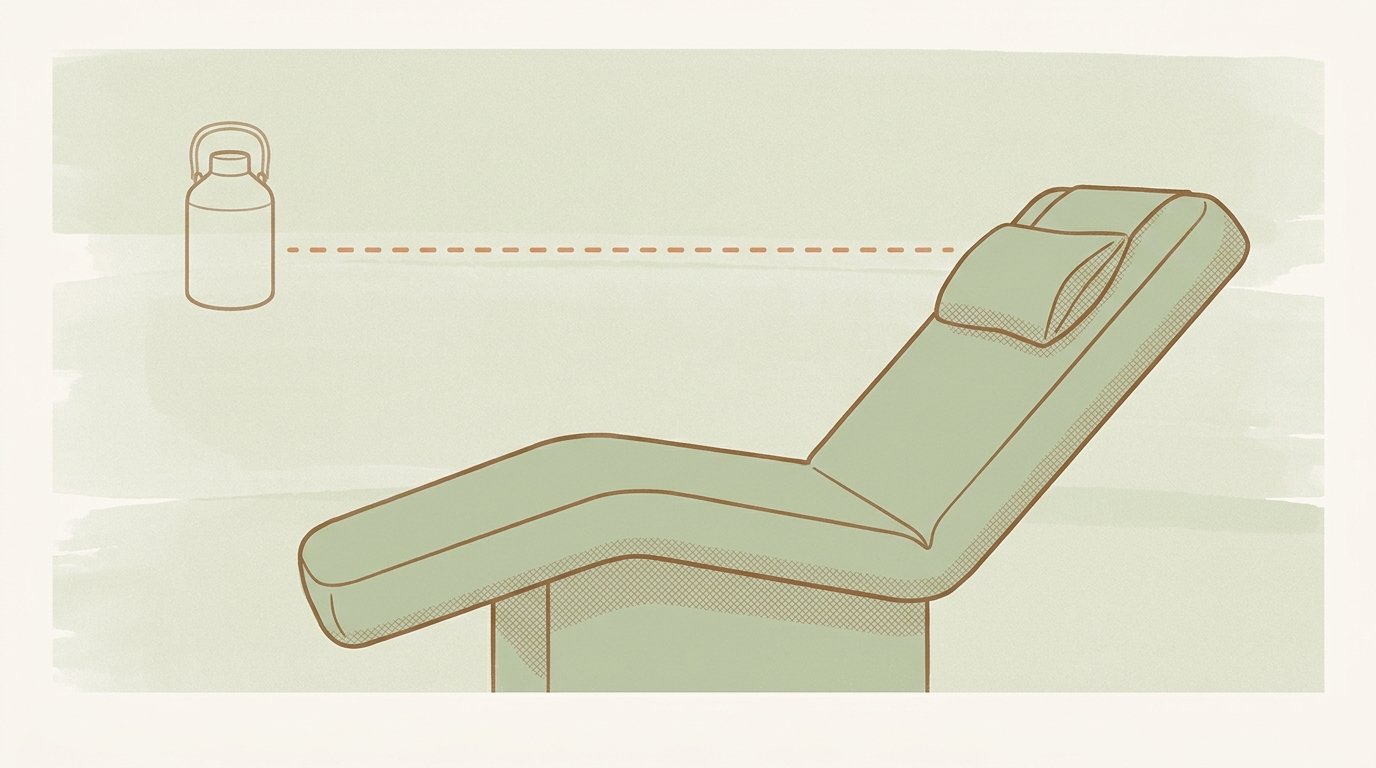
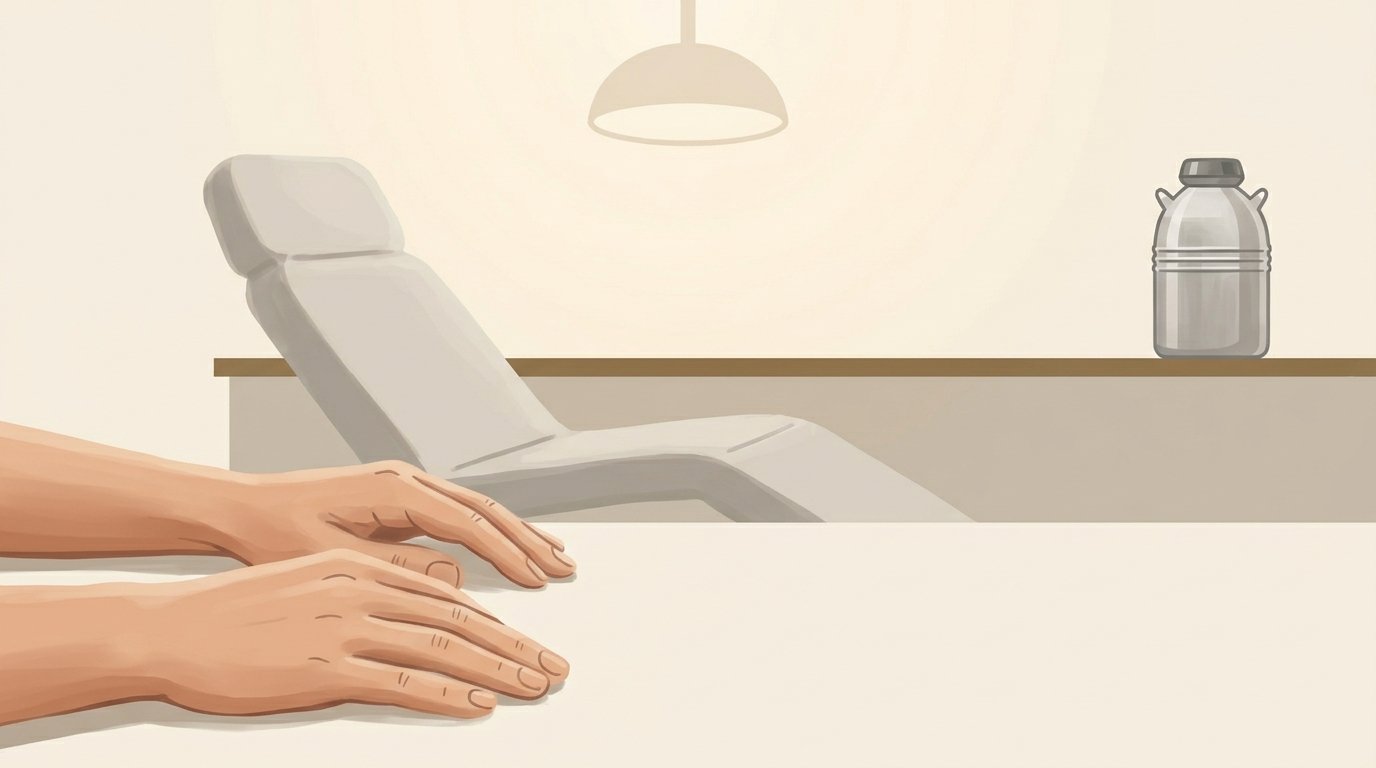
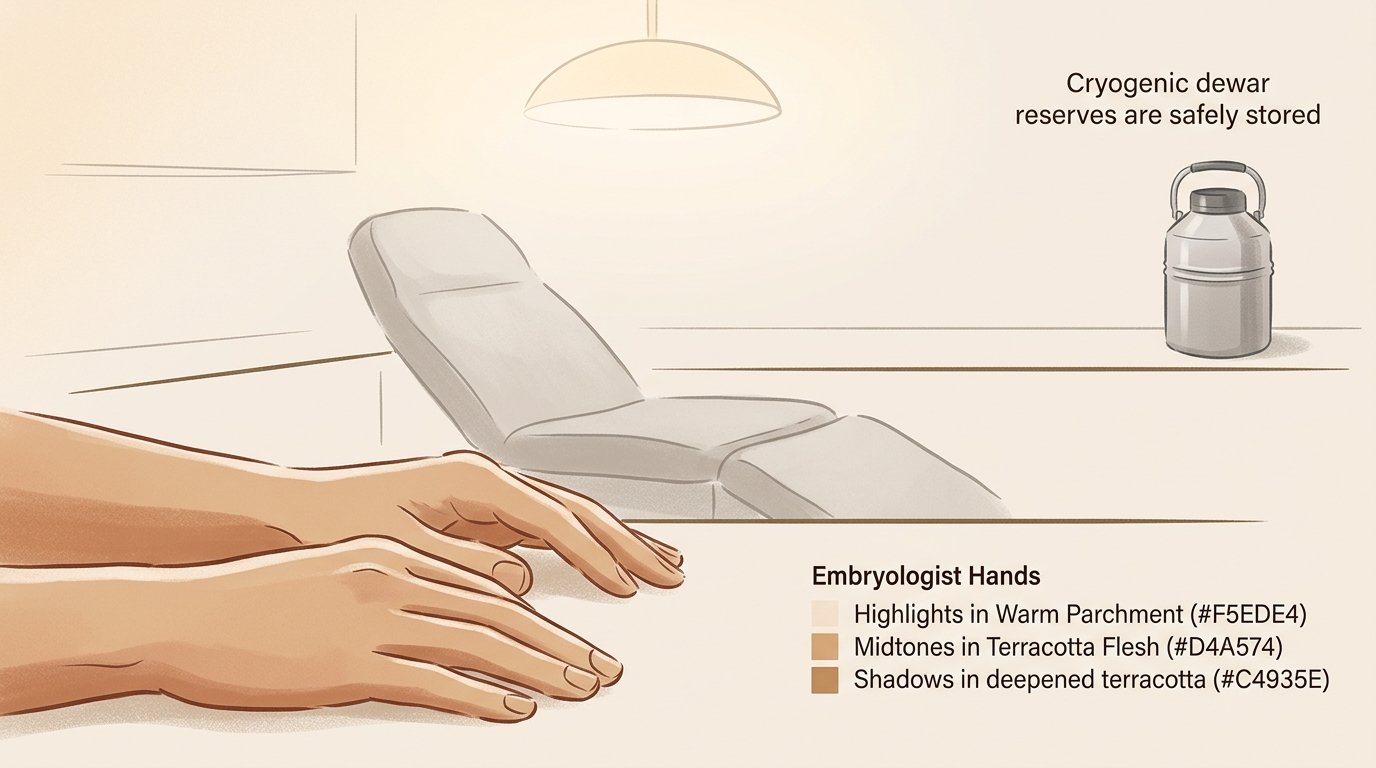
If this occurs and you have extra embryos in storage, there will still be time to thaw an additional embryo.
Clinical room environment as reassuring backdrop; embryologist hands resting calmly at foreground left; small dewar in background reinforcing reserves exist.
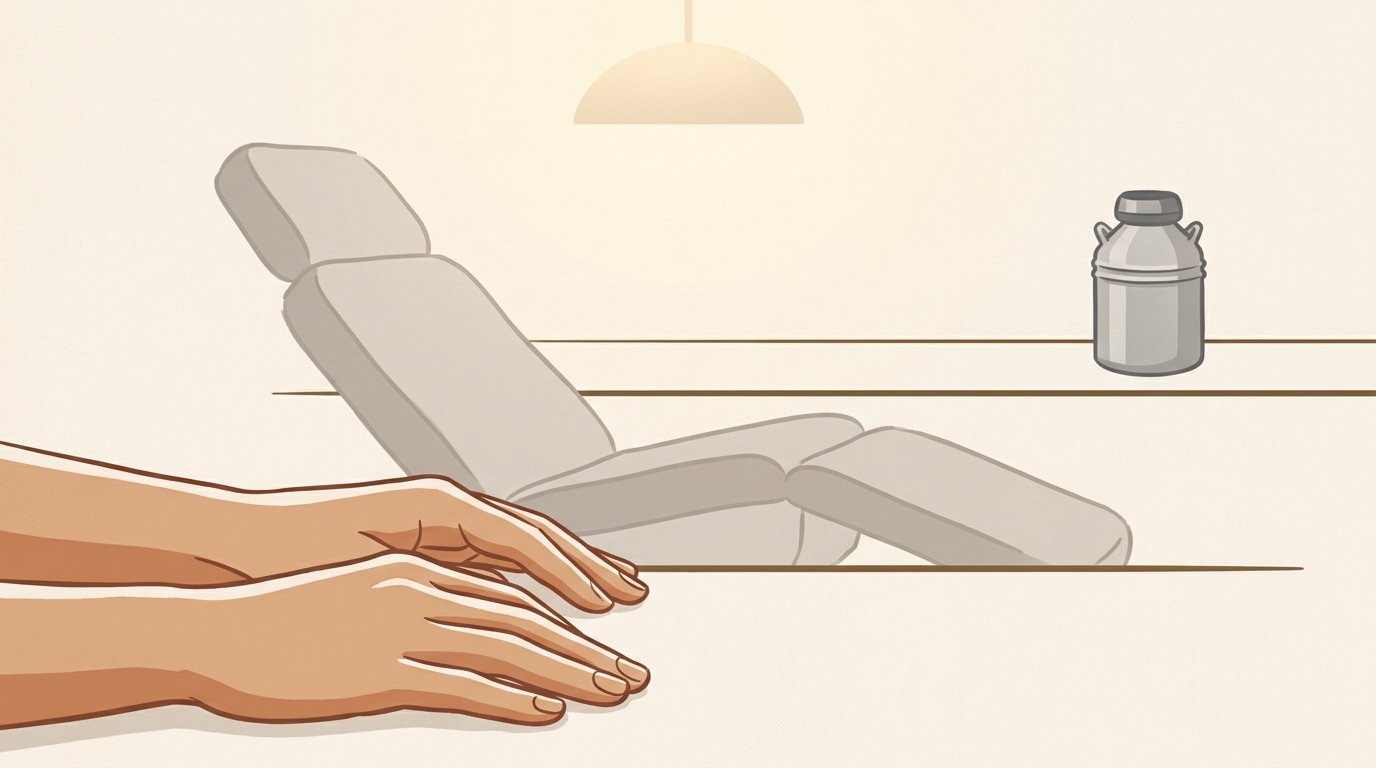
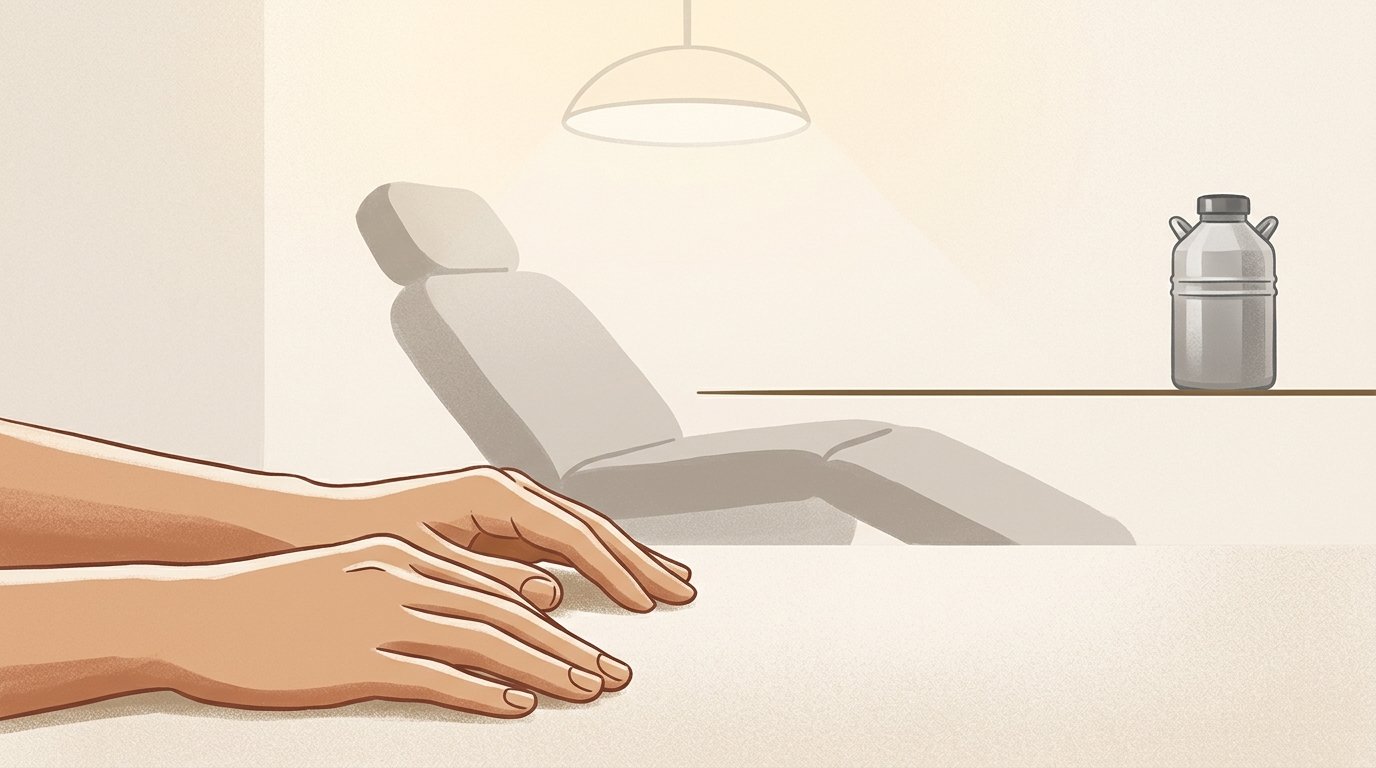
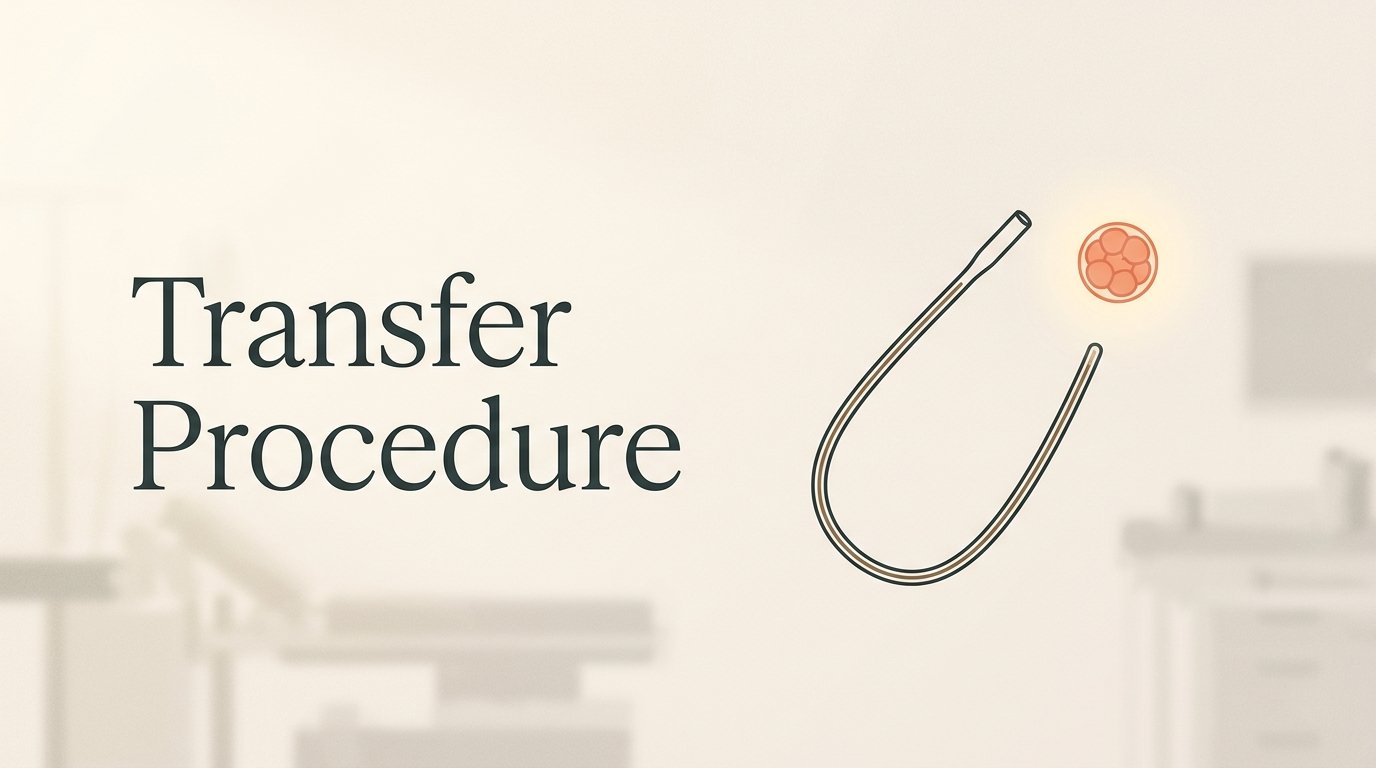
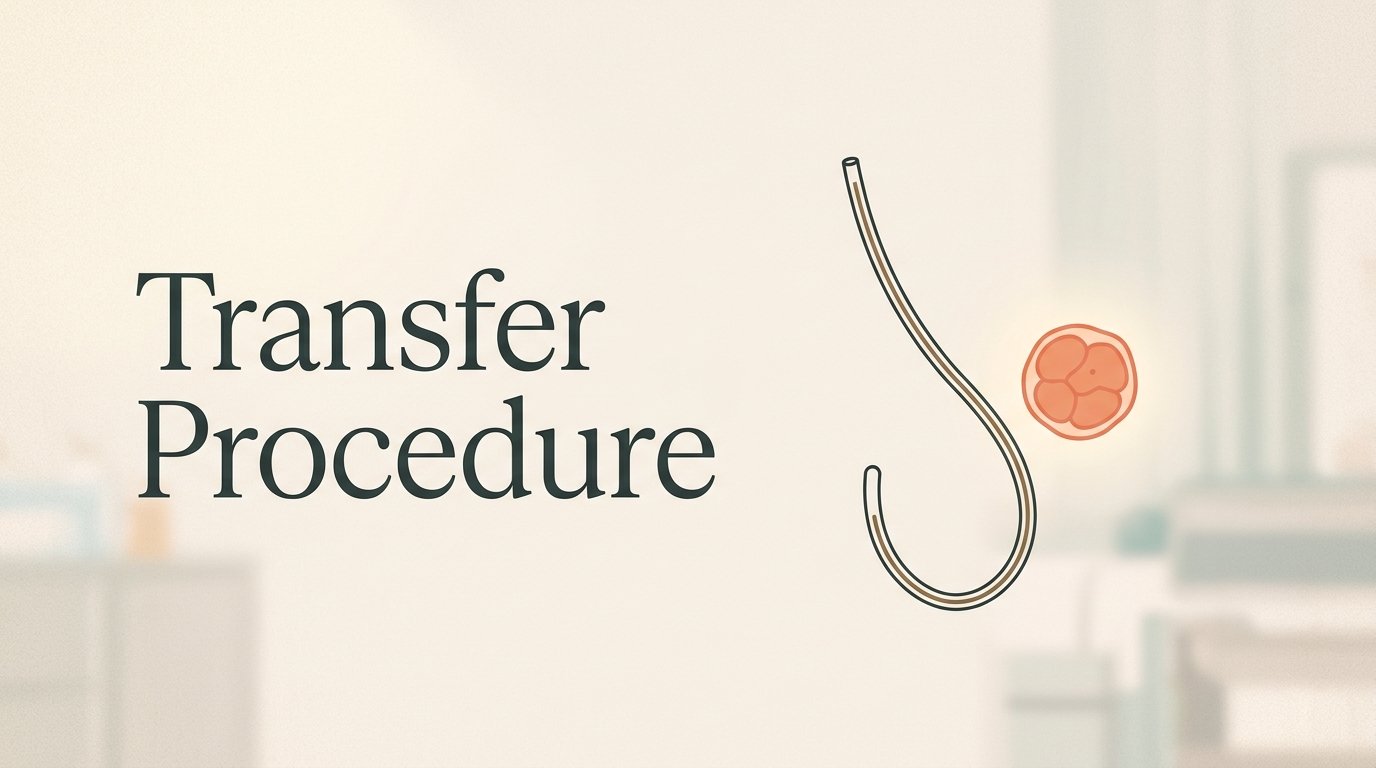
The transfer procedure is simple and nearly painless, and in the vast majority of cases, sedation is not required.
Stage-marker typography at left with catheter and embryo floating in generous negative space at right — composition embodies the narration's message of simplicity.
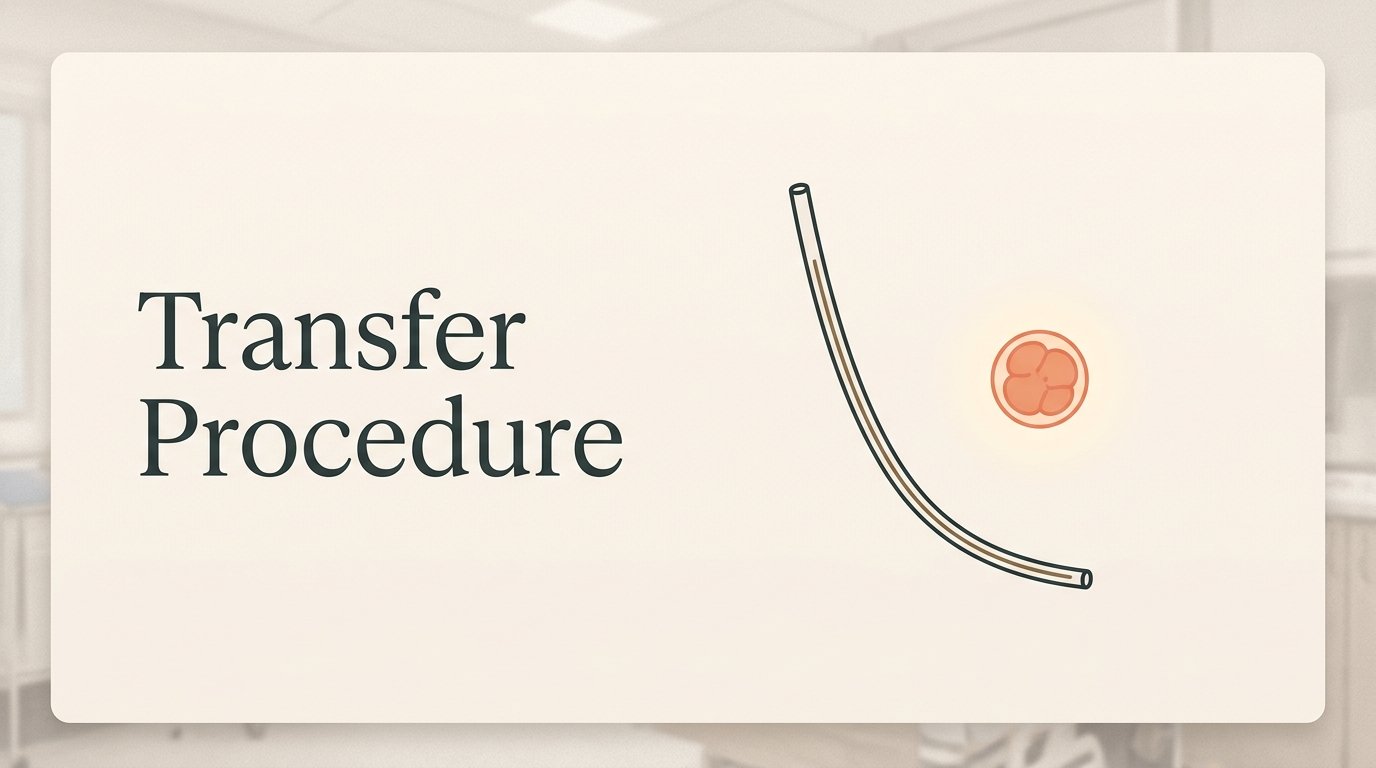
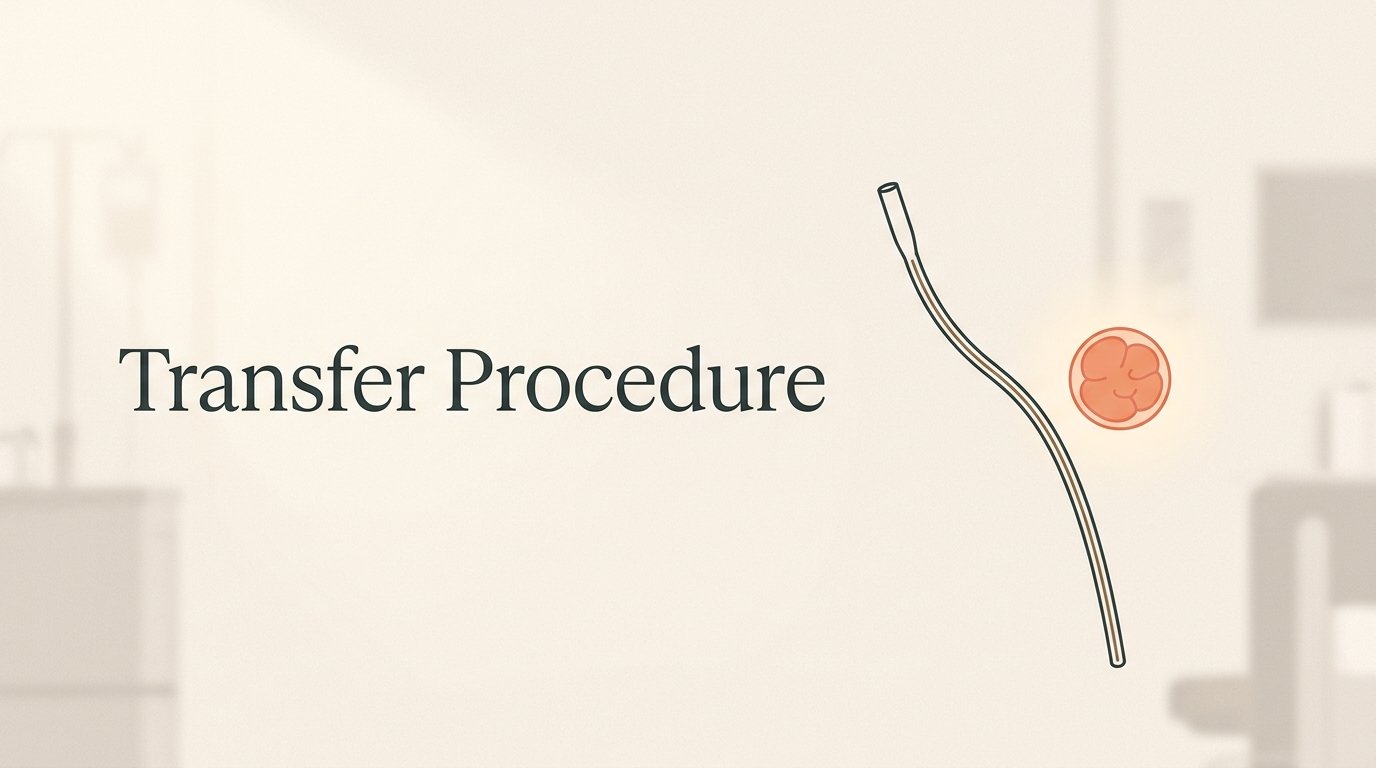
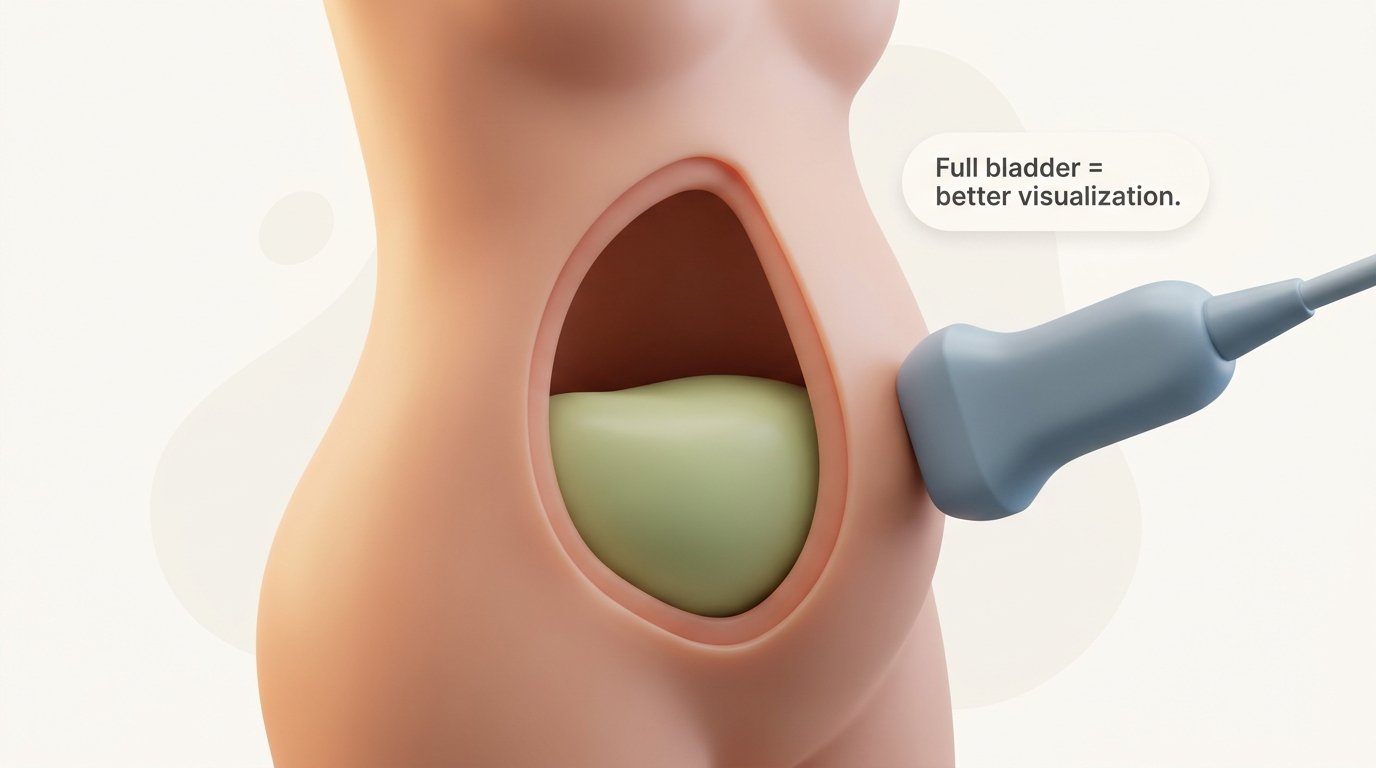
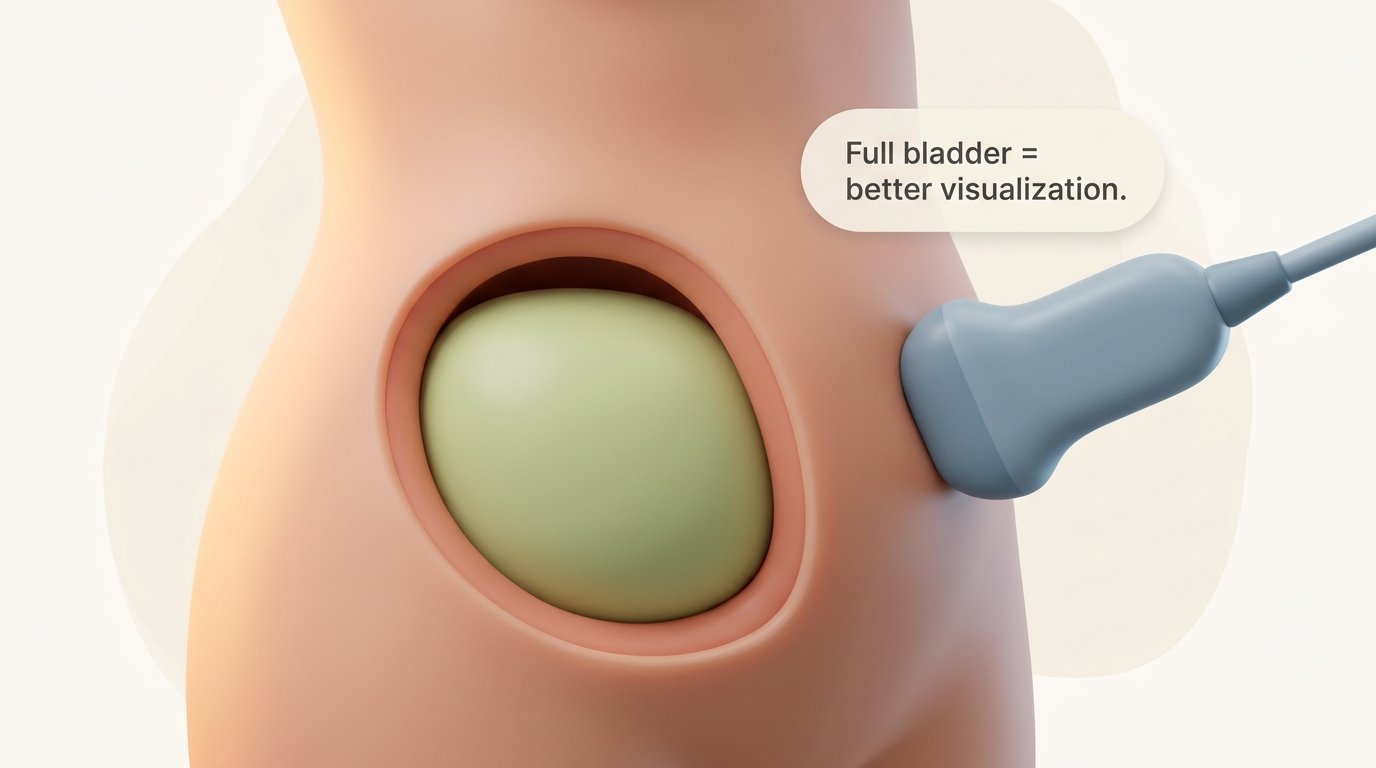
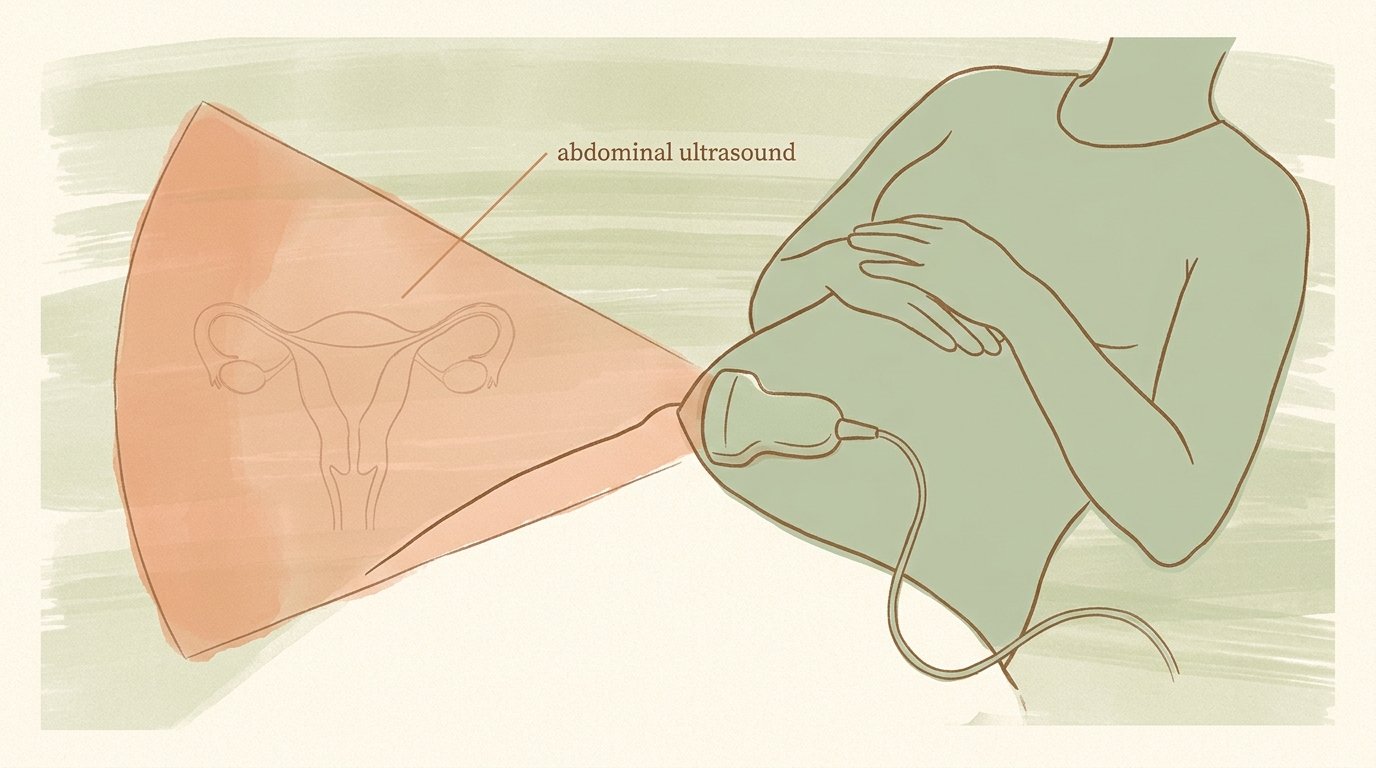
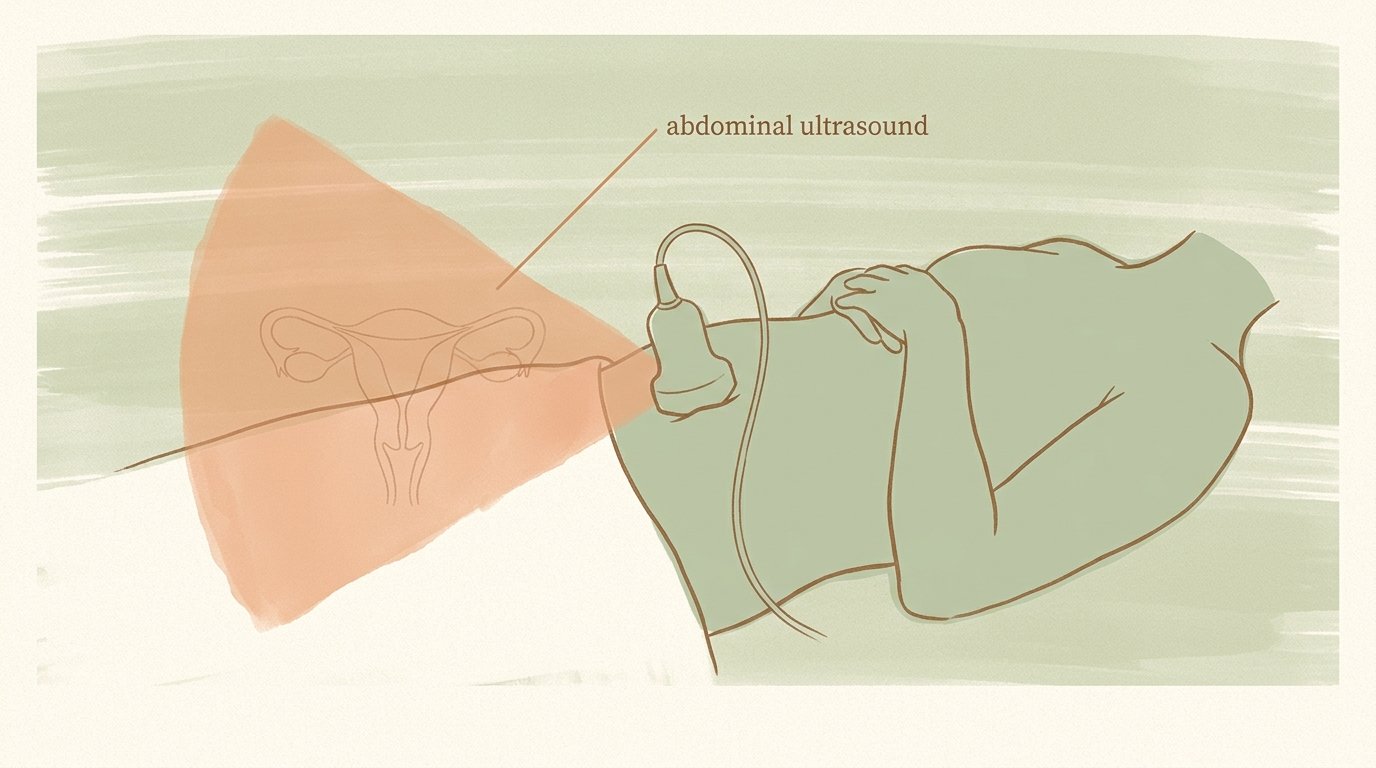
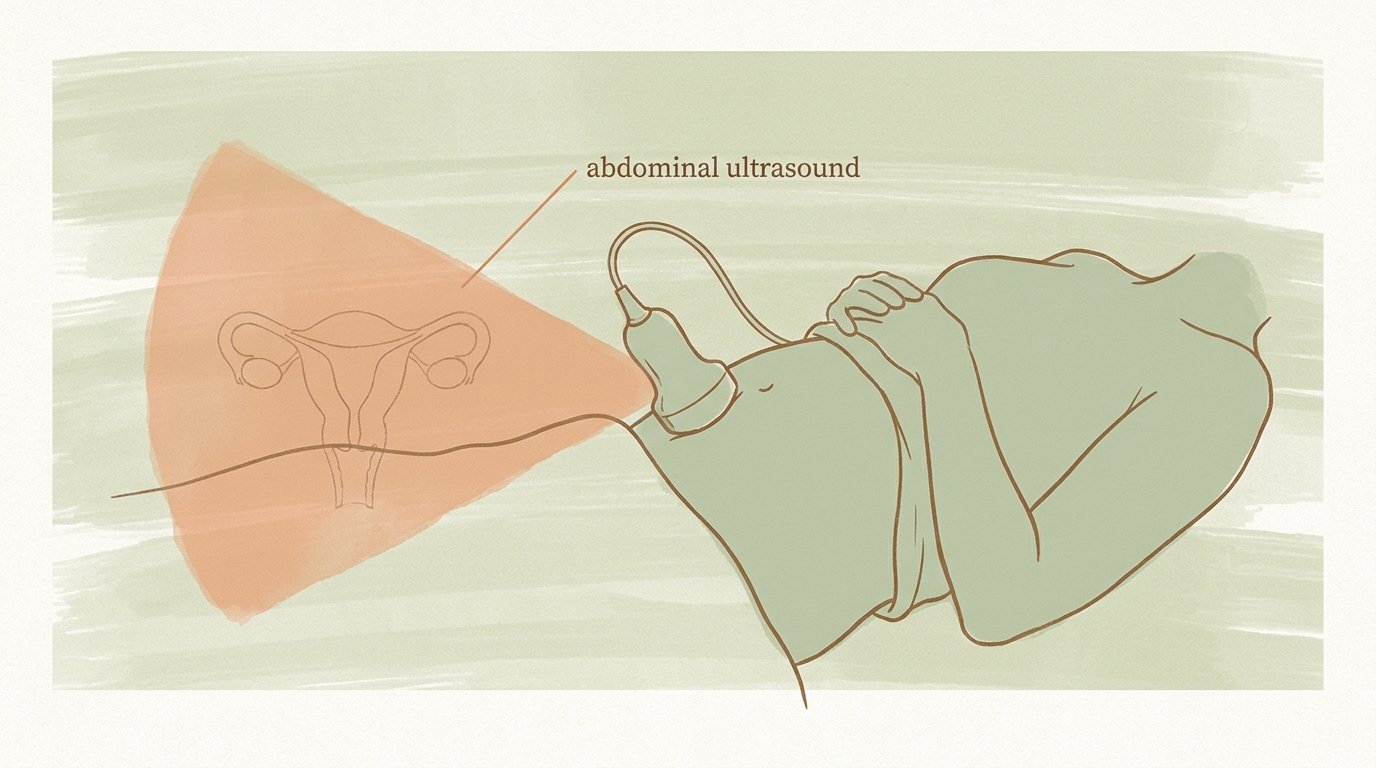
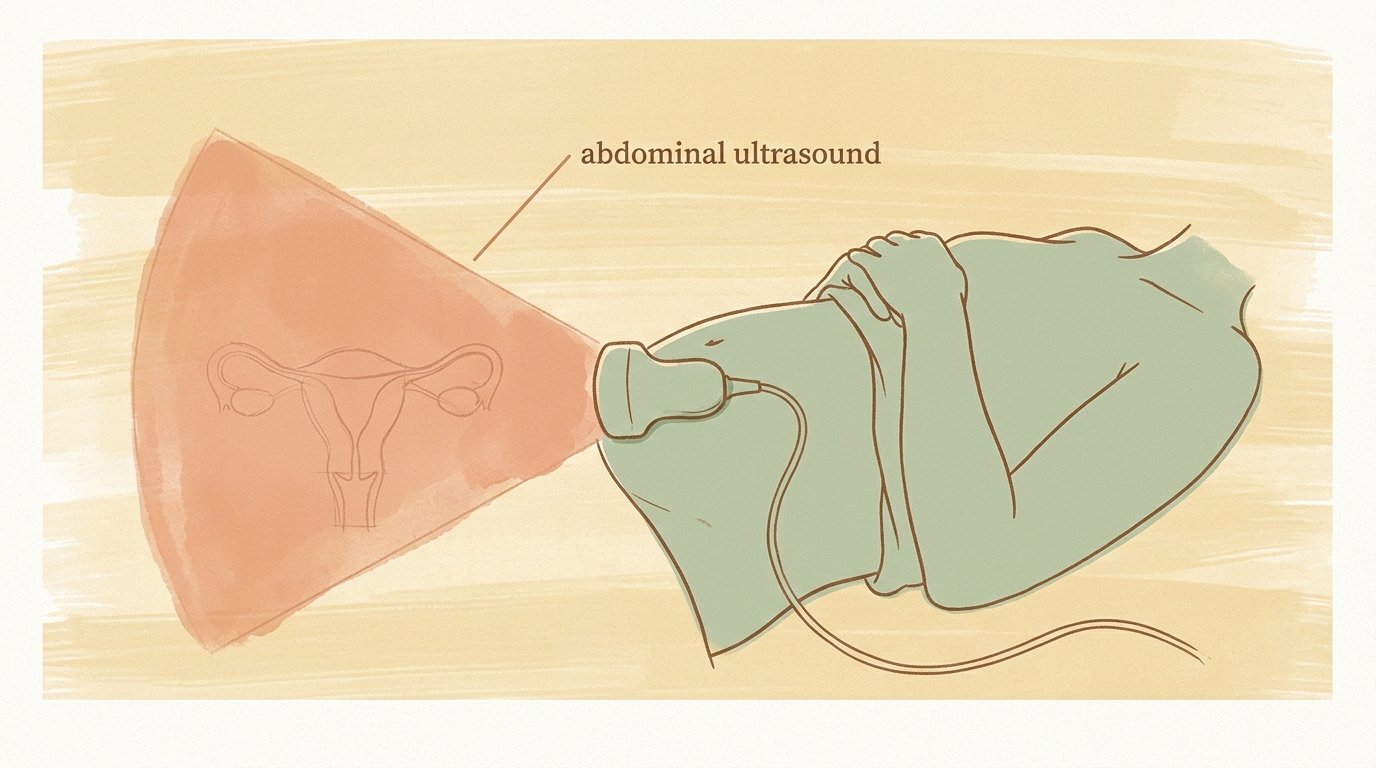
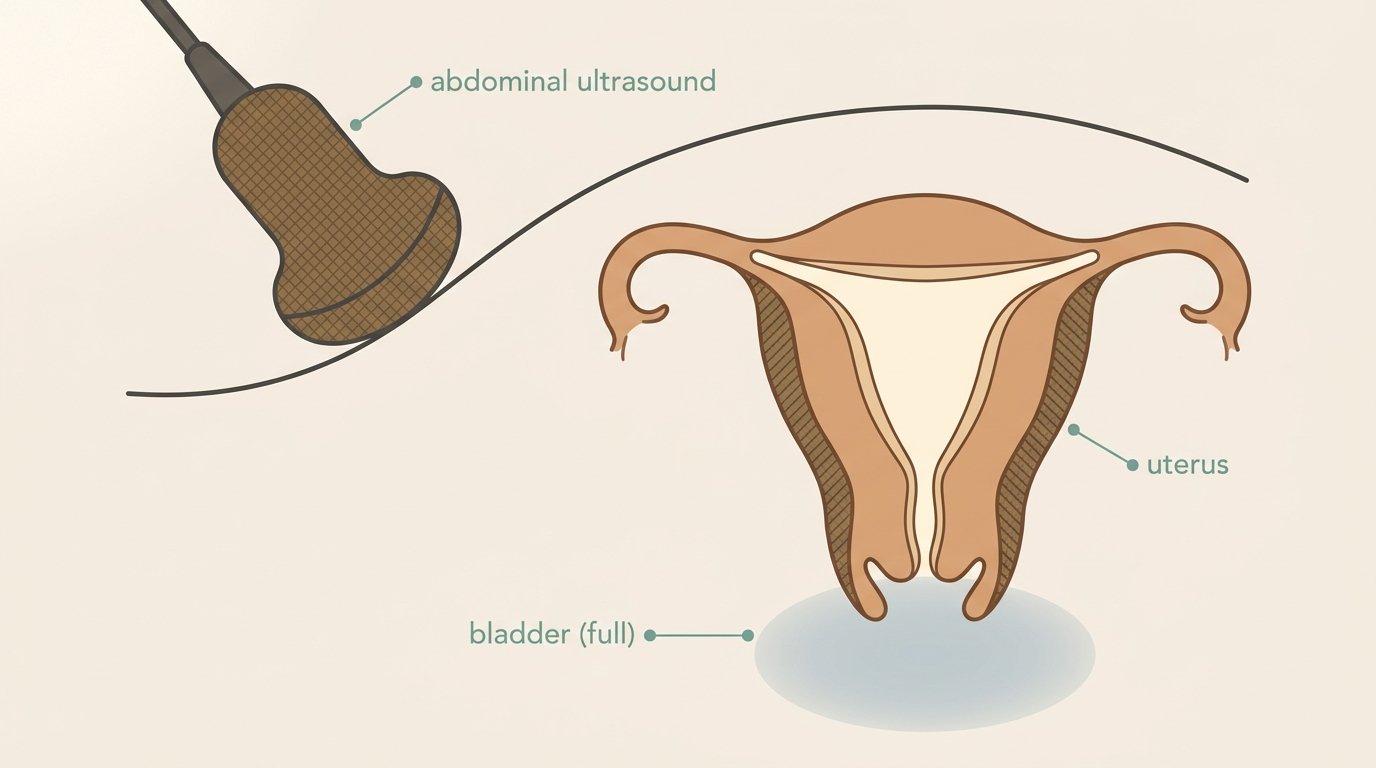
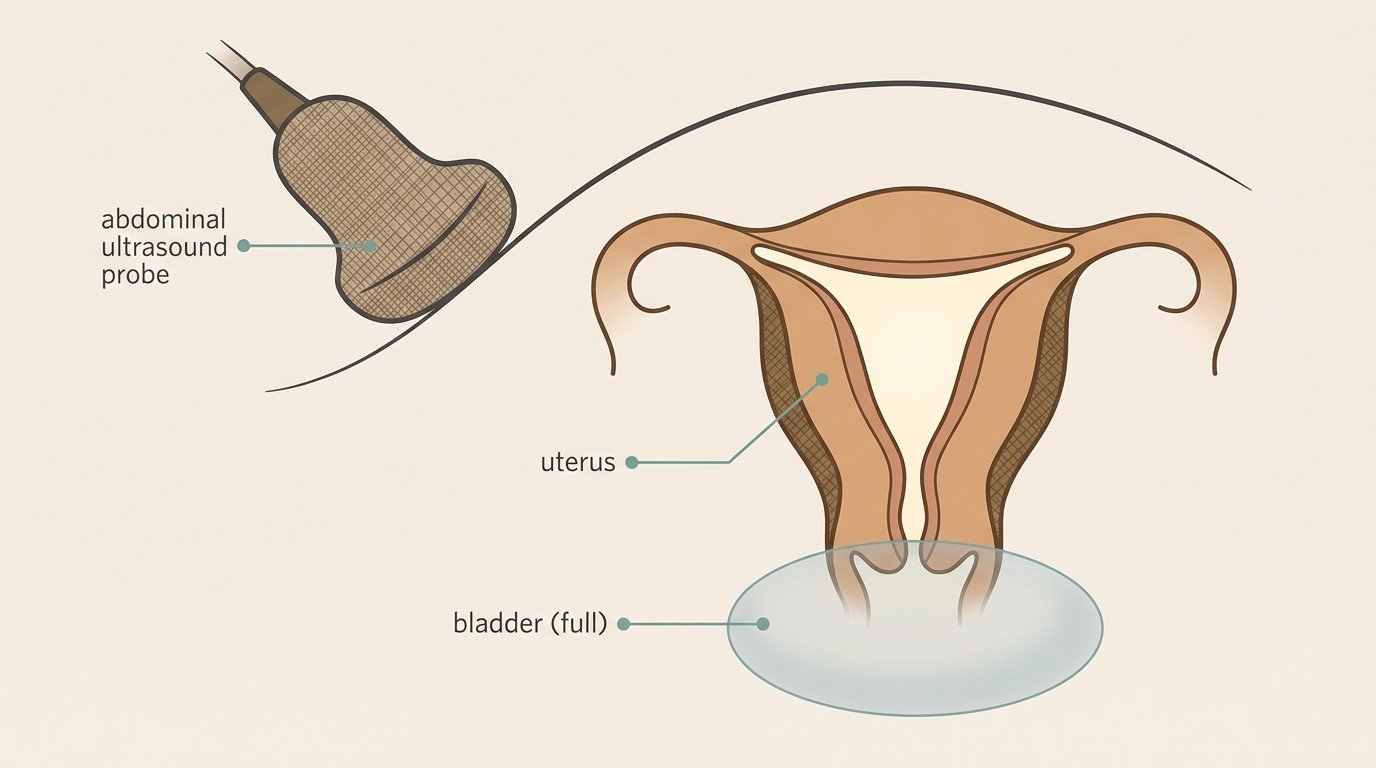
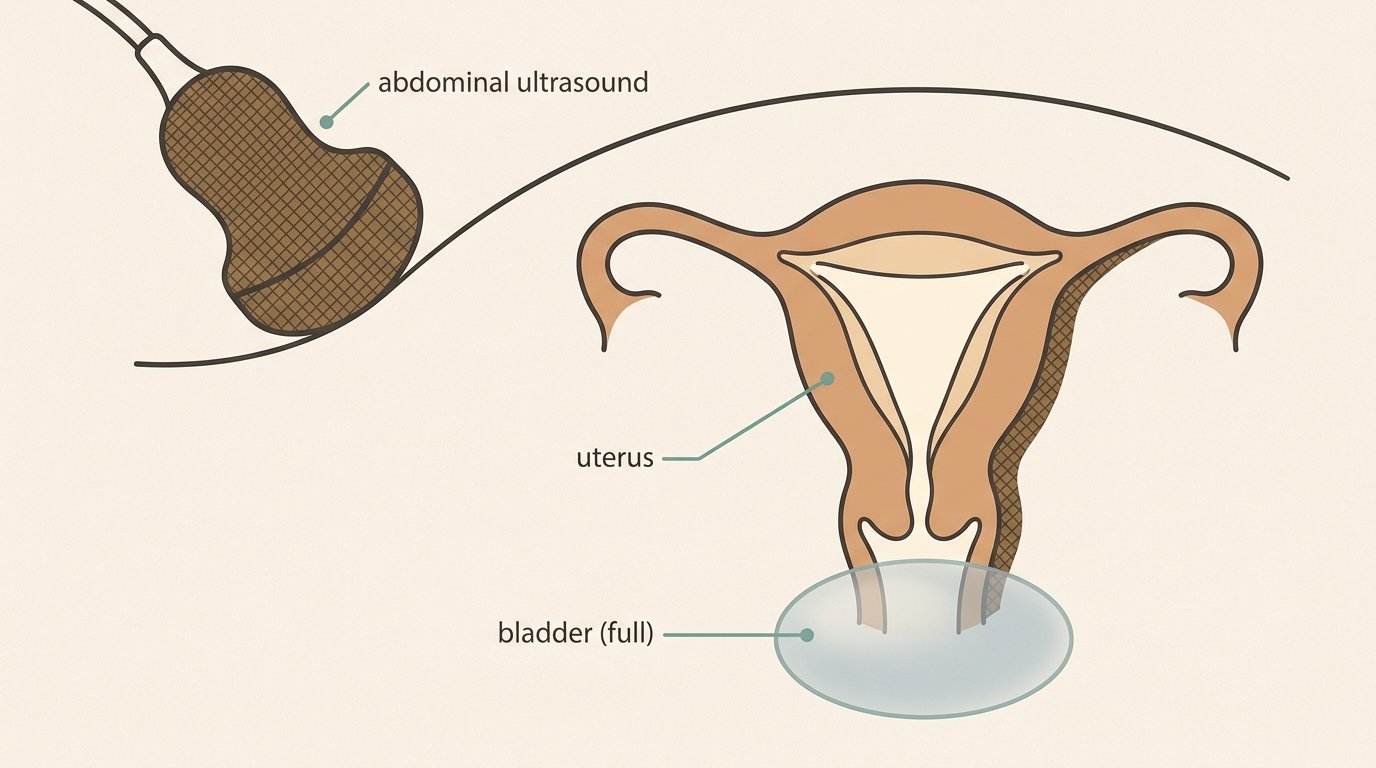
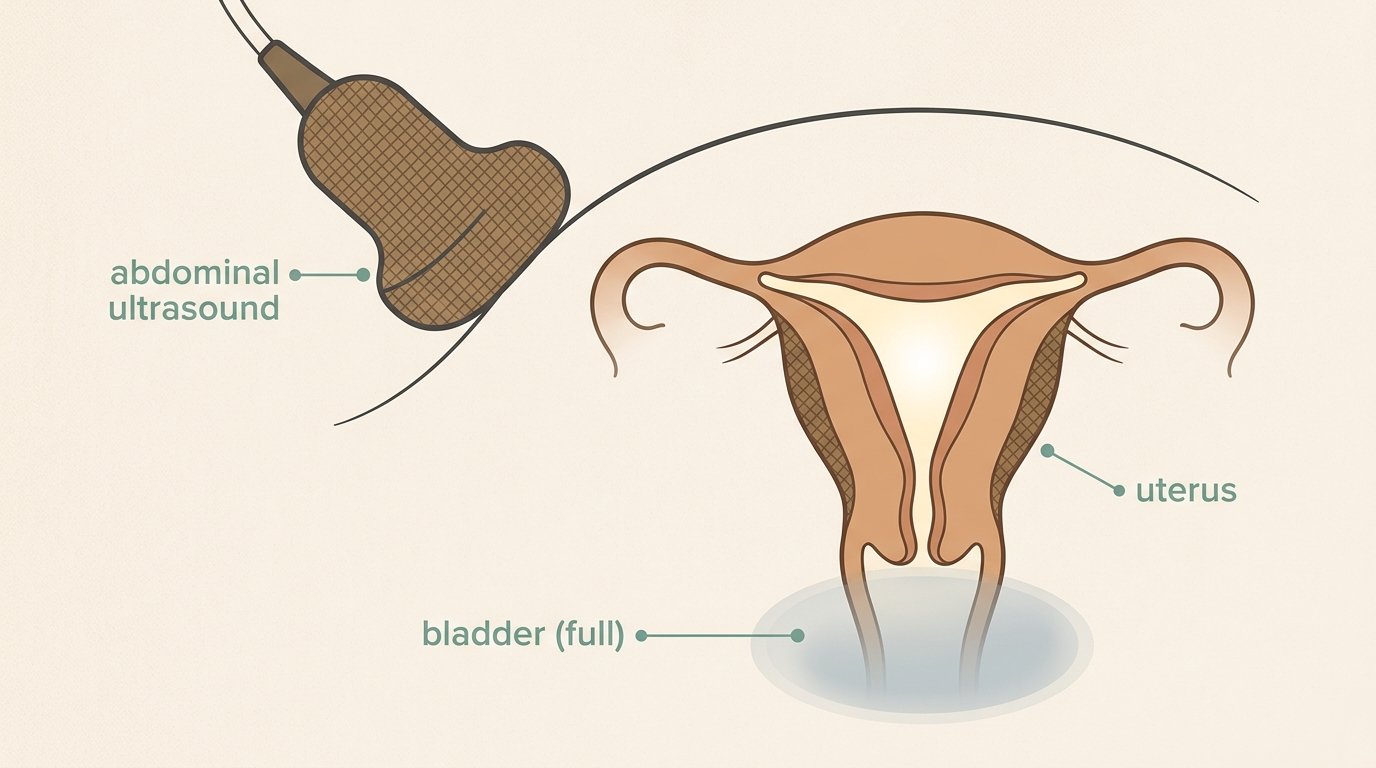
You must come in with a moderately full bladder, which will allow your medical team to better visualize the uterus using abdominal ultrasound.
First appearance of the uterus cross-section at right; ultrasound probe at upper-left; bladder indicator below uterus; three Muted Sage callout labels.
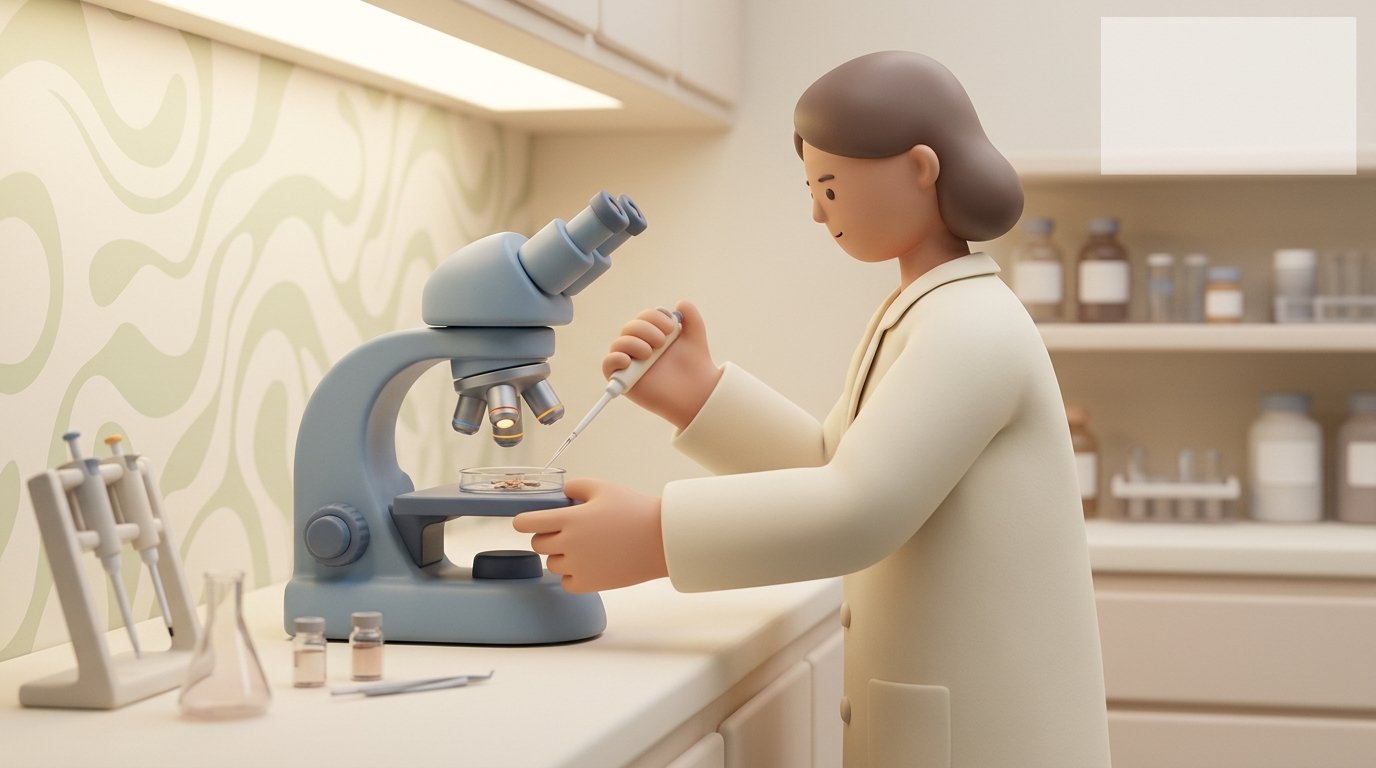
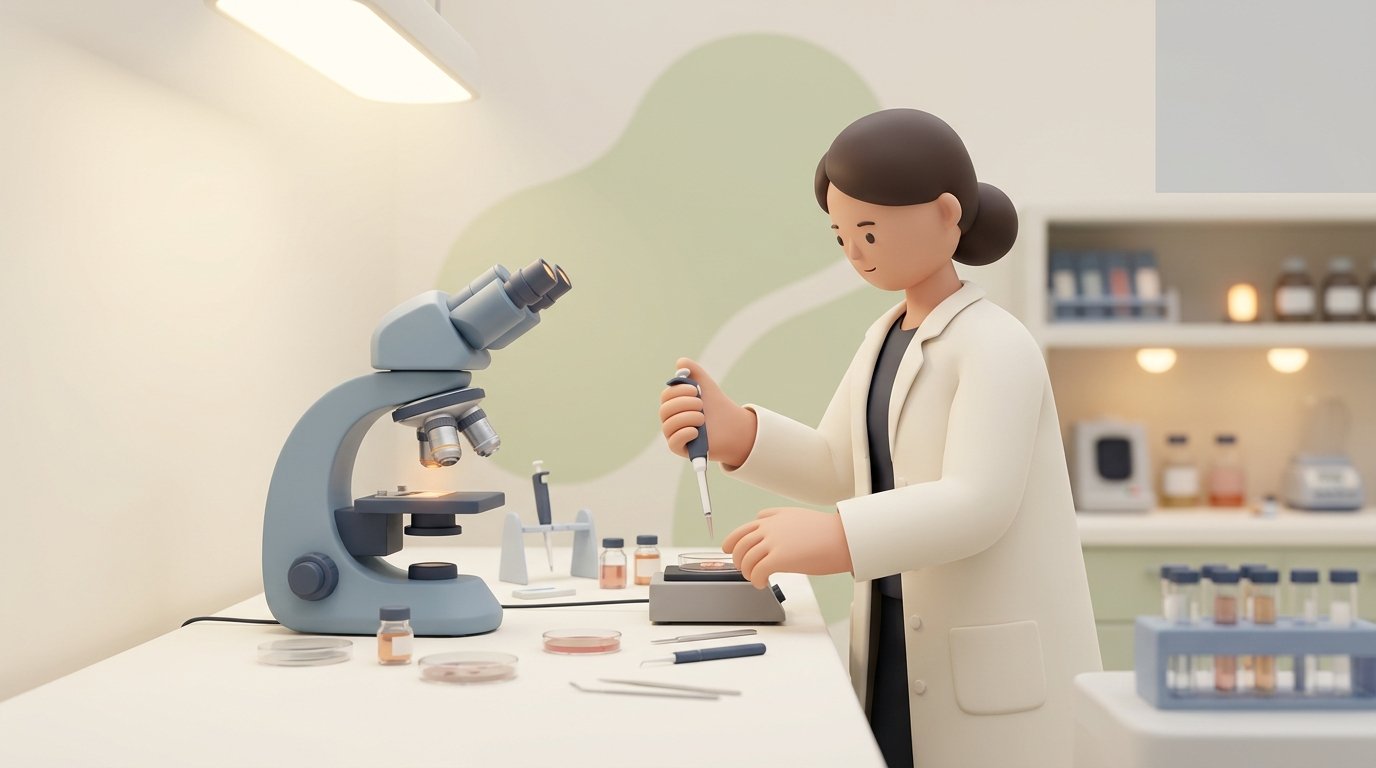
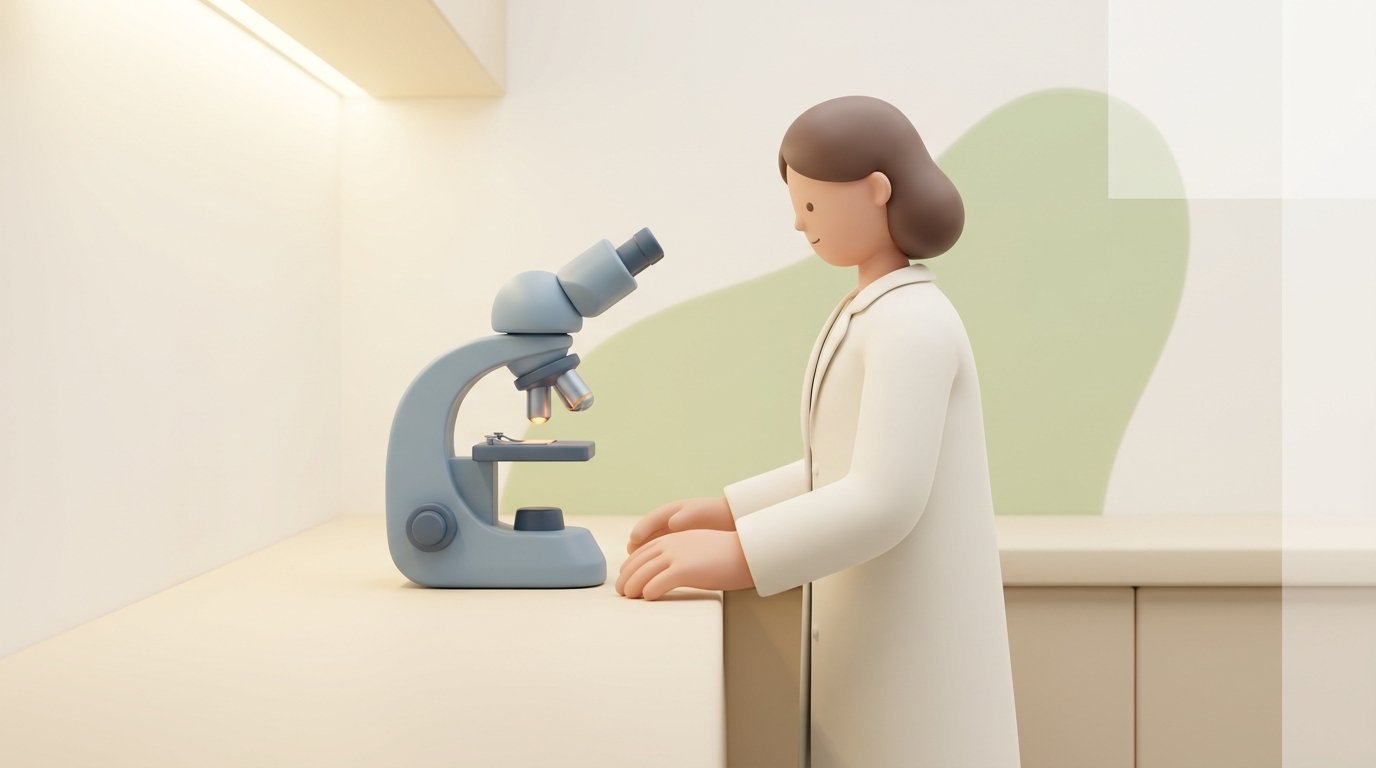
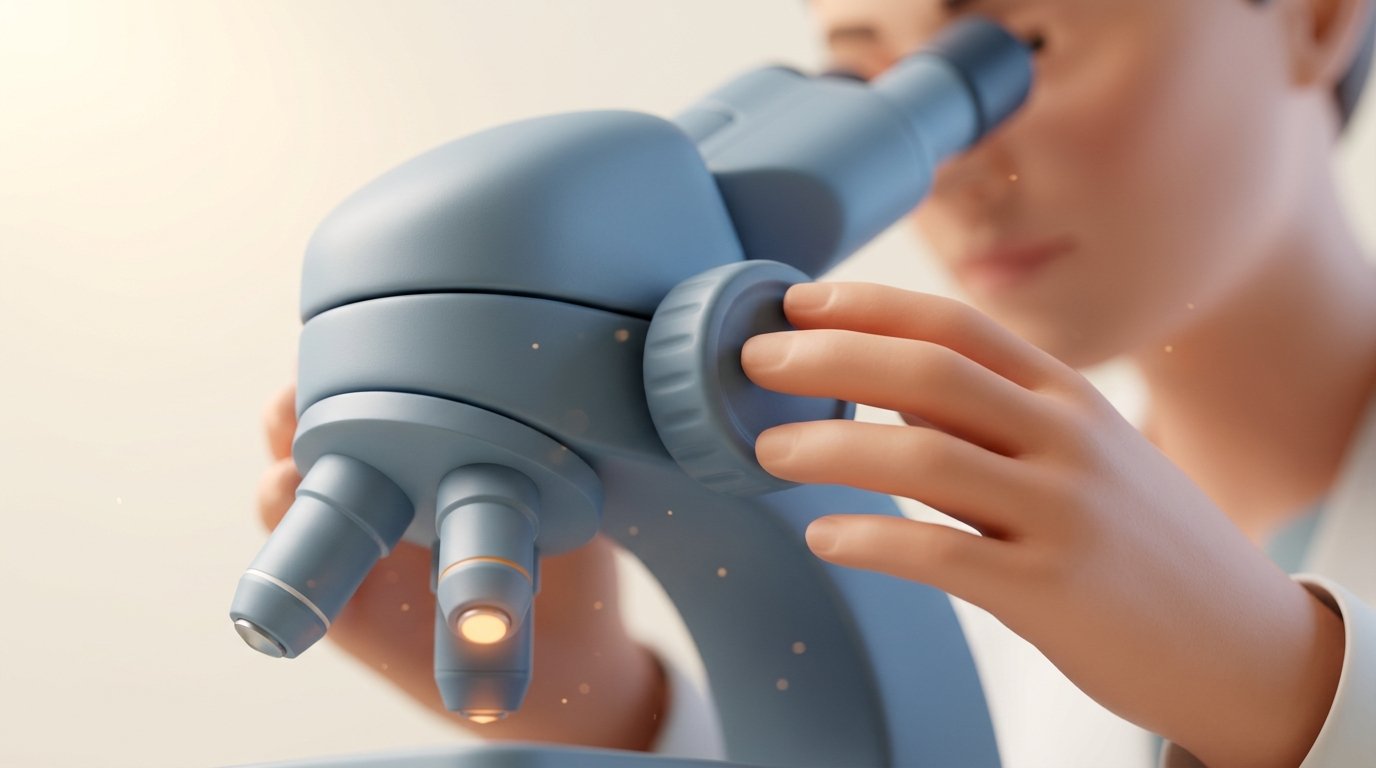
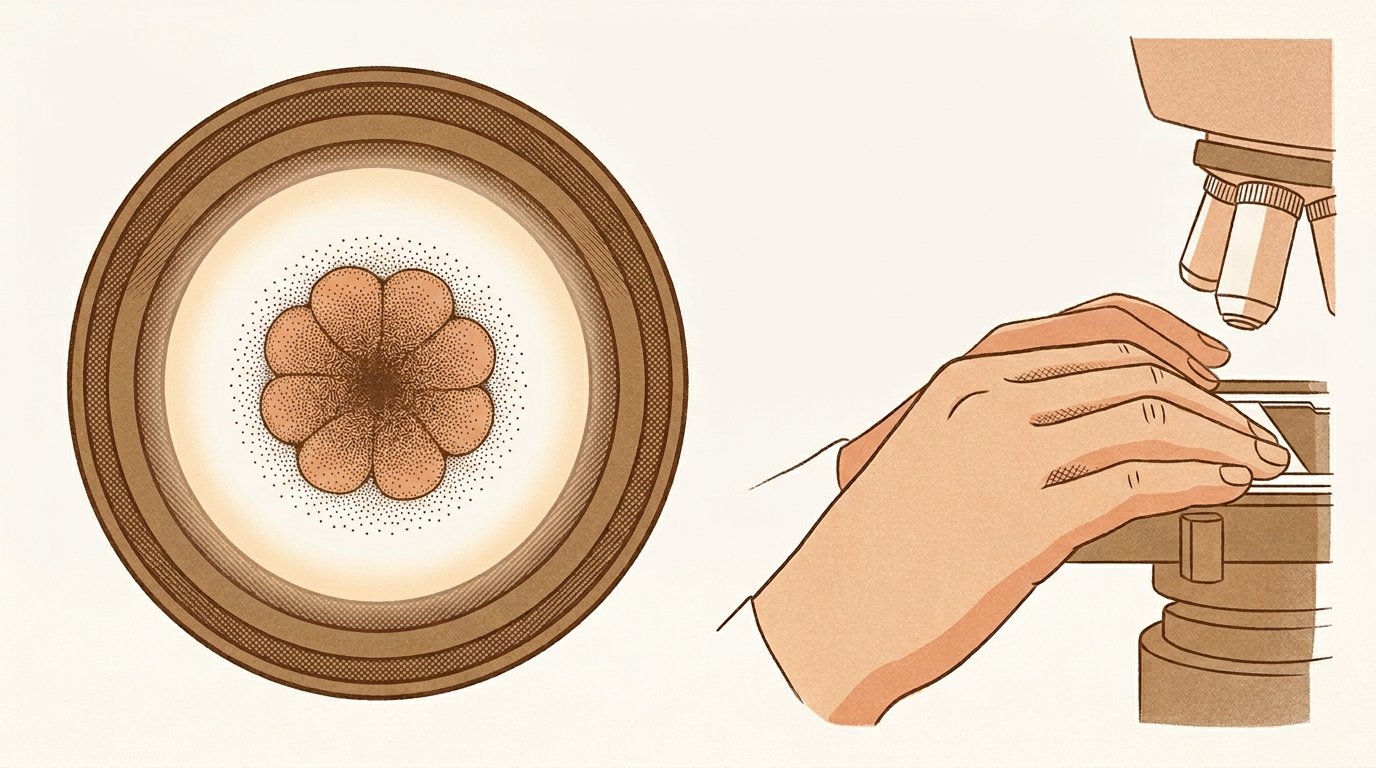
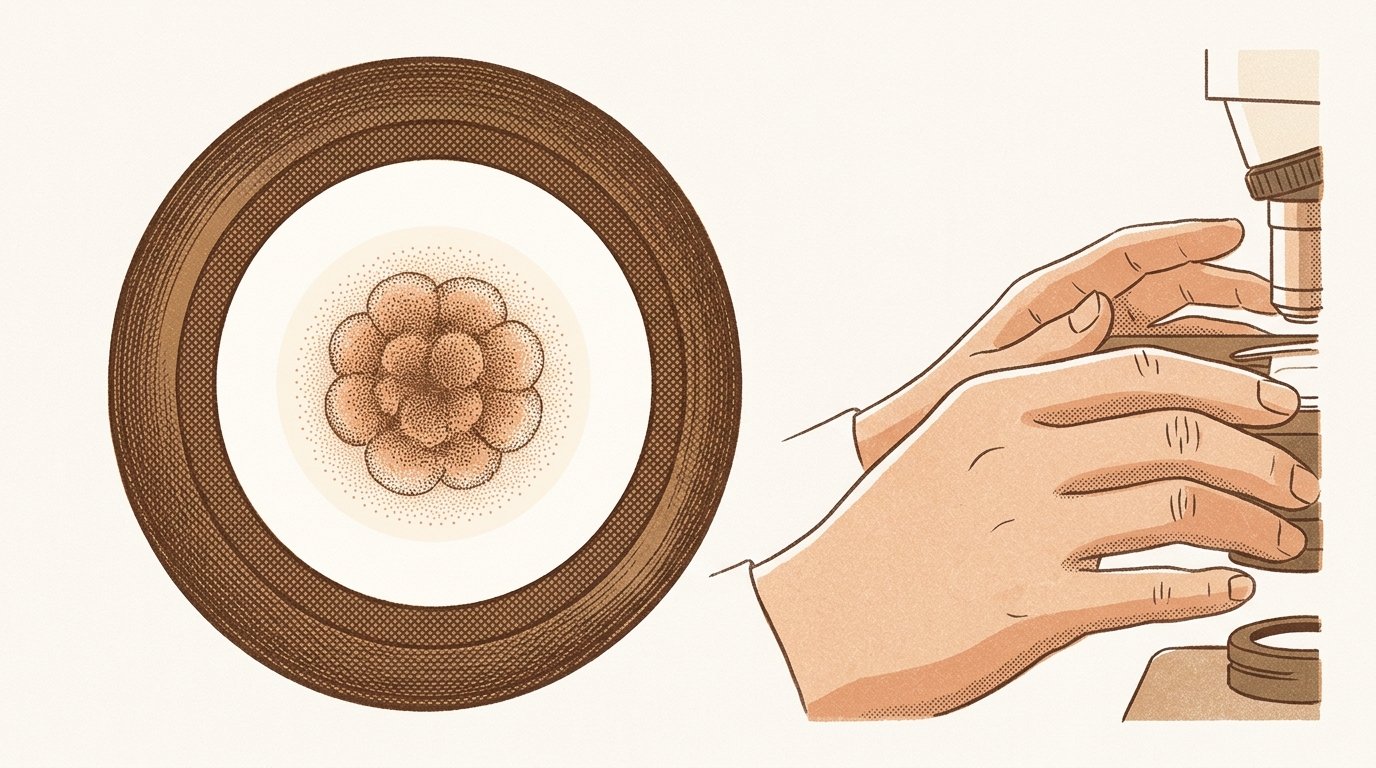
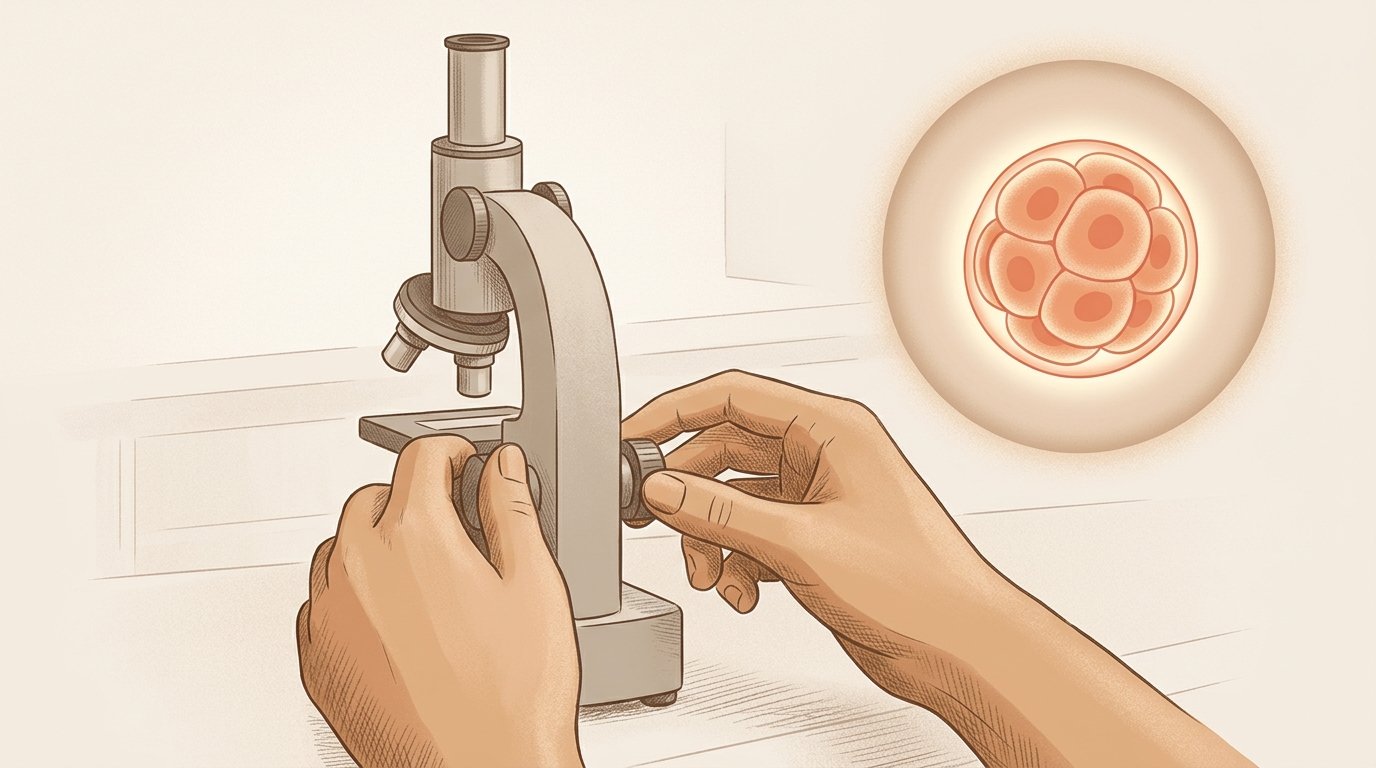
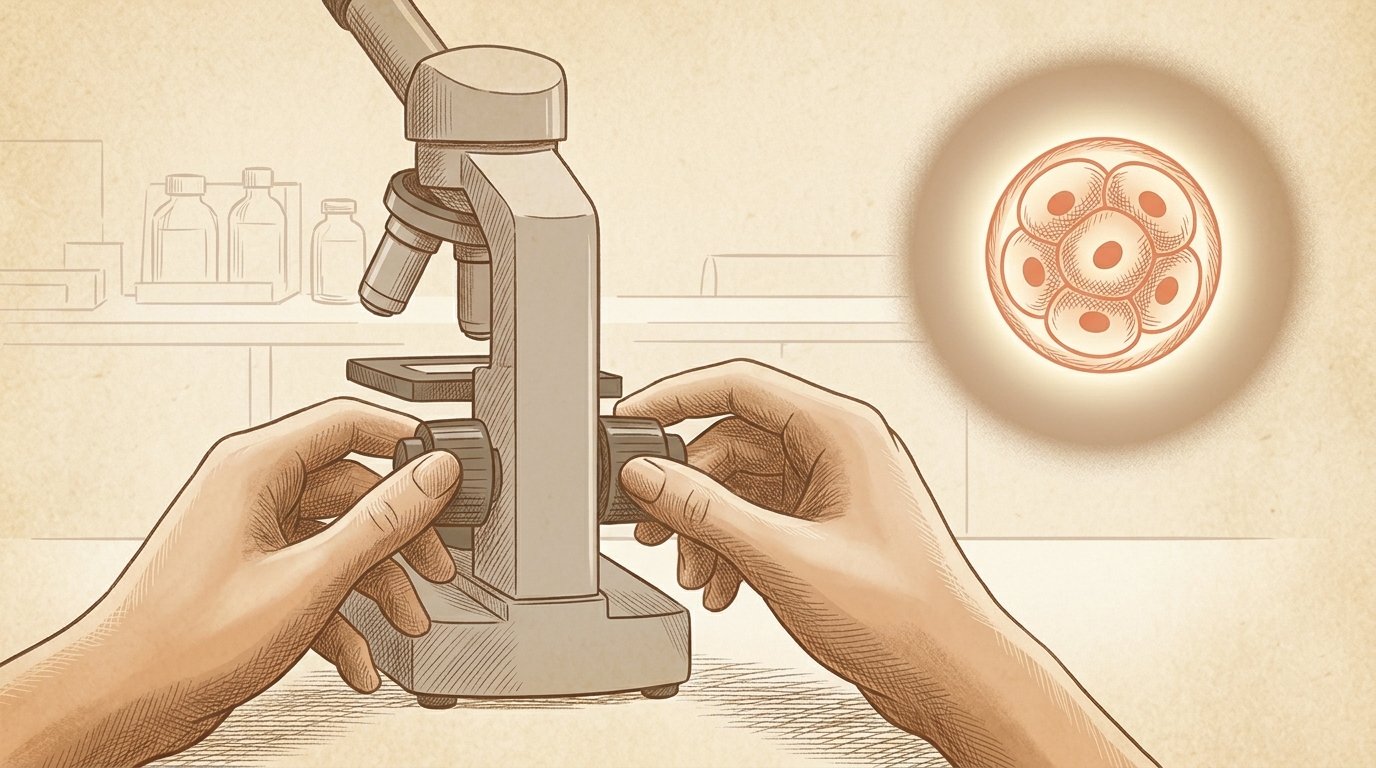
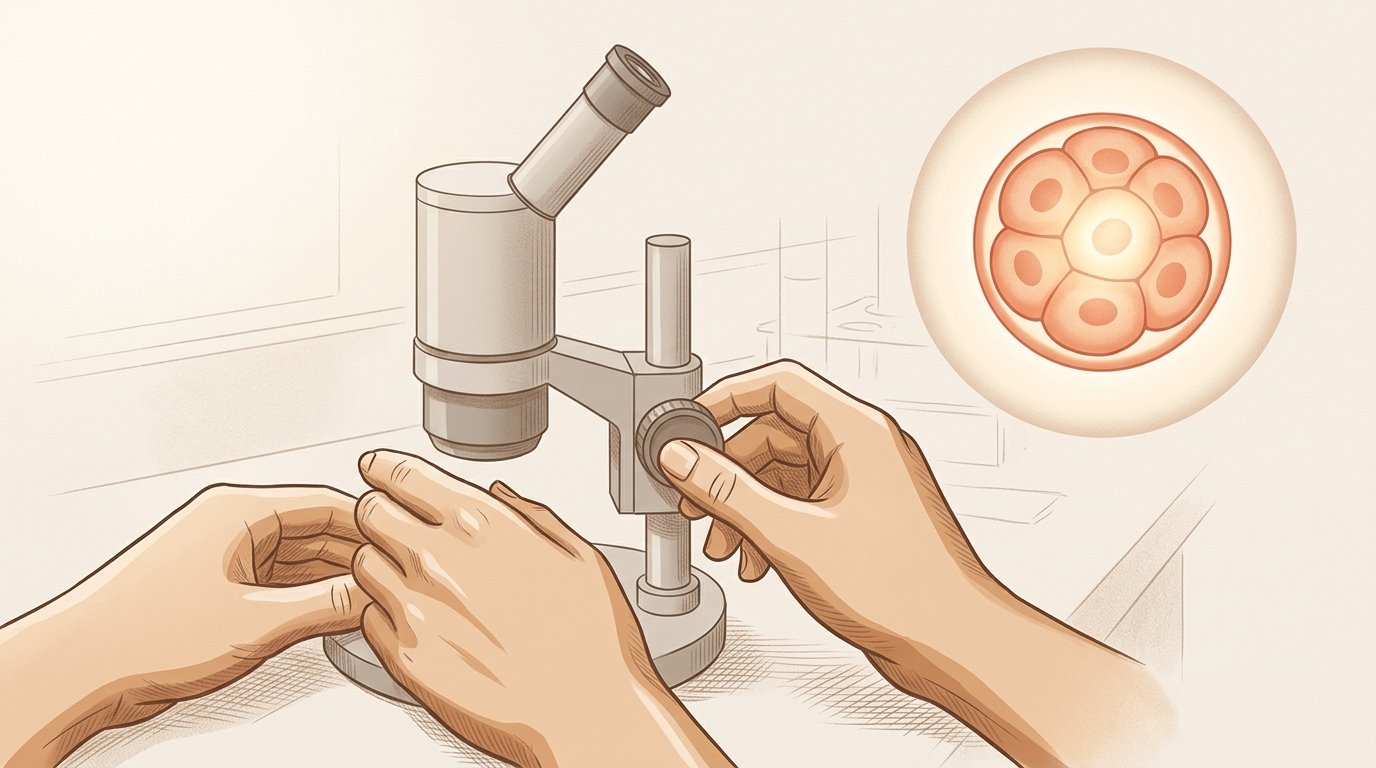
To start the embryo transfer procedure, the embryologist looks at the embryo under a microscope.
Close-in humanizing scene — embryologist hands with microscope, circular eyepiece vignette revealing the embryo magnified; the first fully human moment.
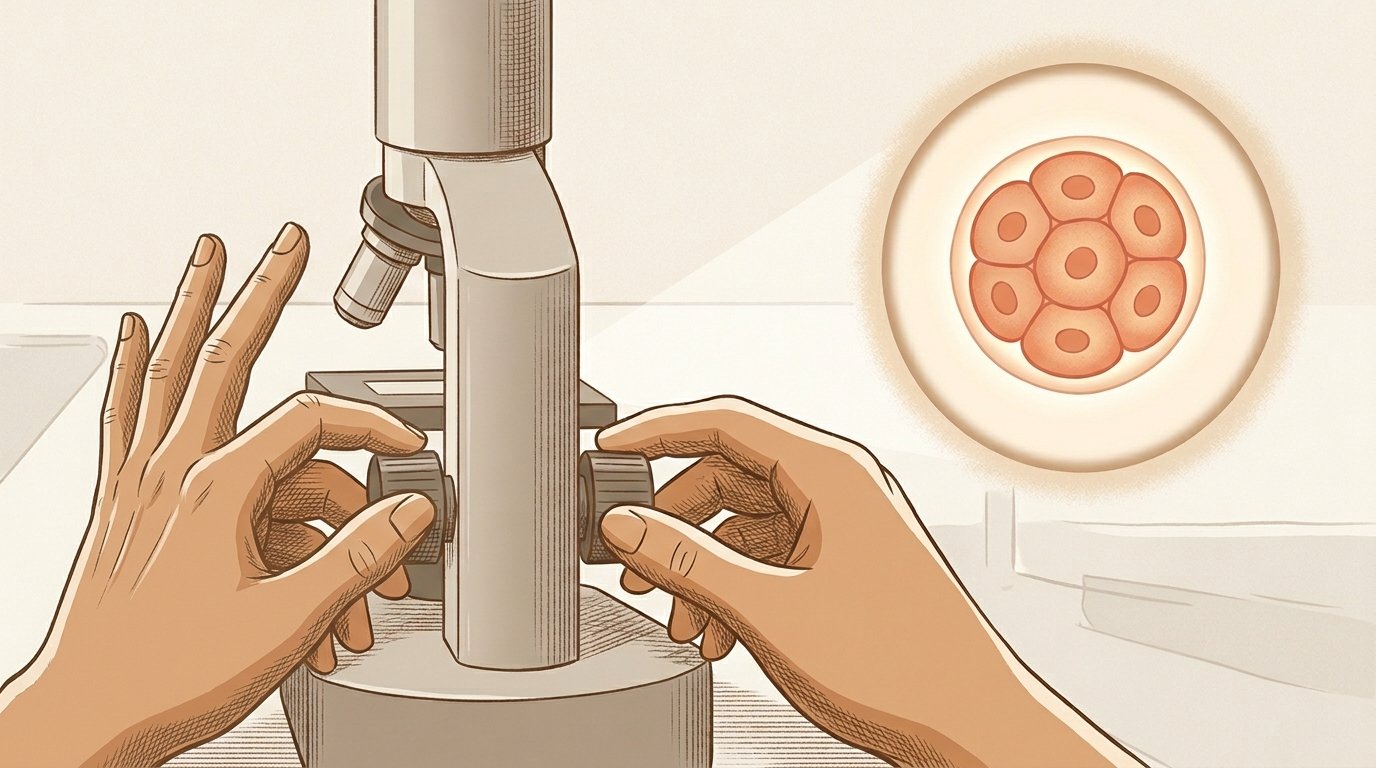
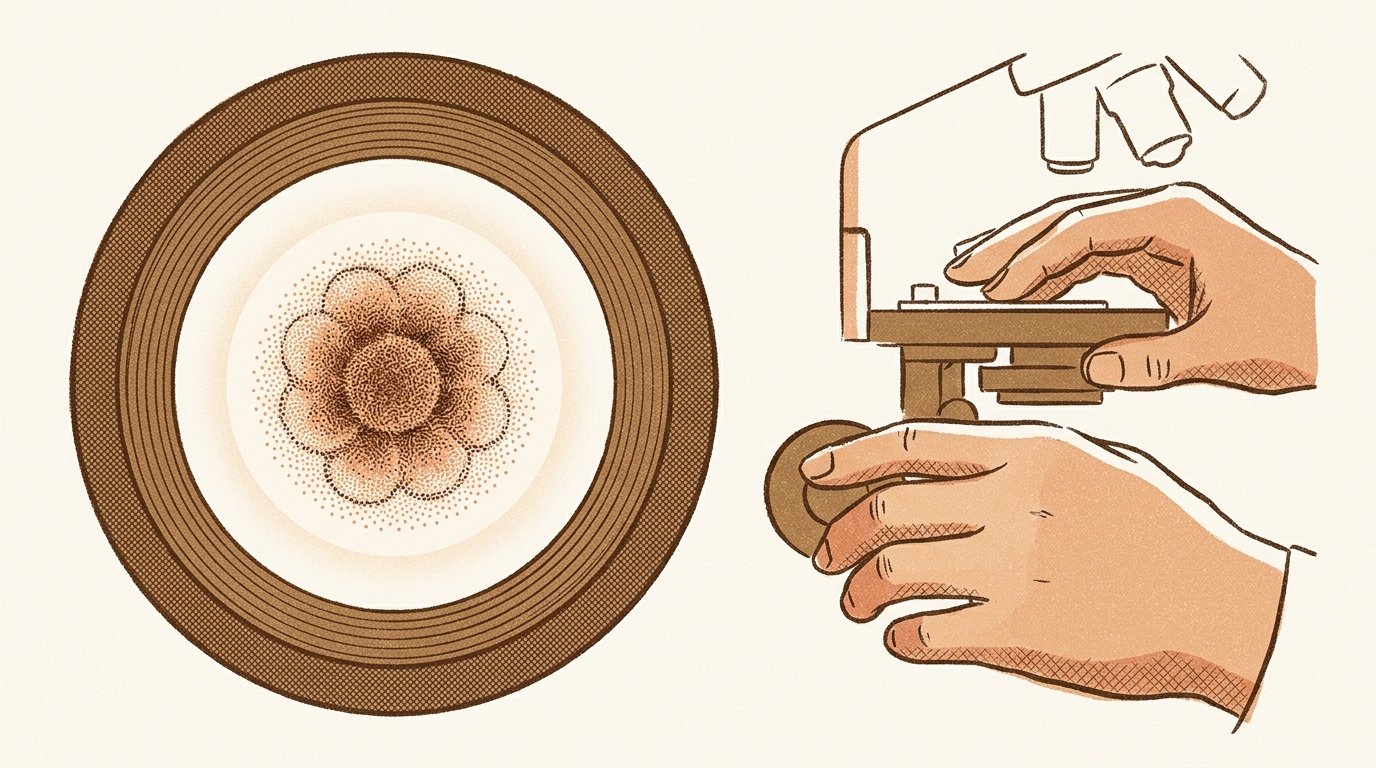
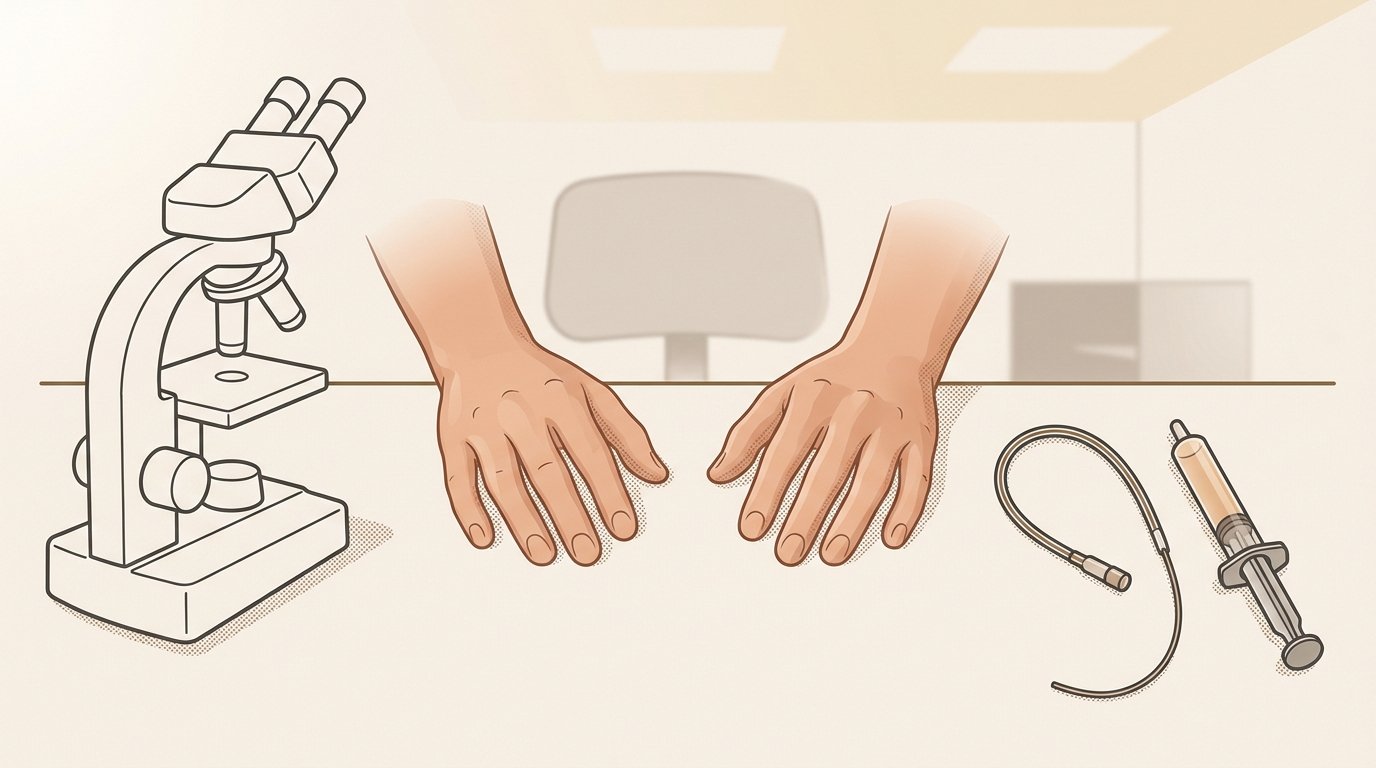
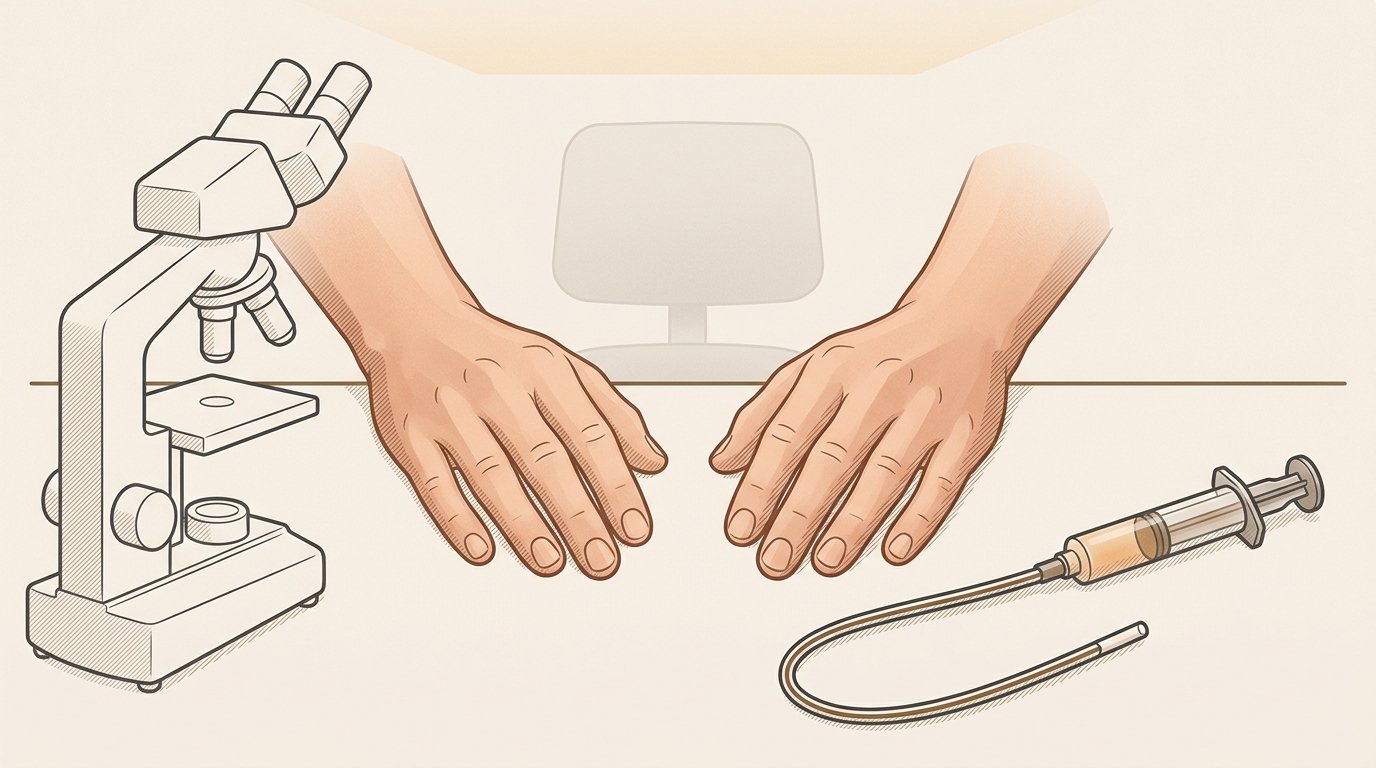
(continuation — embryologist at workstation, instruments laid out)
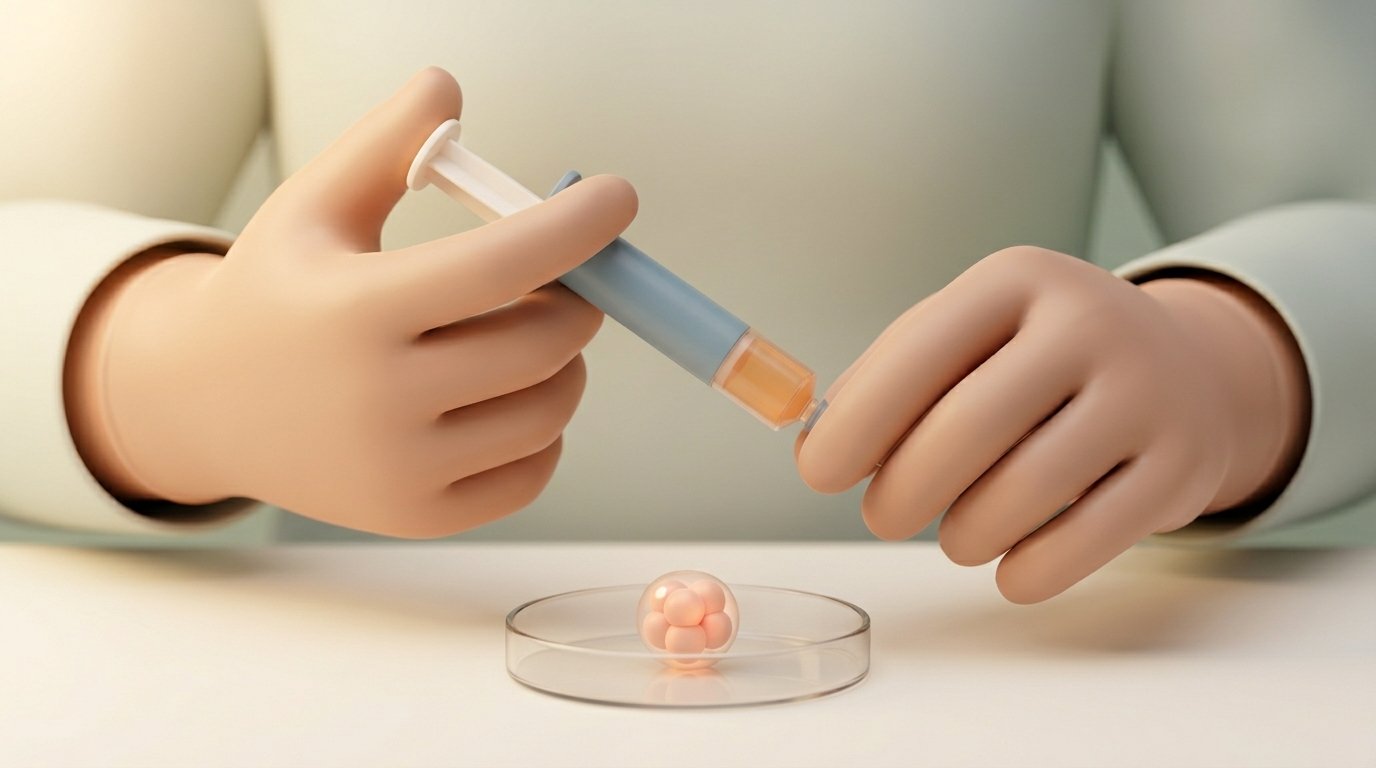
Wider view pulling back from Scene 7 — both hands visible on lab surface, microscope at left, catheter-syringe assembly laid out at right, organized and ready.
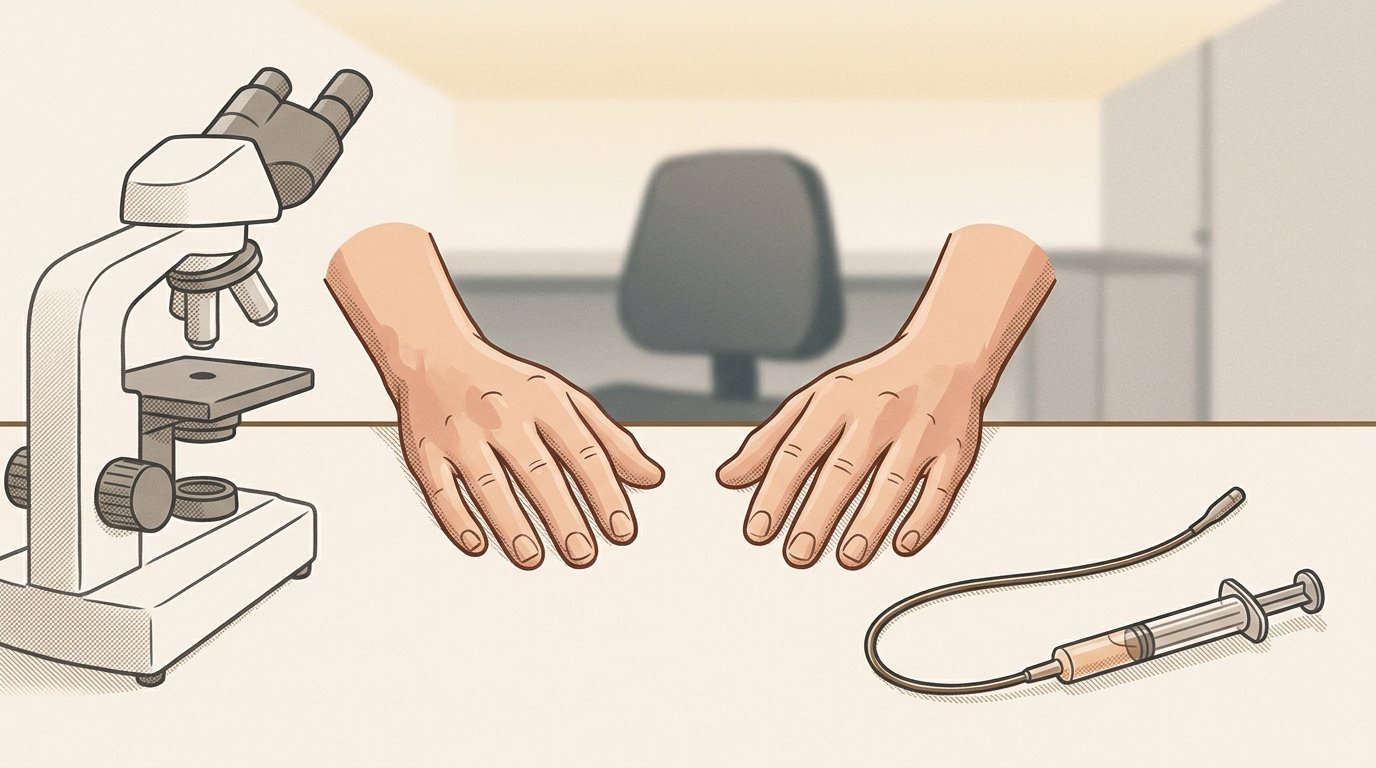
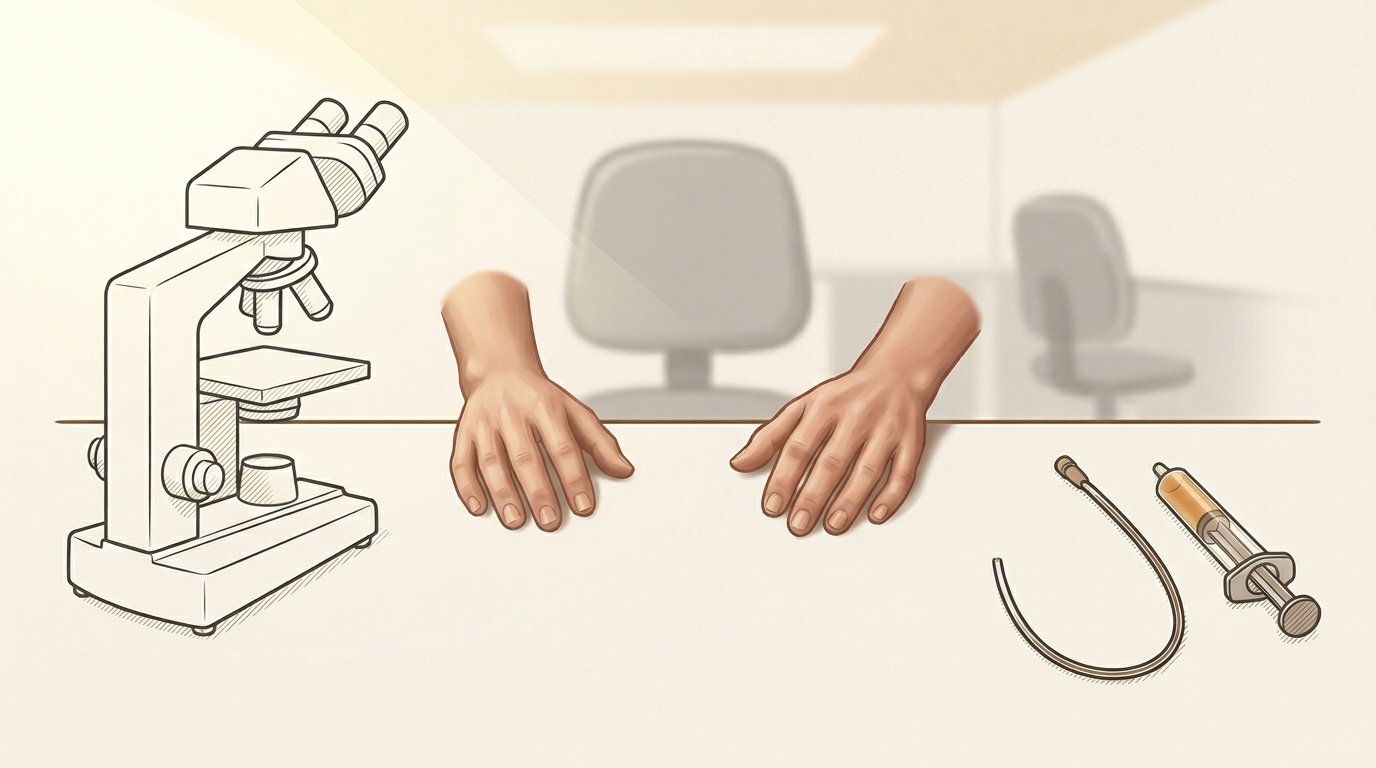
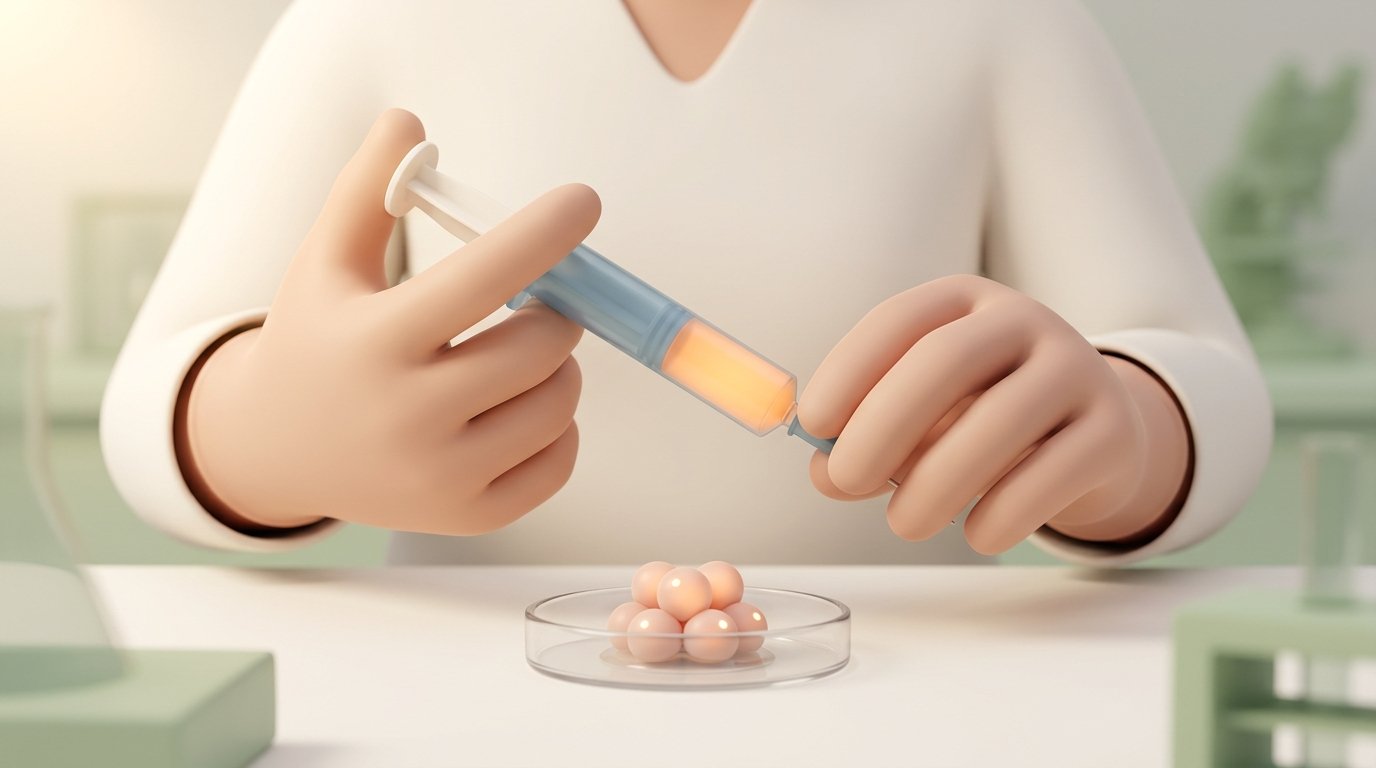
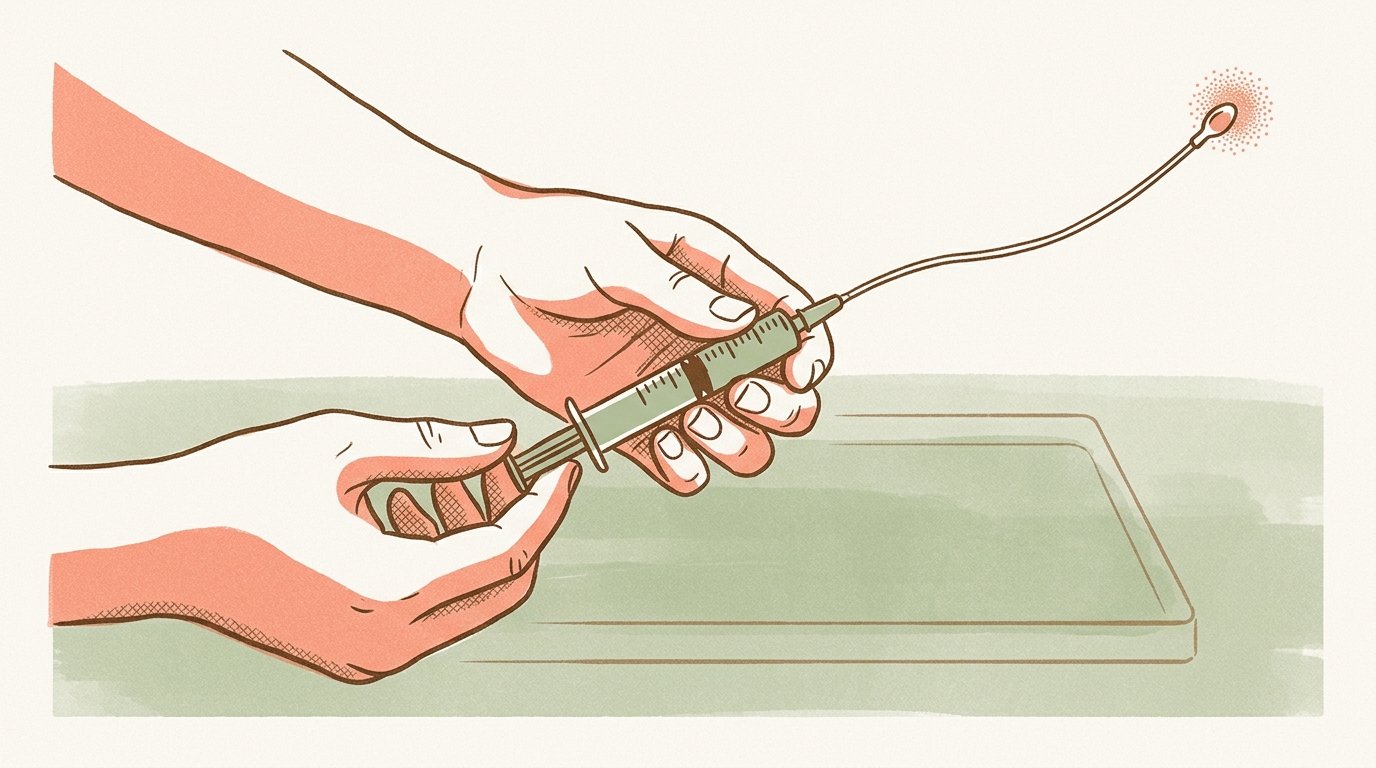
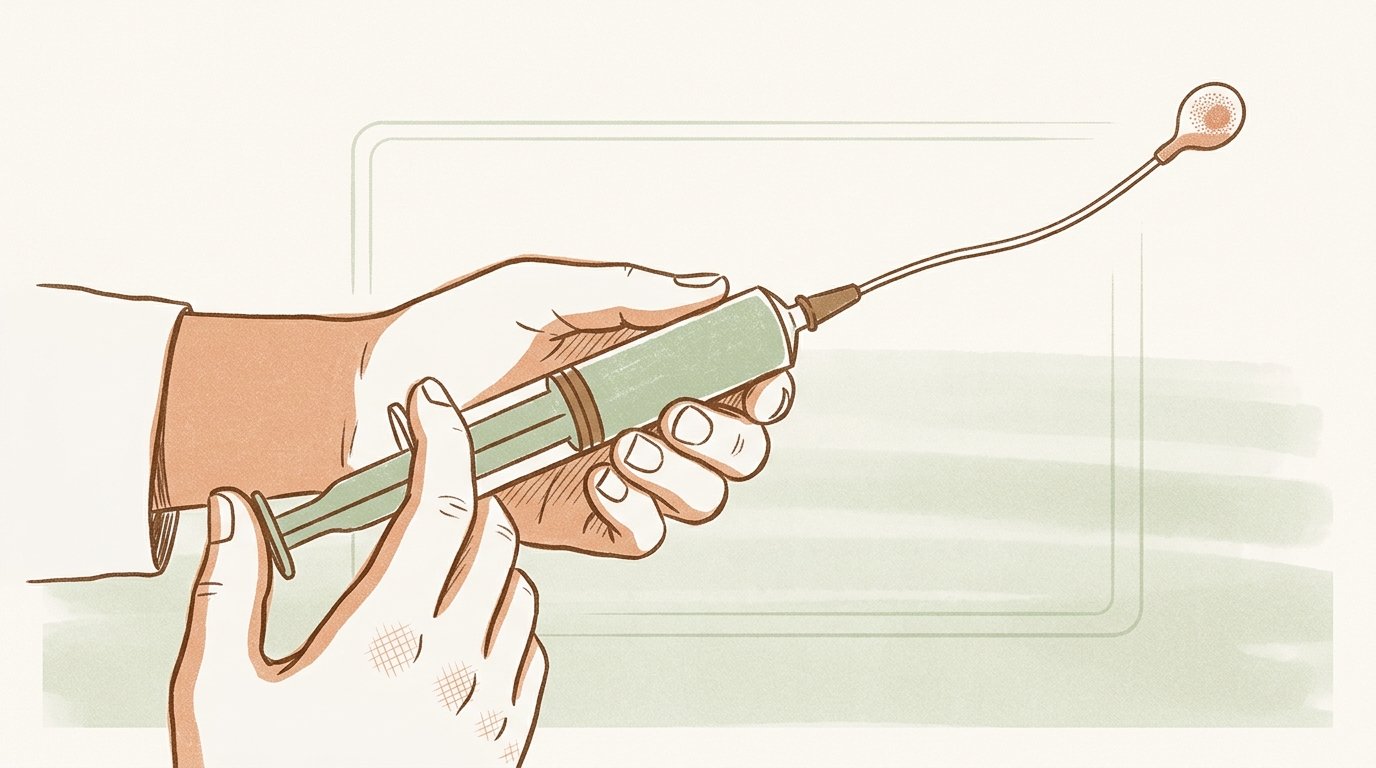
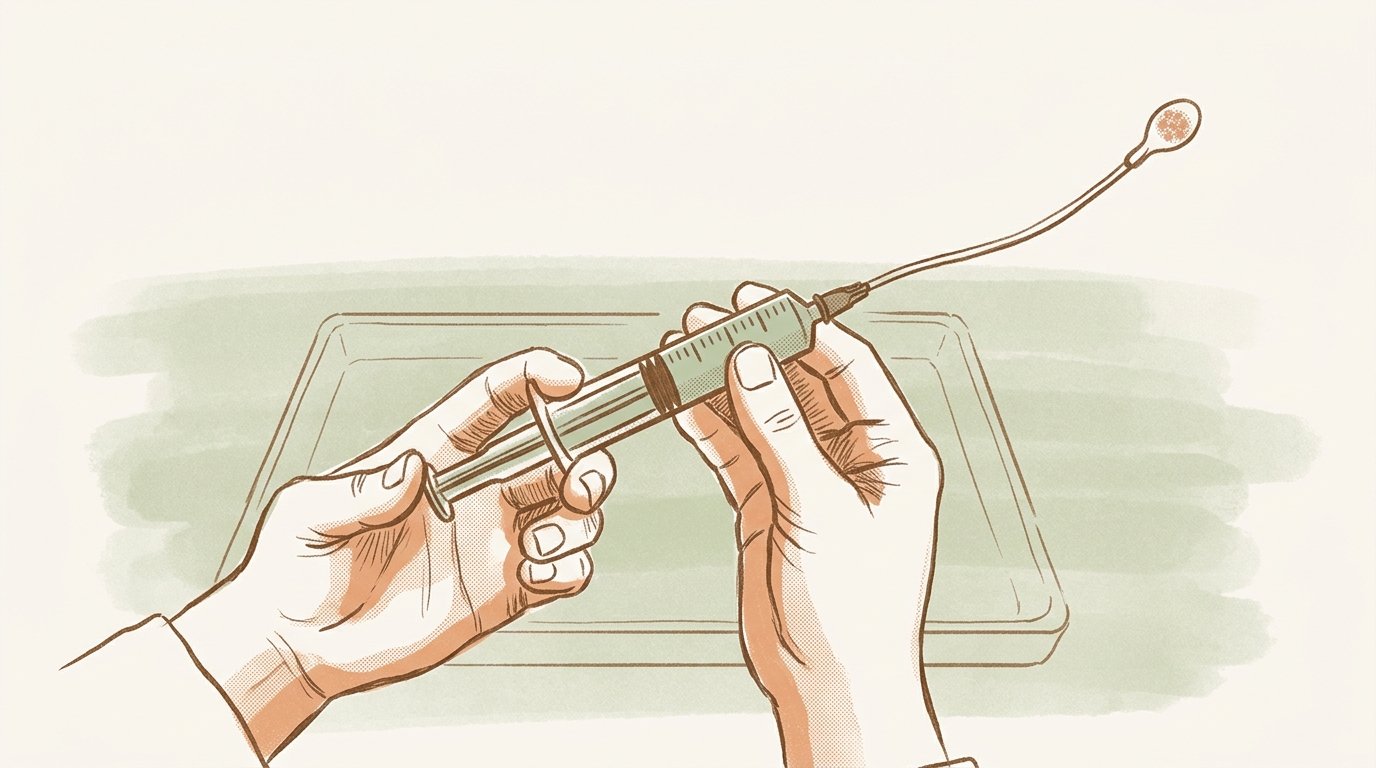
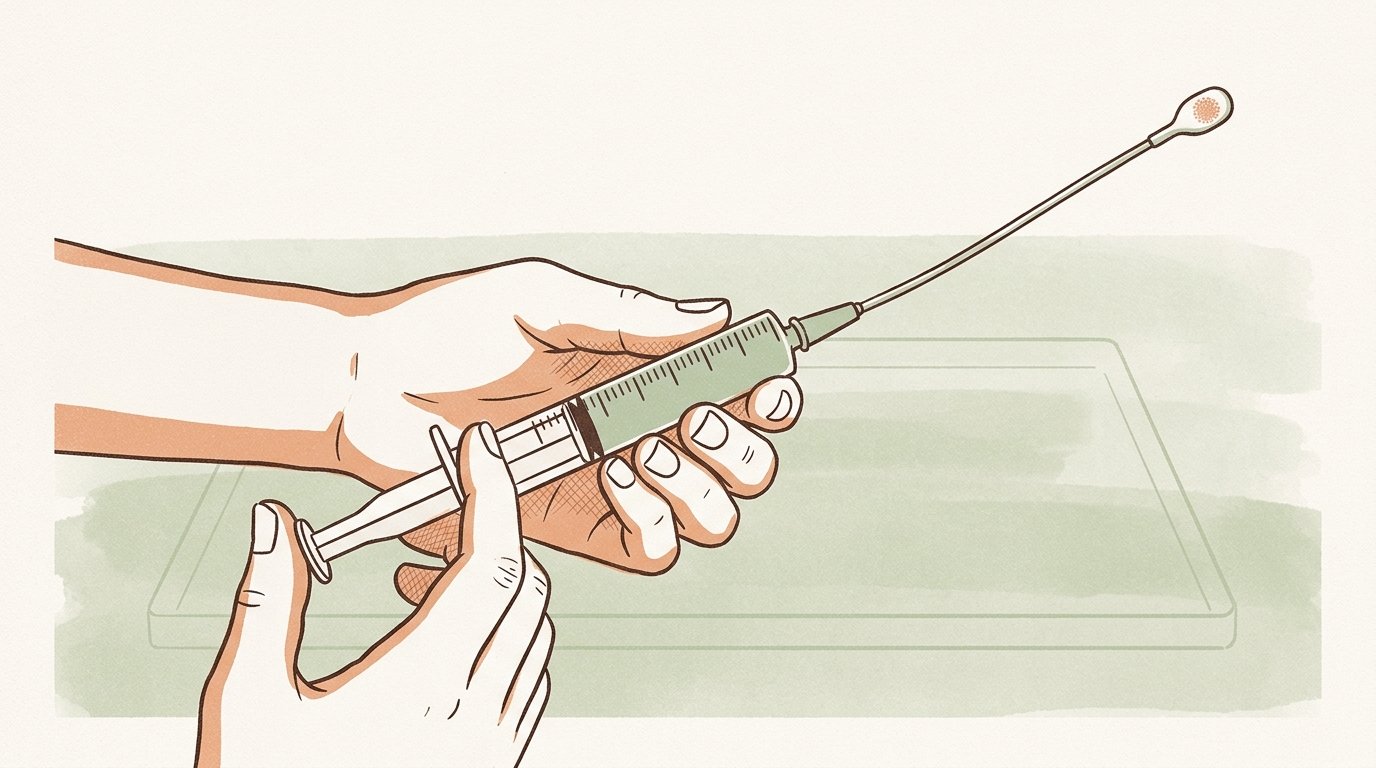
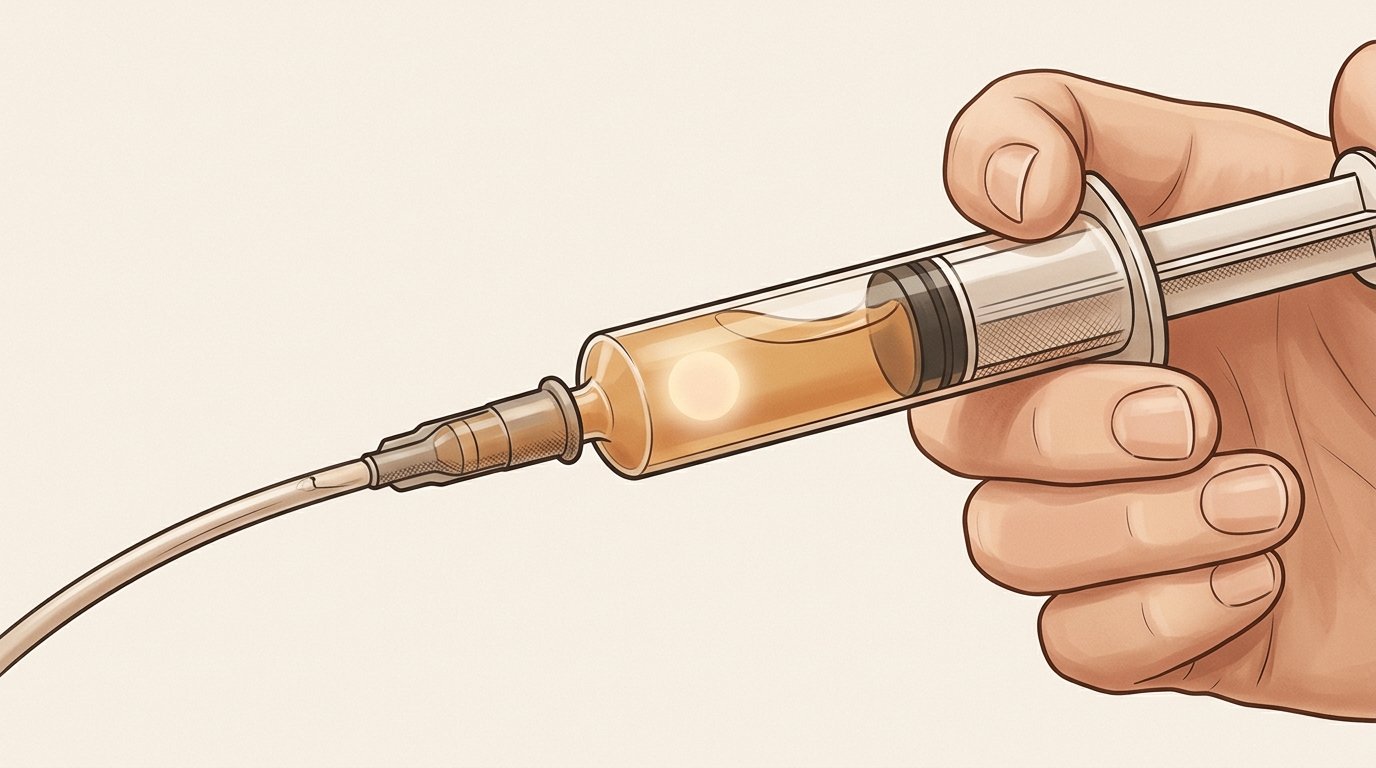
Using a small syringe, the embryologist draws the embryo and a small amount of culture media into the thin, flexible transfer catheter.
Close-up precision — right hand gripping syringe, plunger pulling back, warm amber fluid drawing into the clear barrel, embryo glow faintly visible entering the tube.
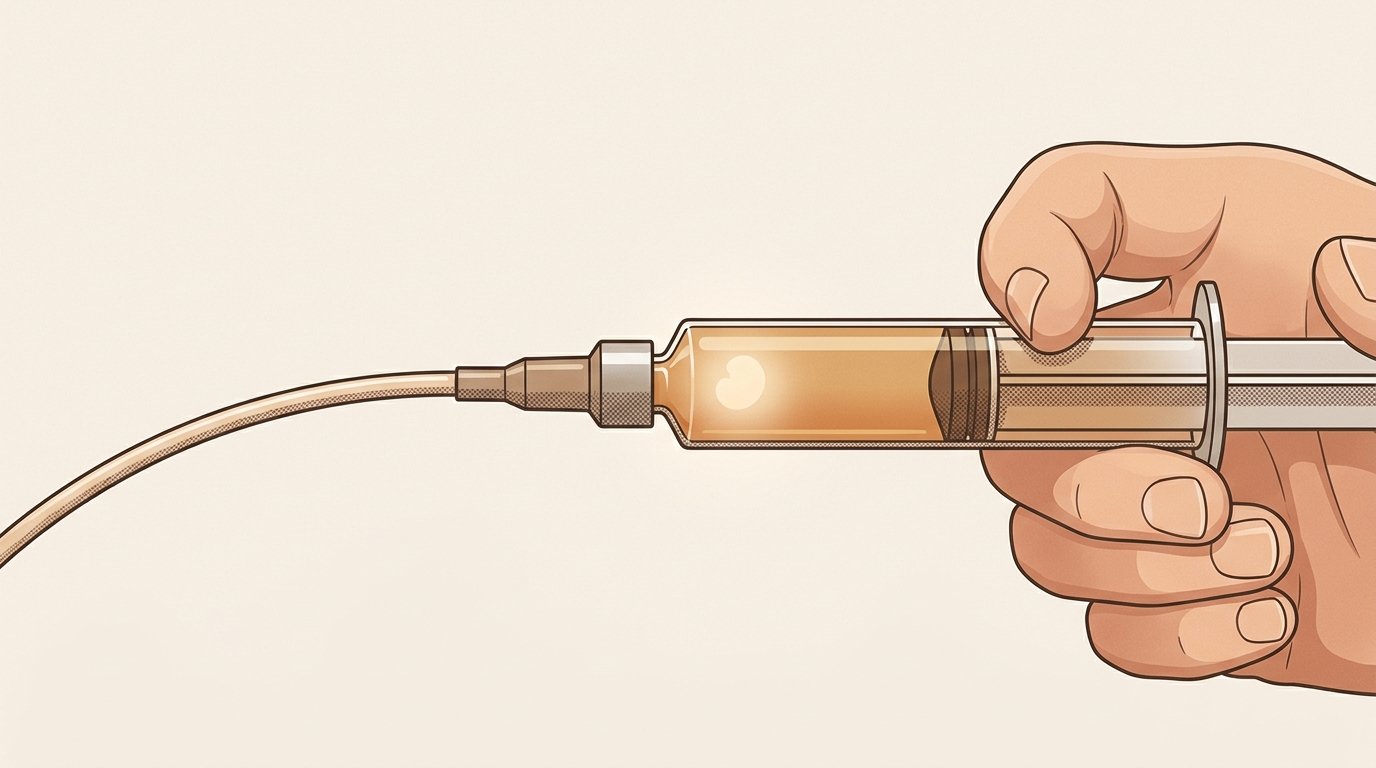
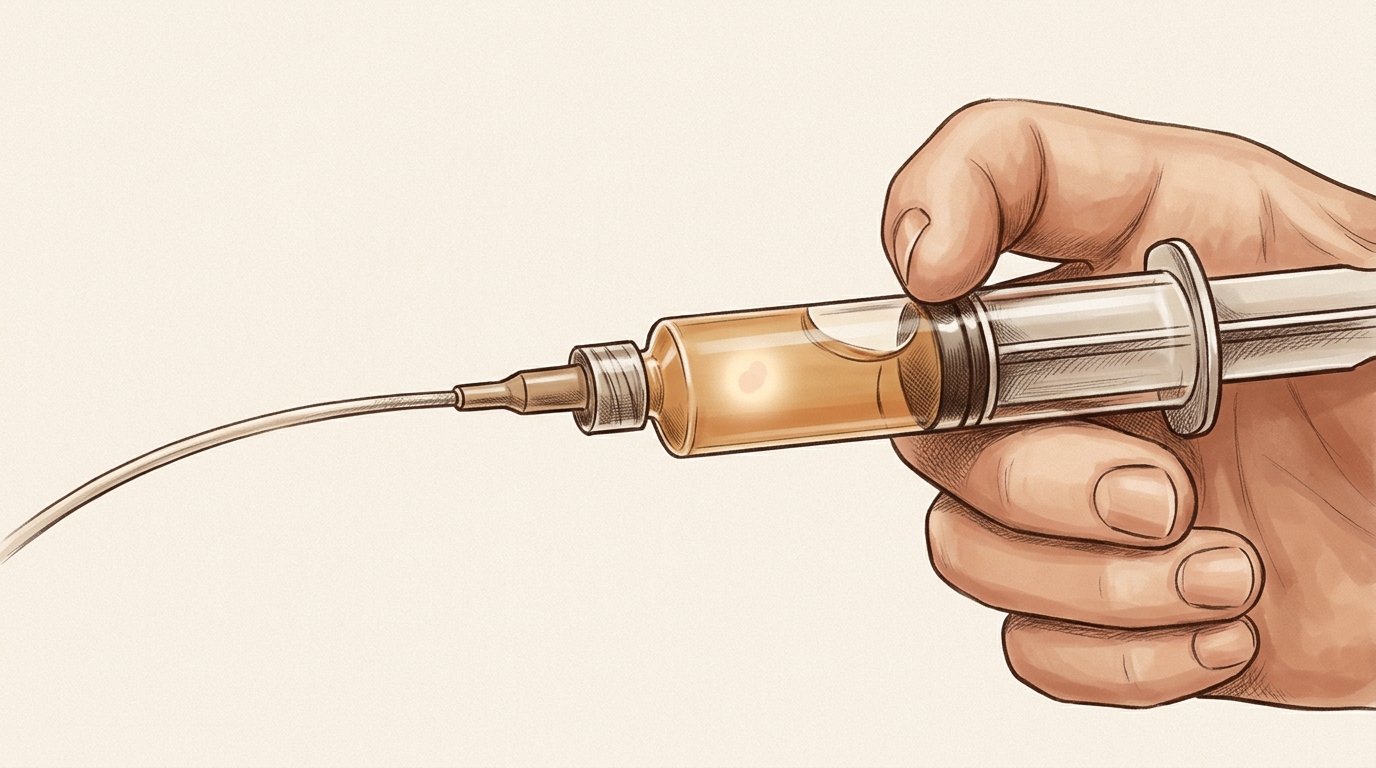
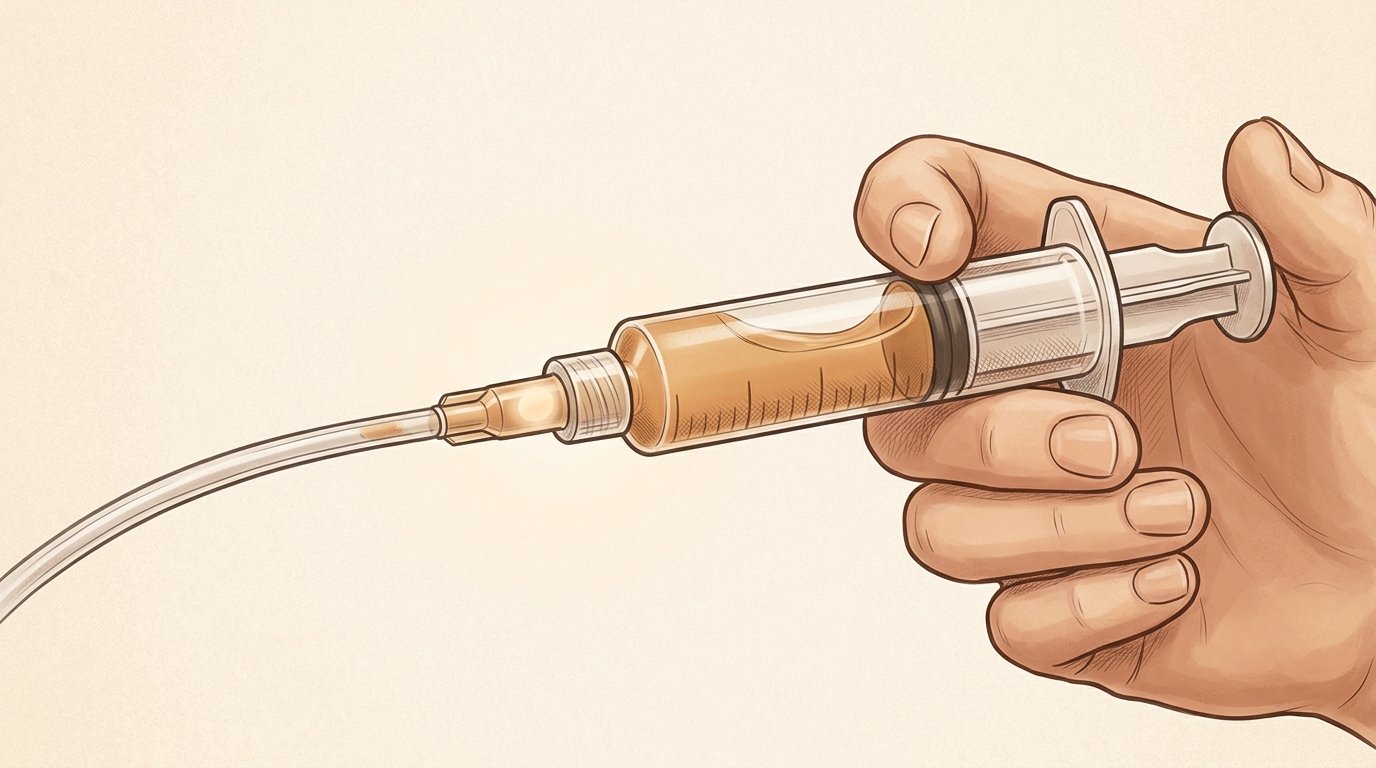
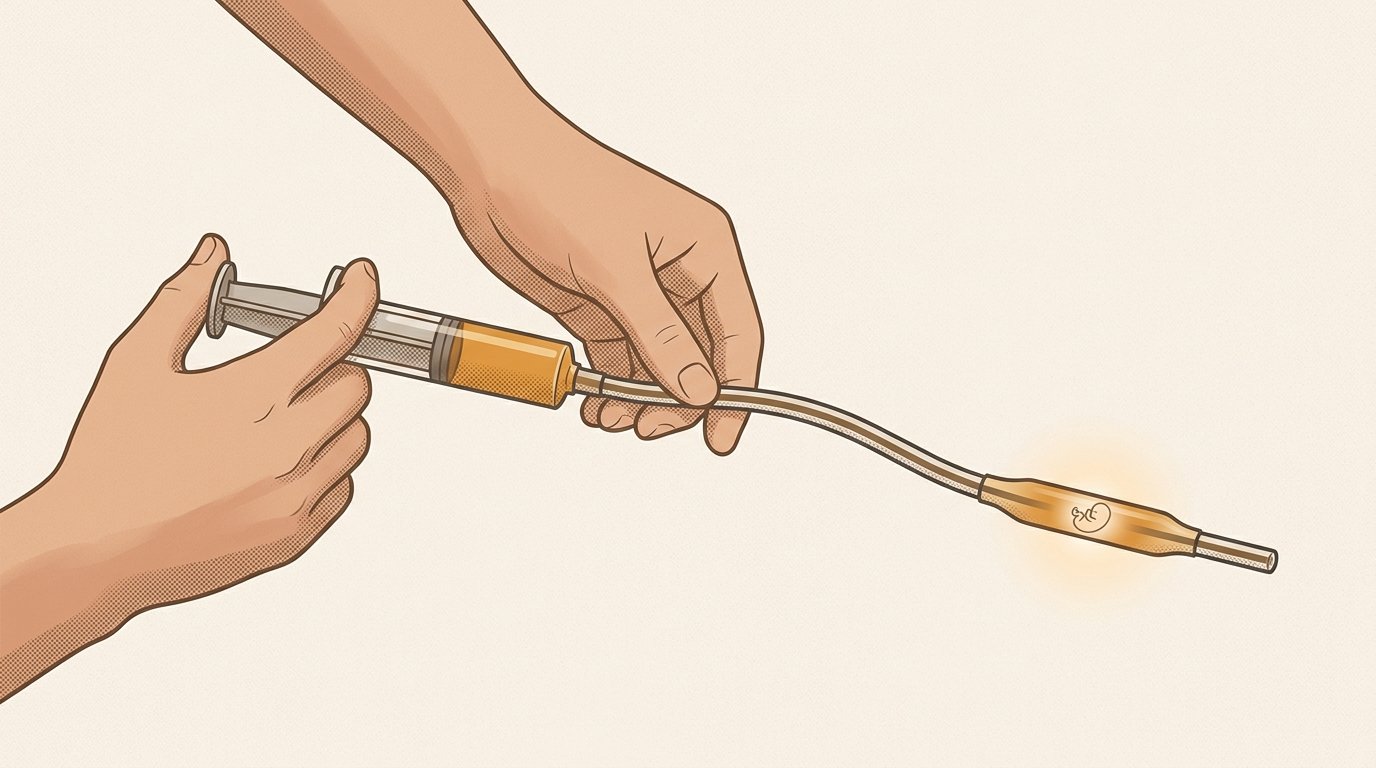
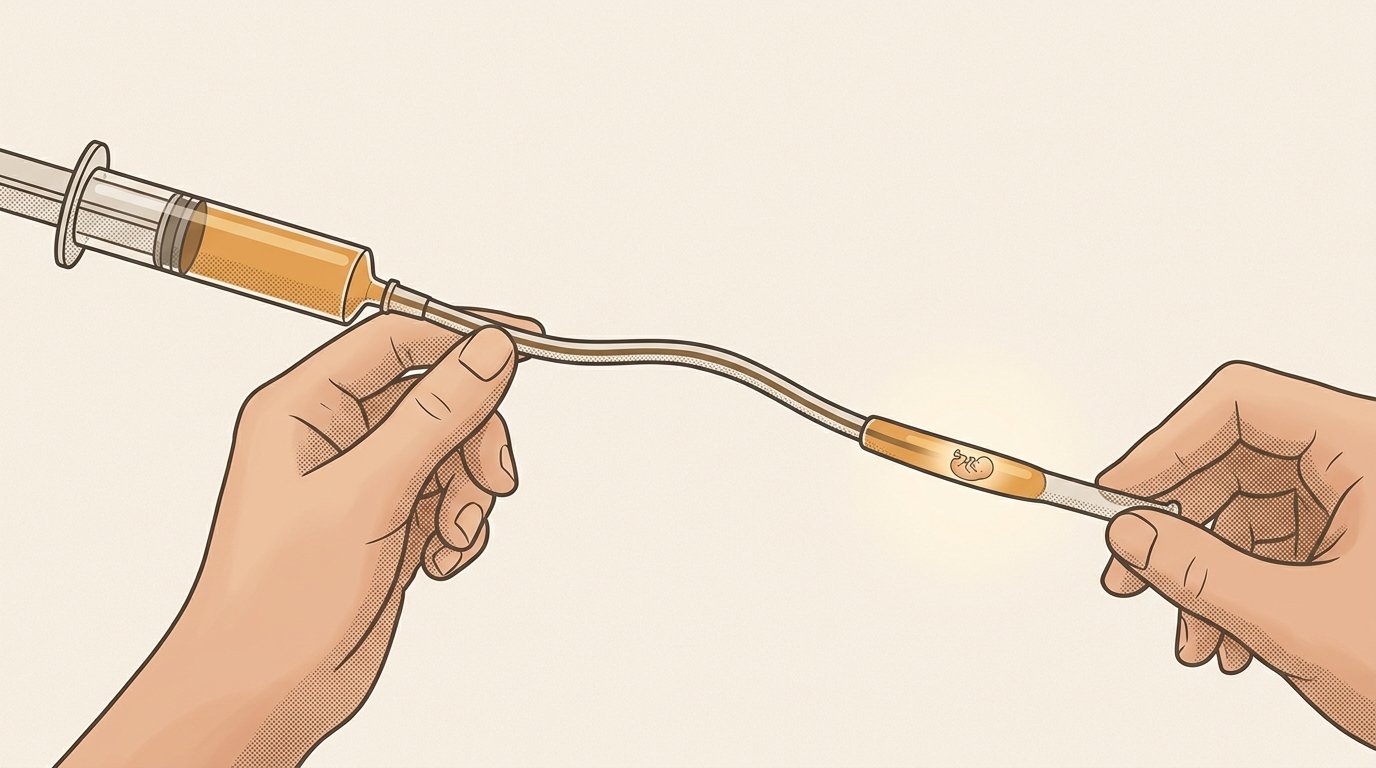
(continuation — catheter fully loaded, embryo and culture media in the catheter)
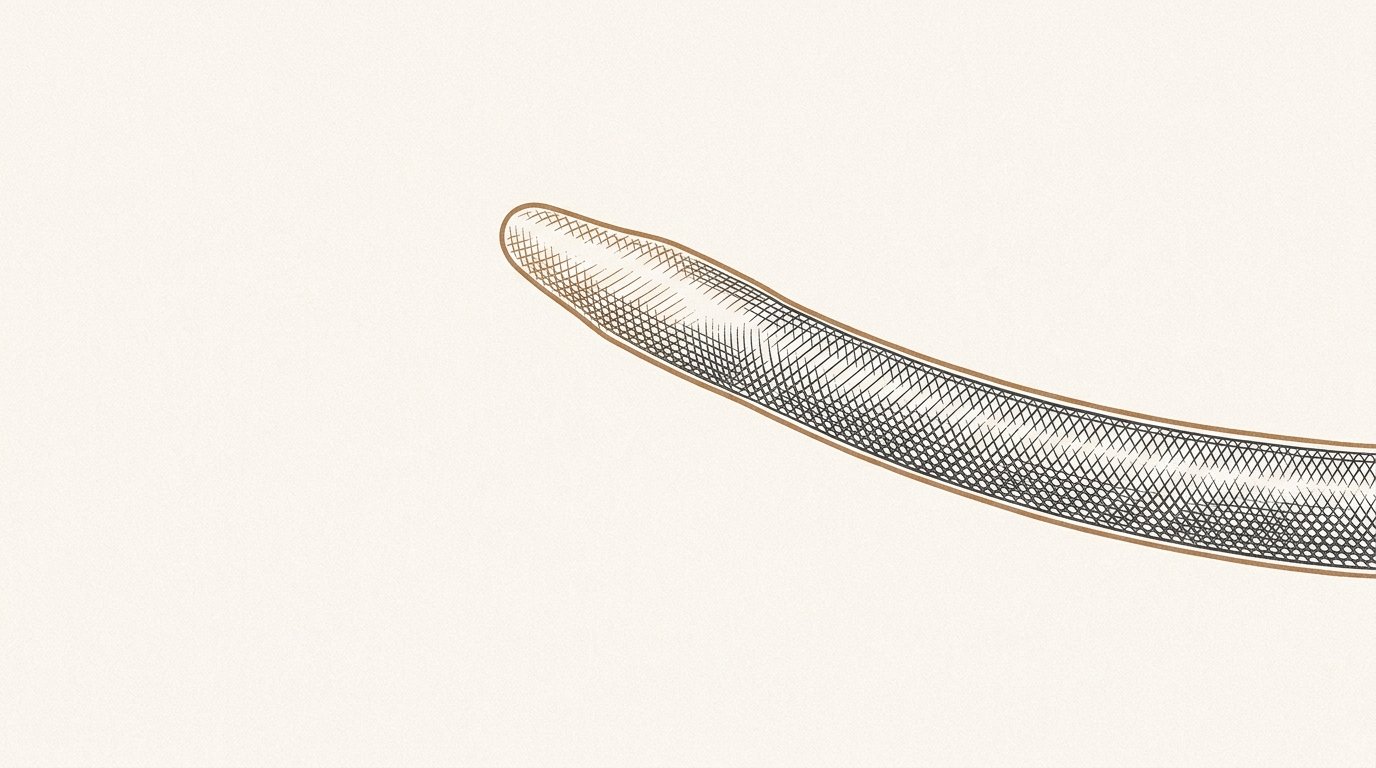
Reframe to show the full catheter assembly — both hands visible, embryo glow seated inside the tube near the distal tip, instrument ready and confident.
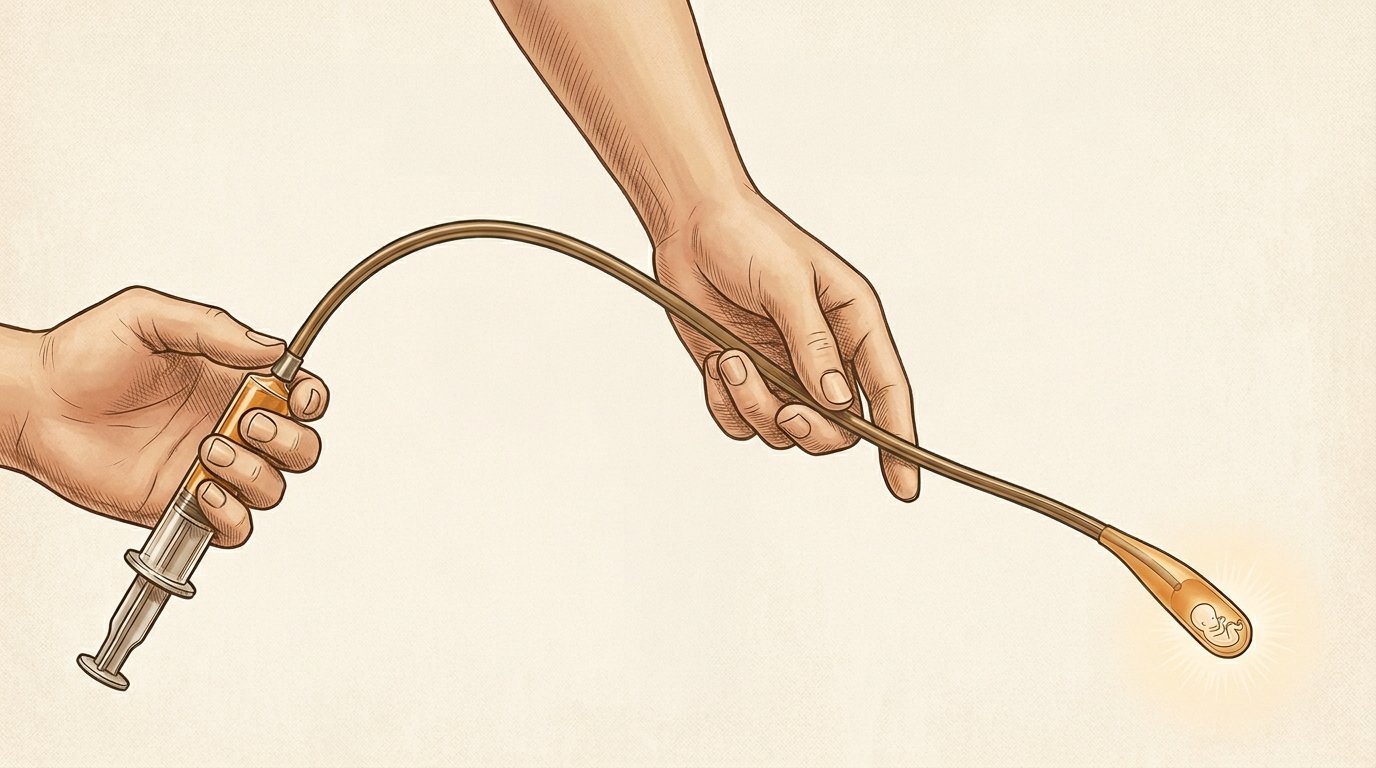
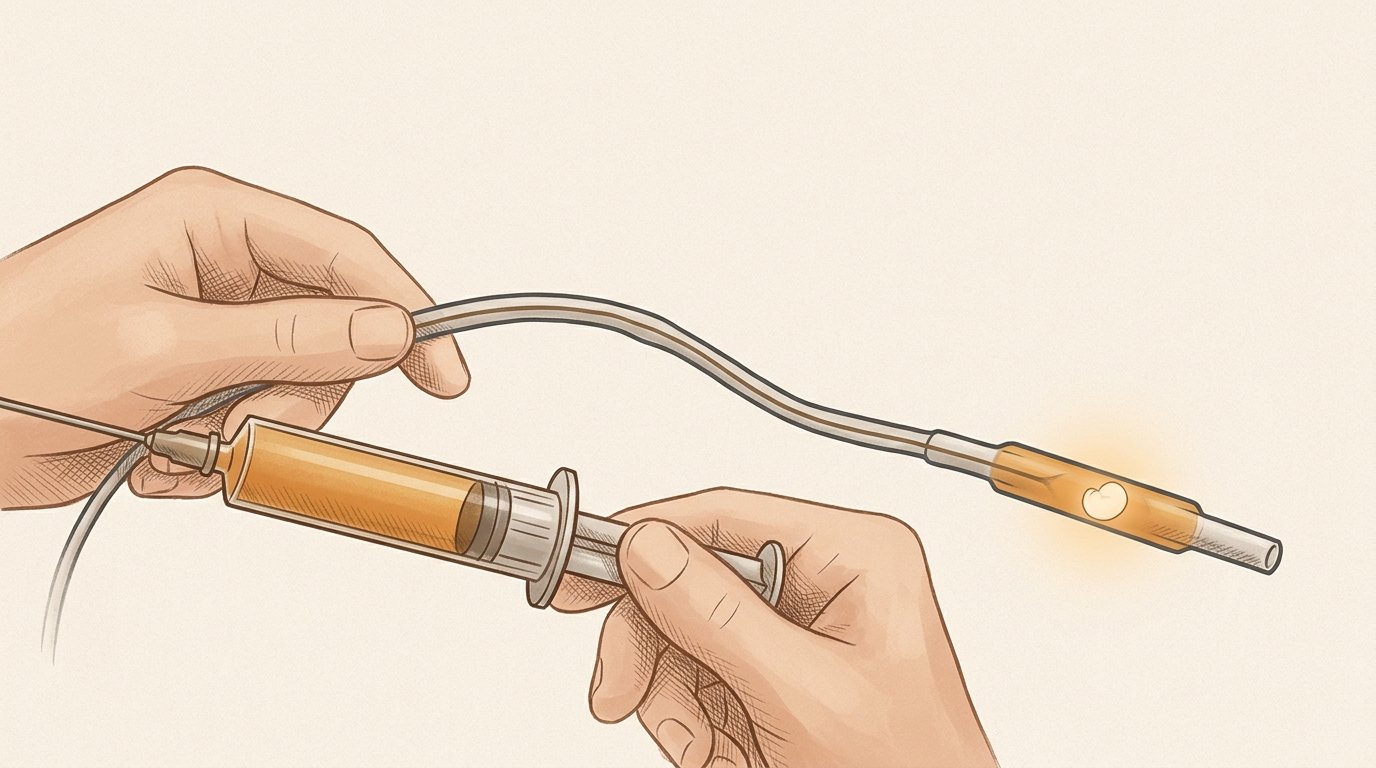
(transition beat — instrument detail before procedure begins)
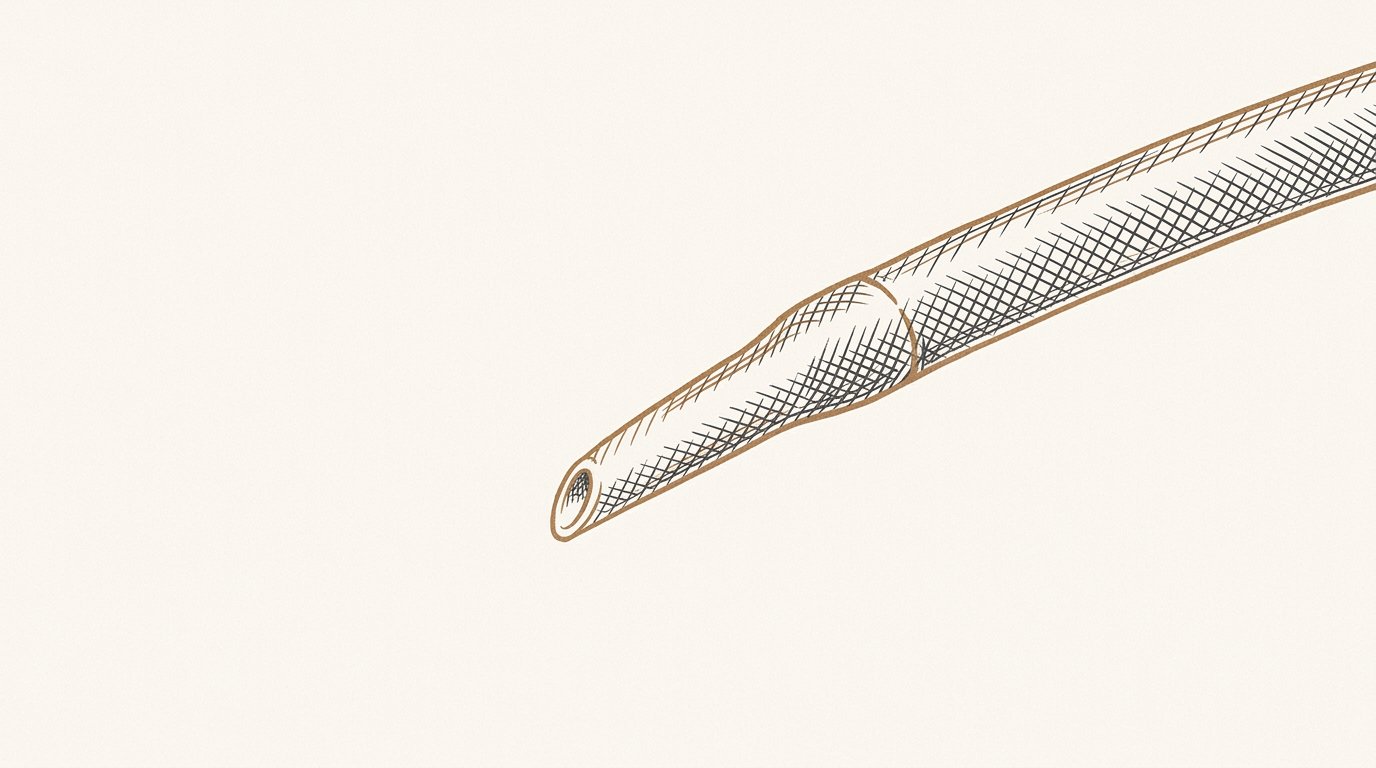
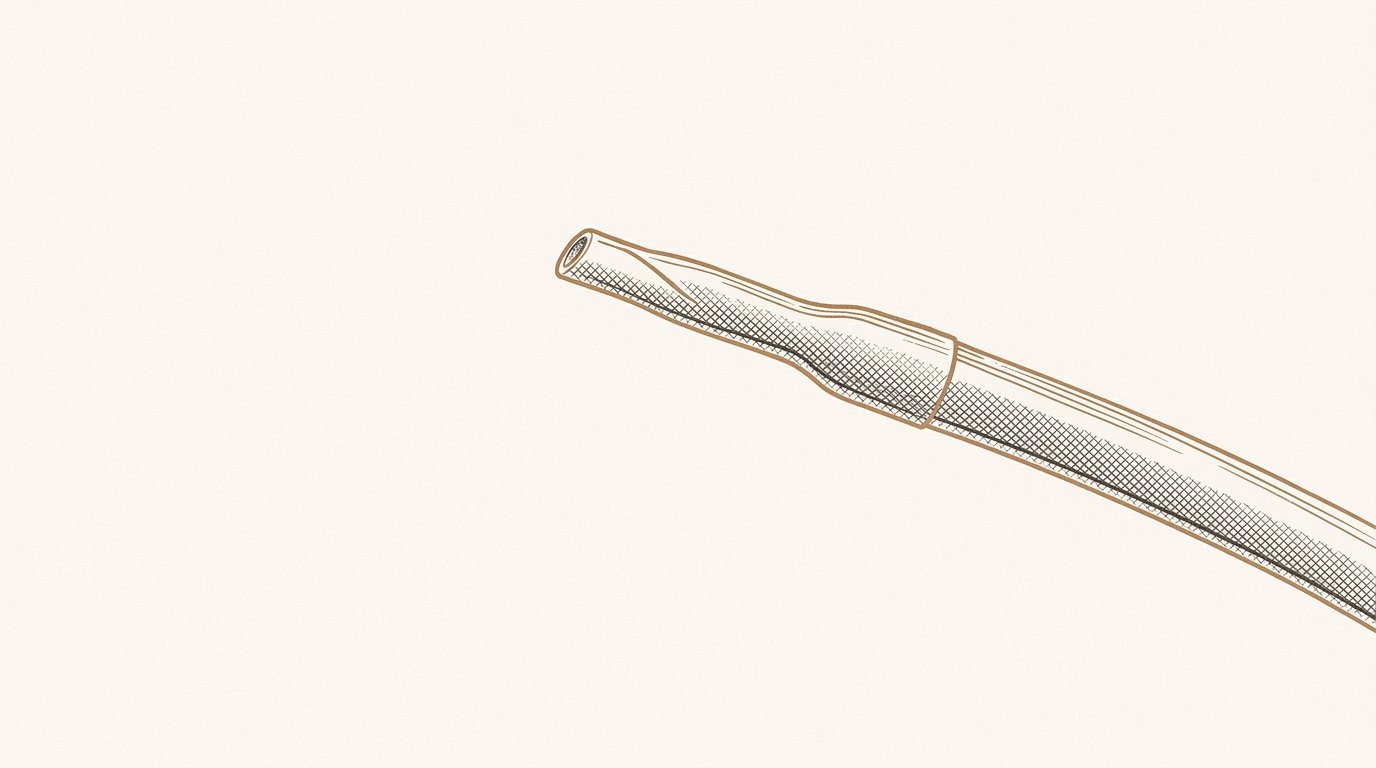
Extreme close-up of the catheter tip only — deliberately blunted, precise technical illustration, amber glow visible just behind the tip, pure stillness.
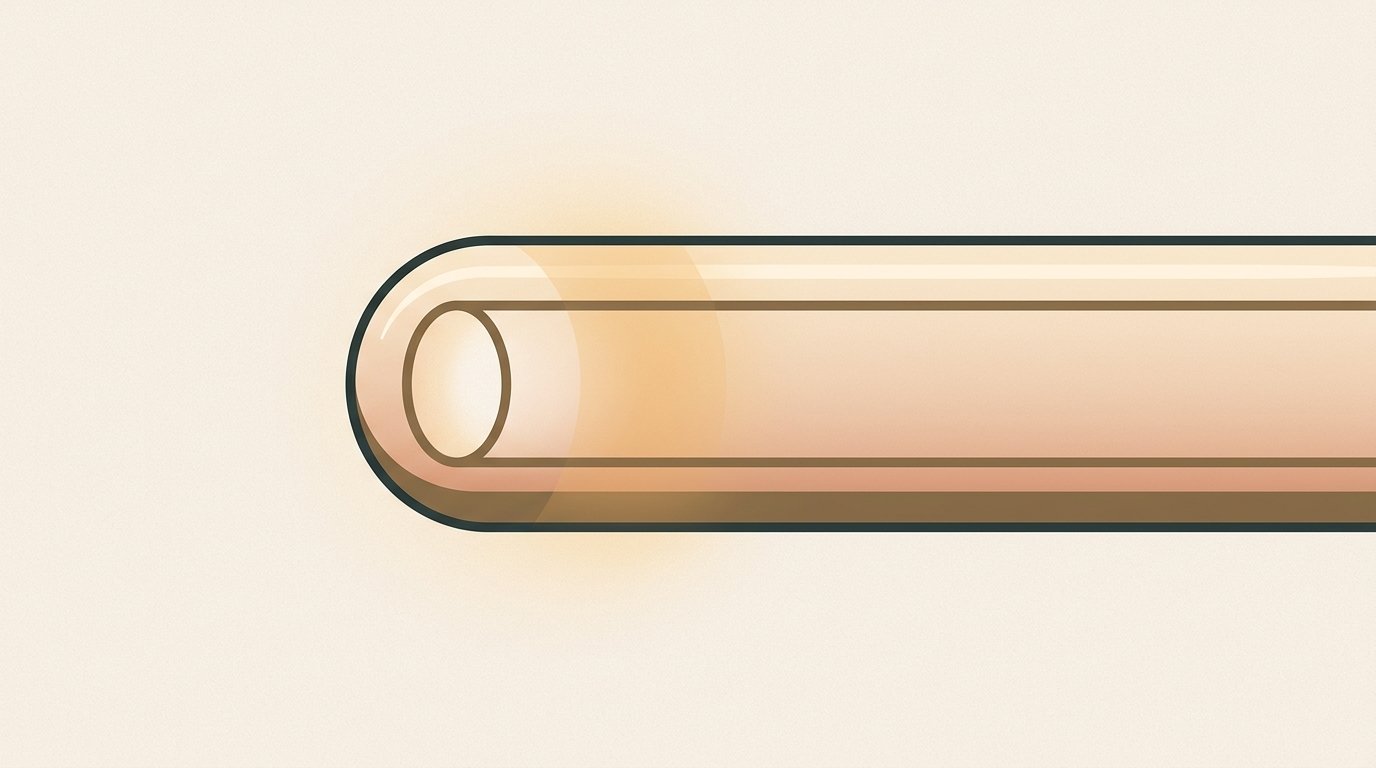
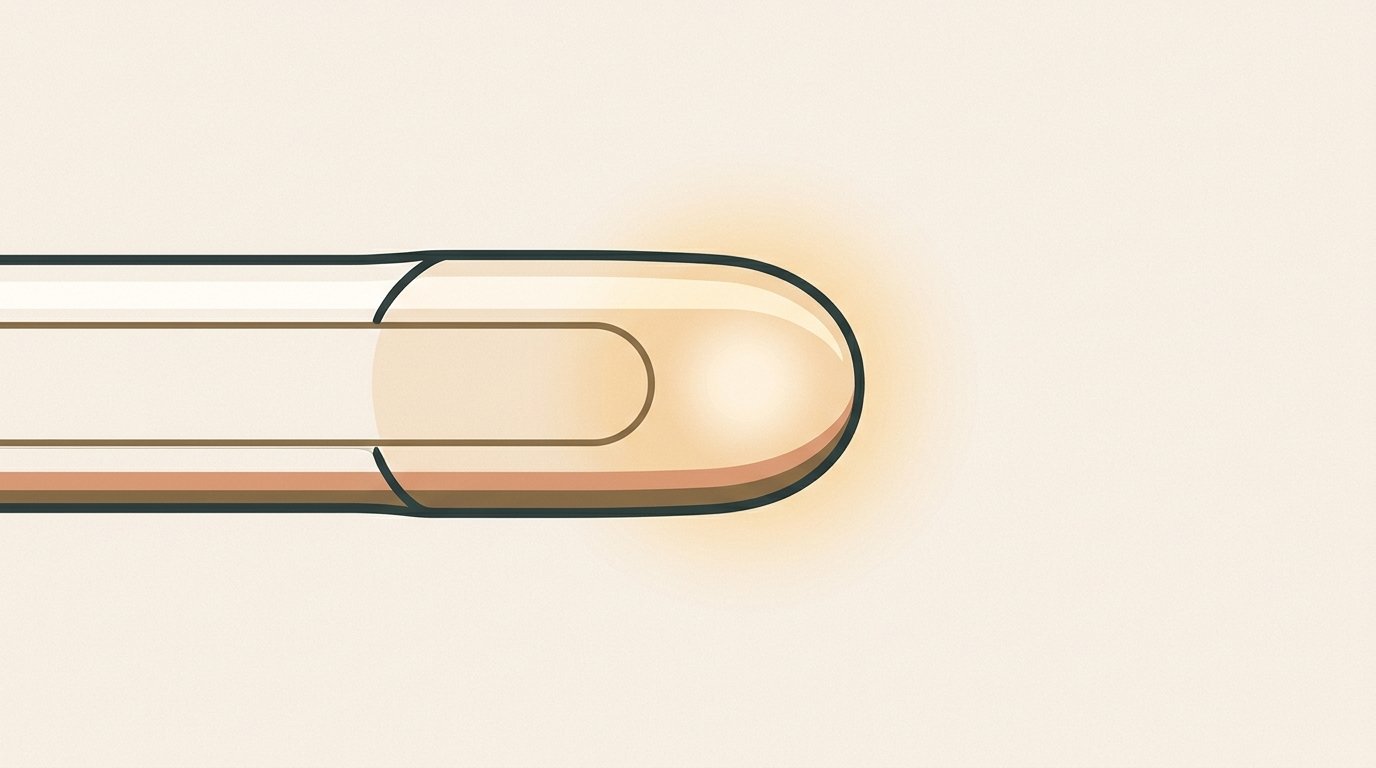
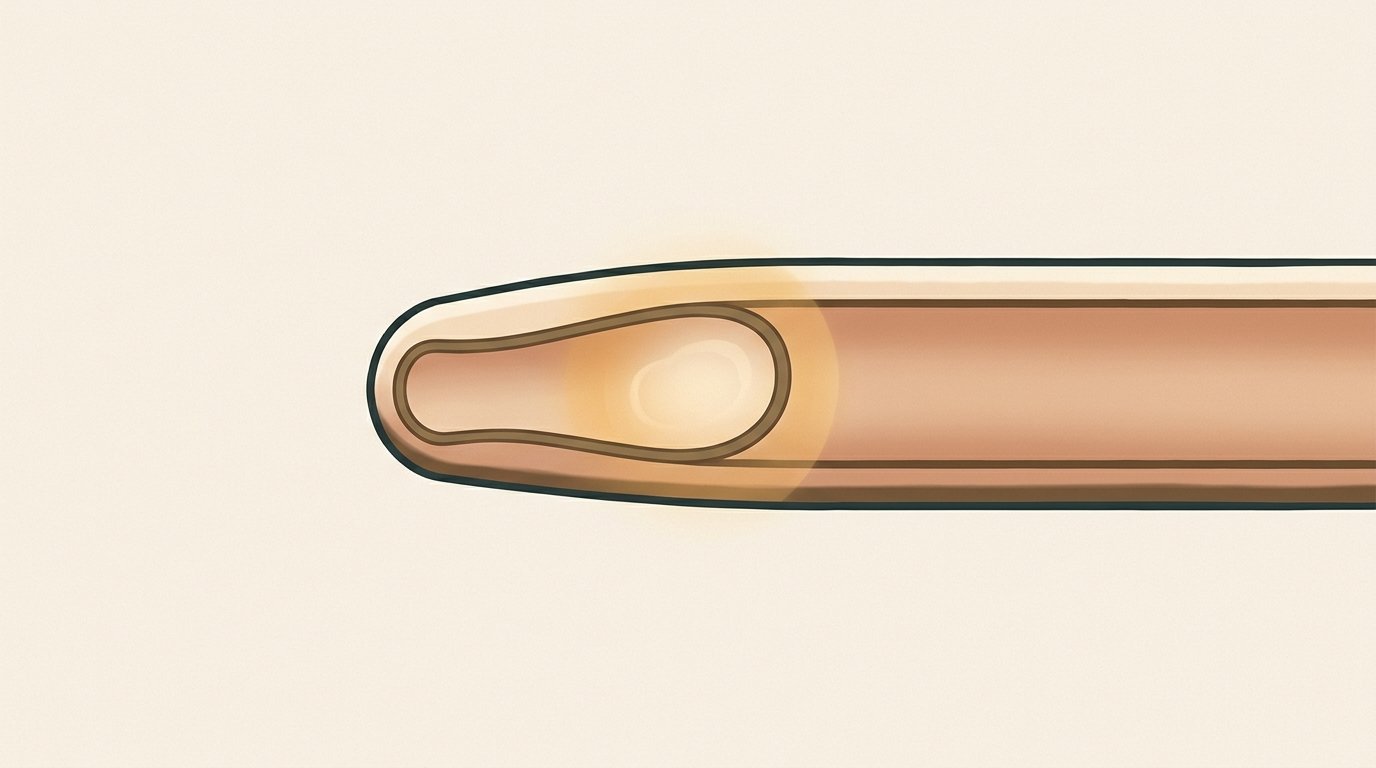
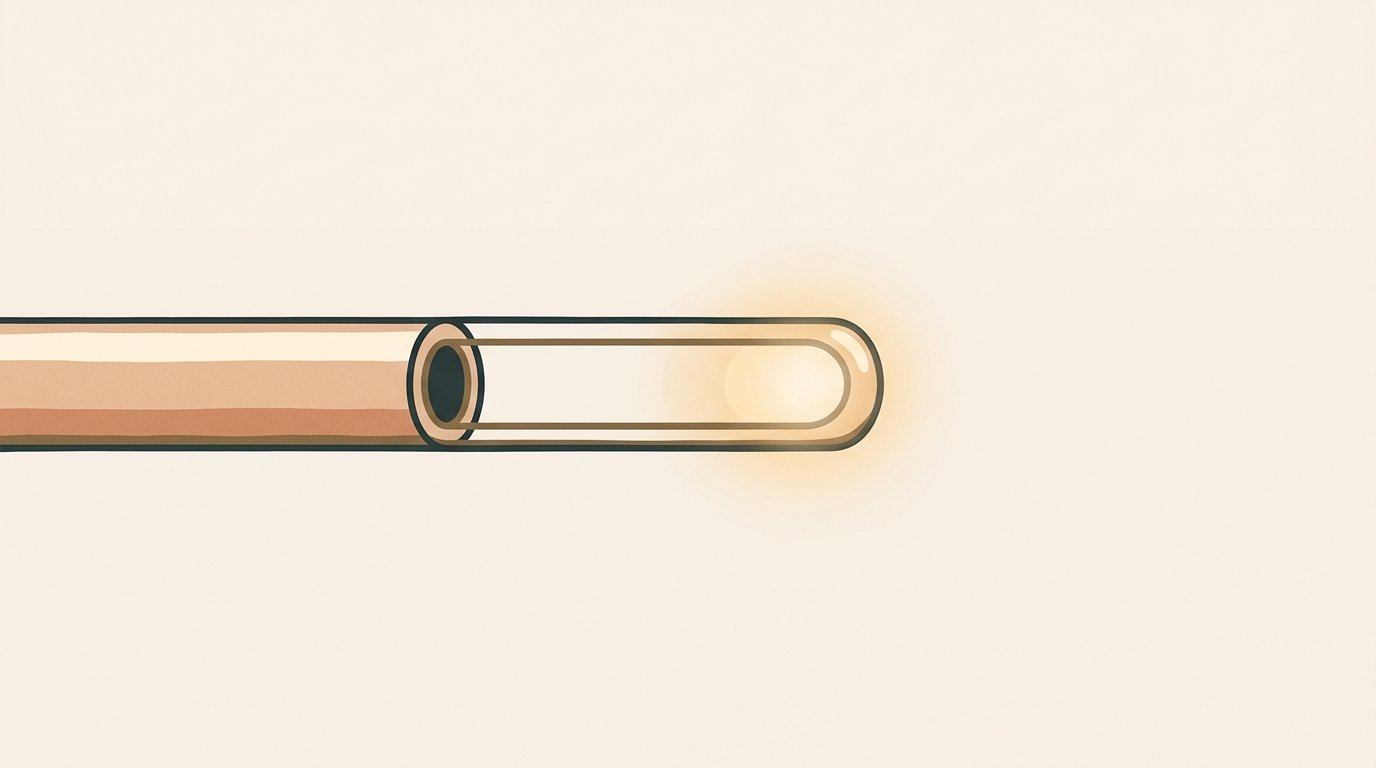
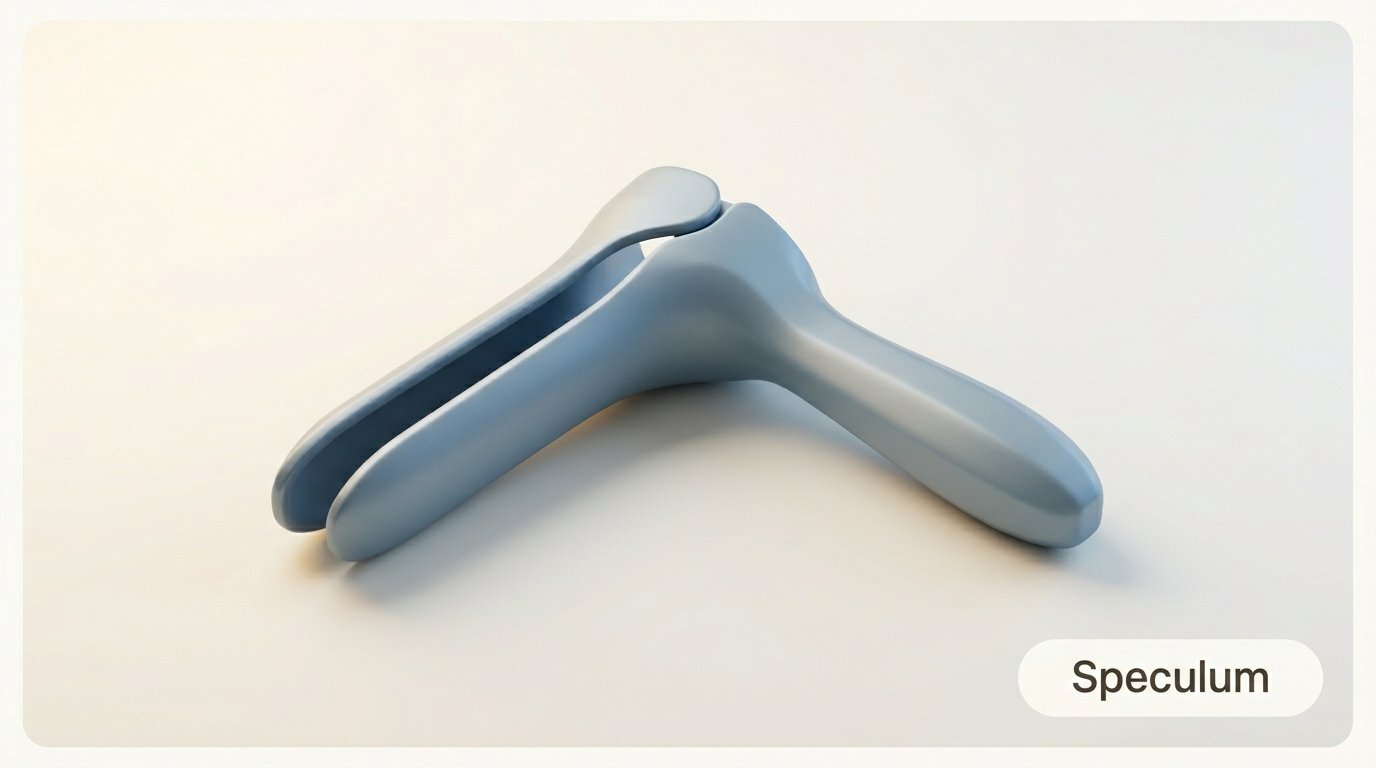
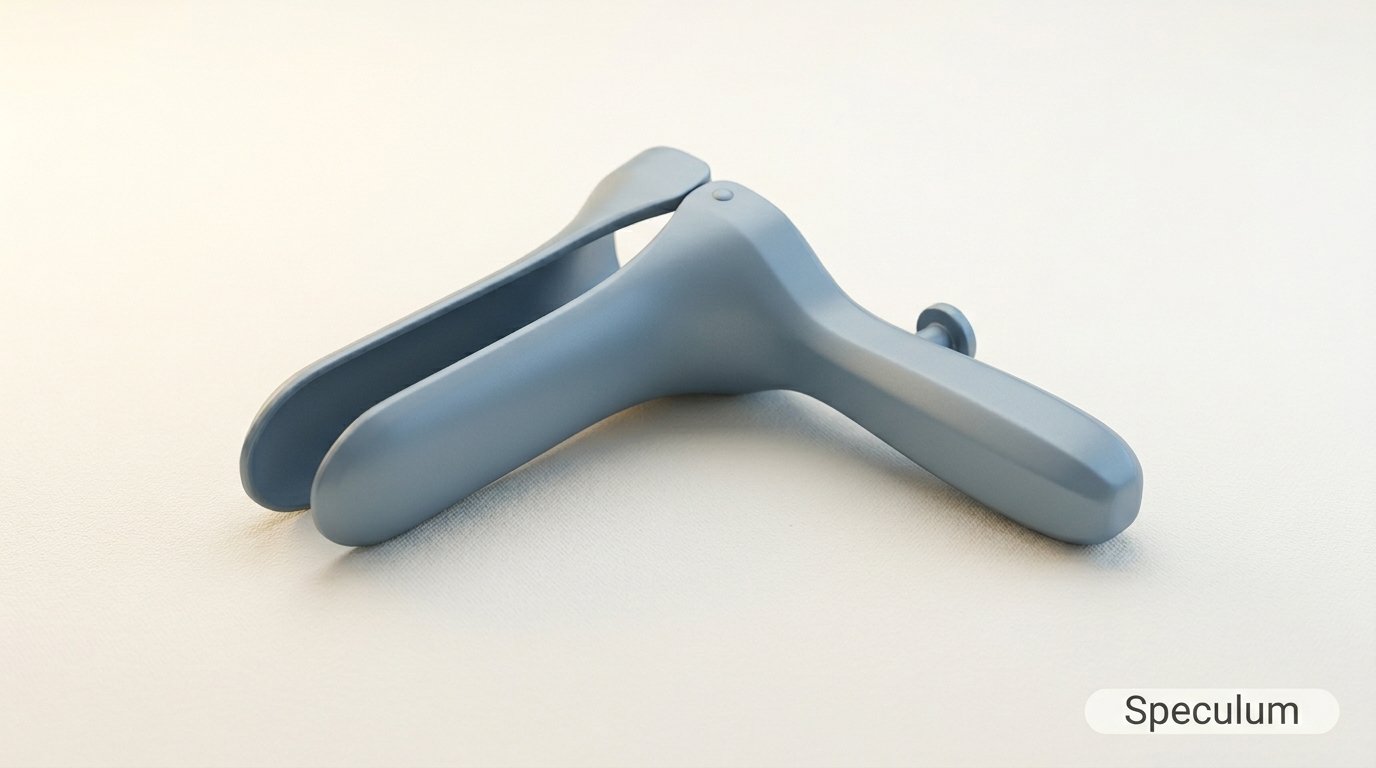
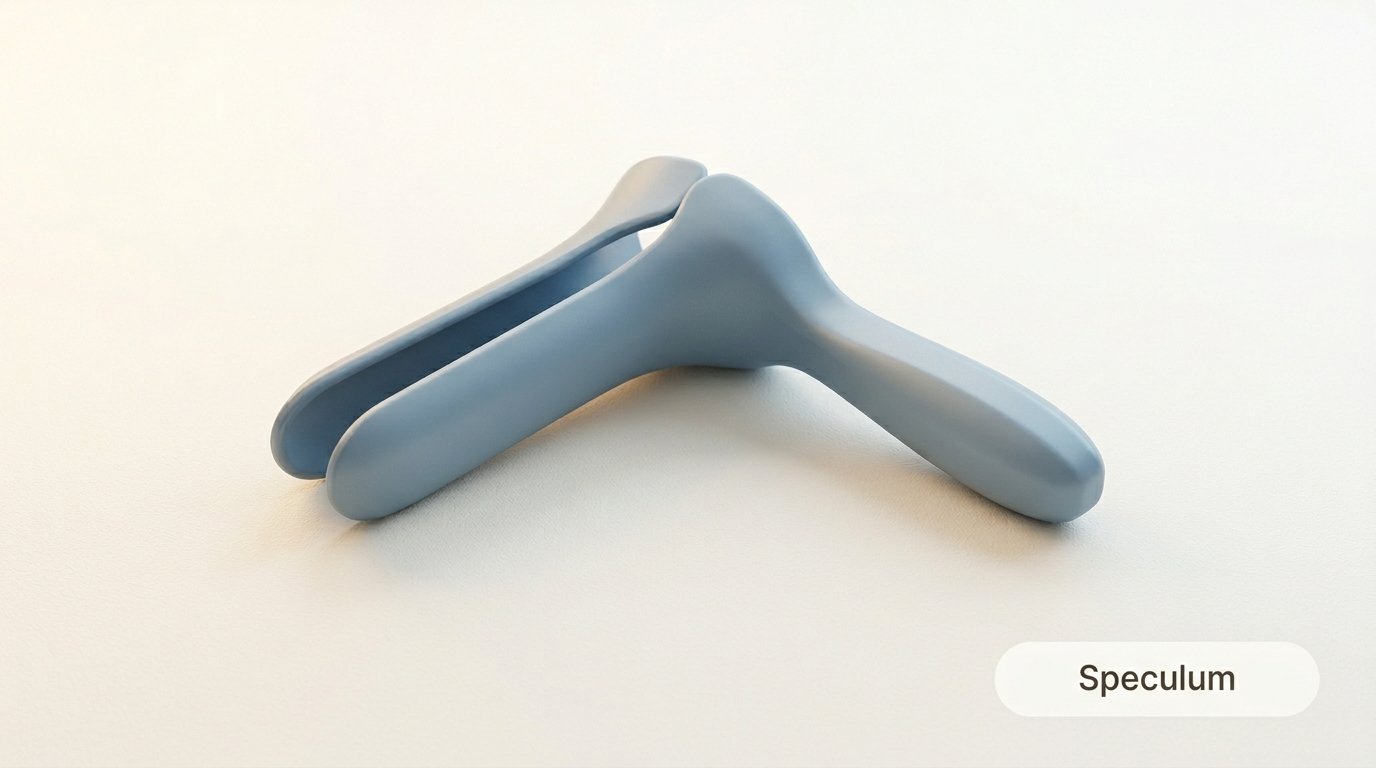
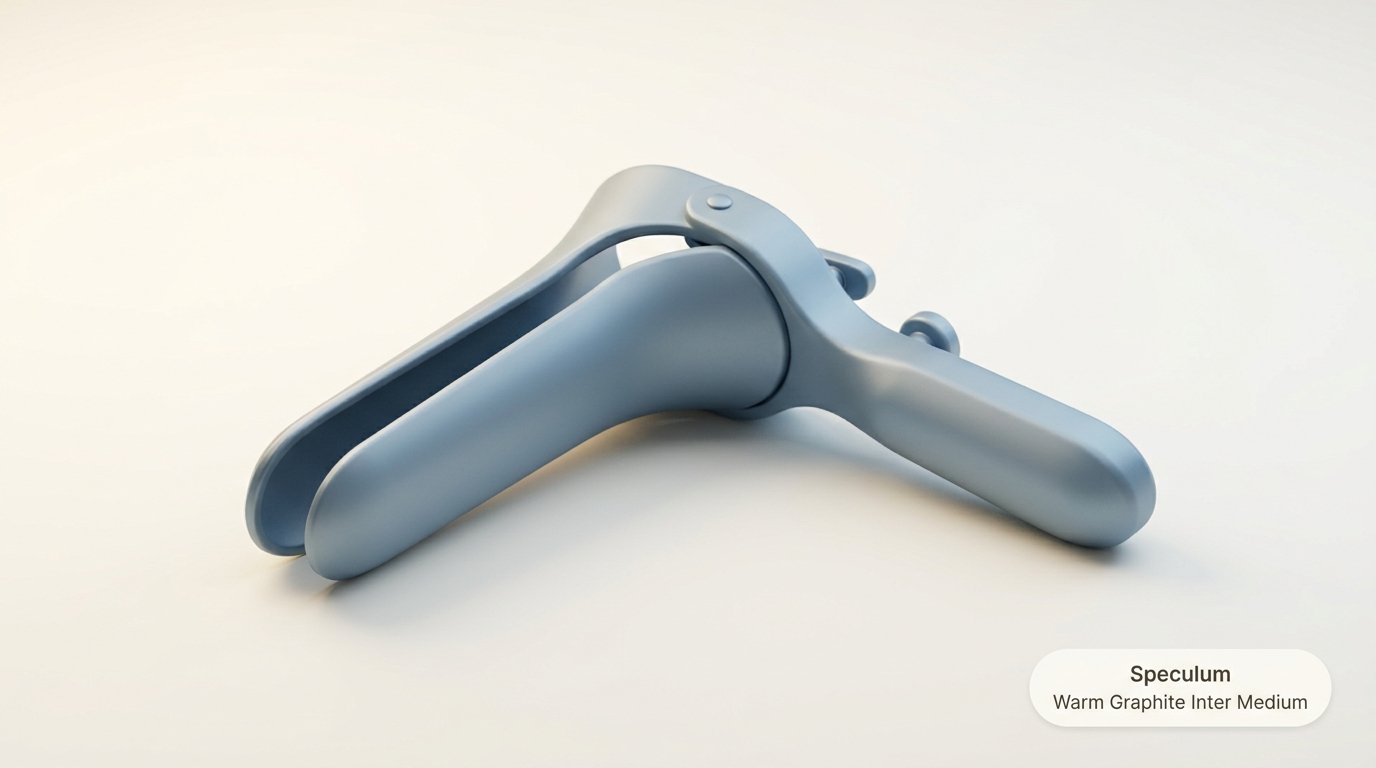
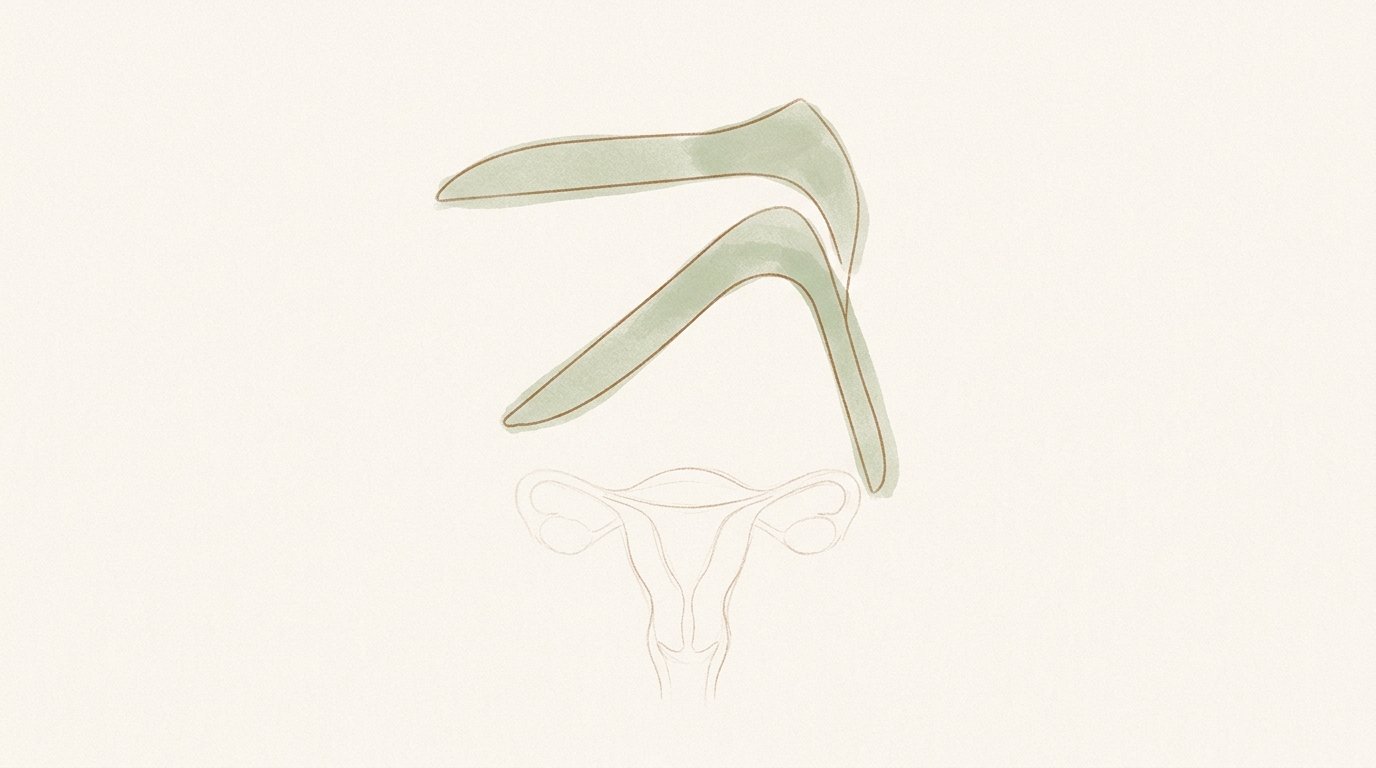
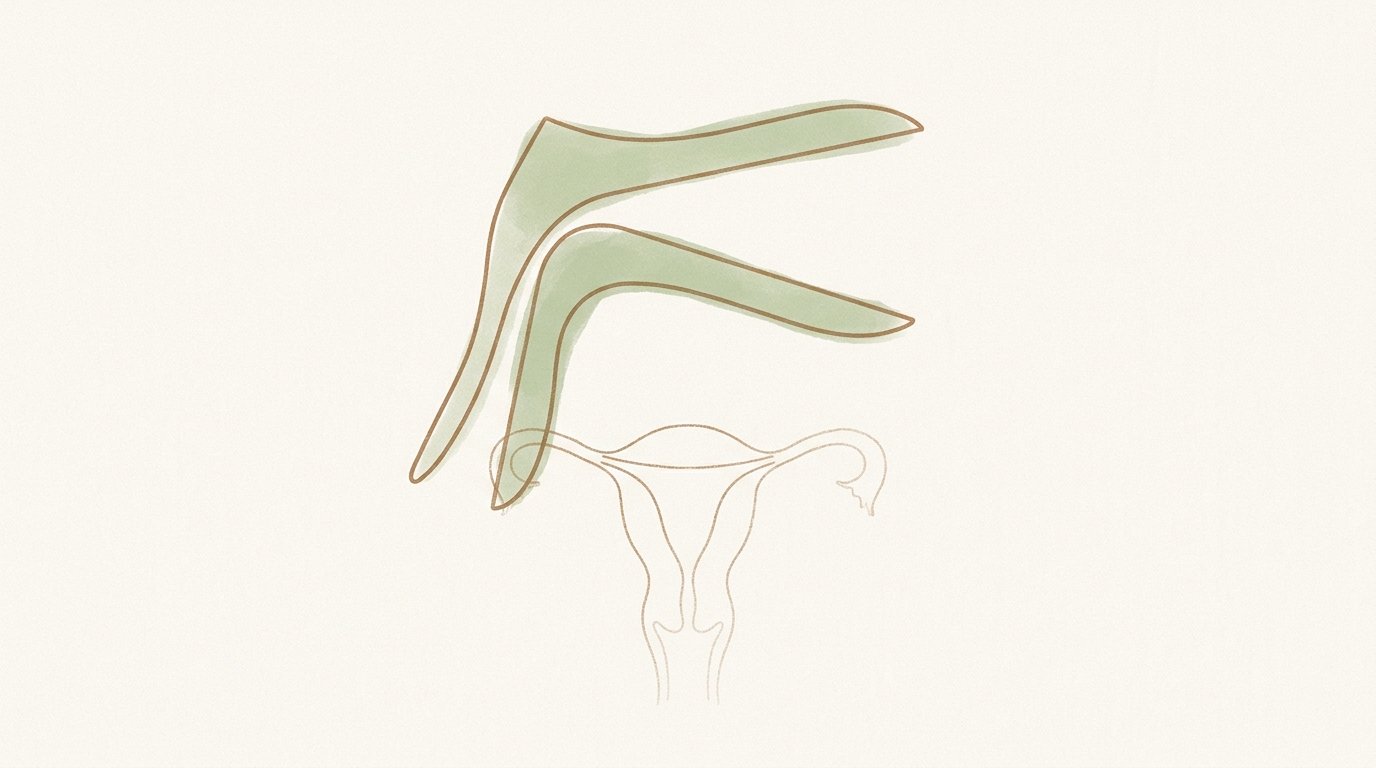
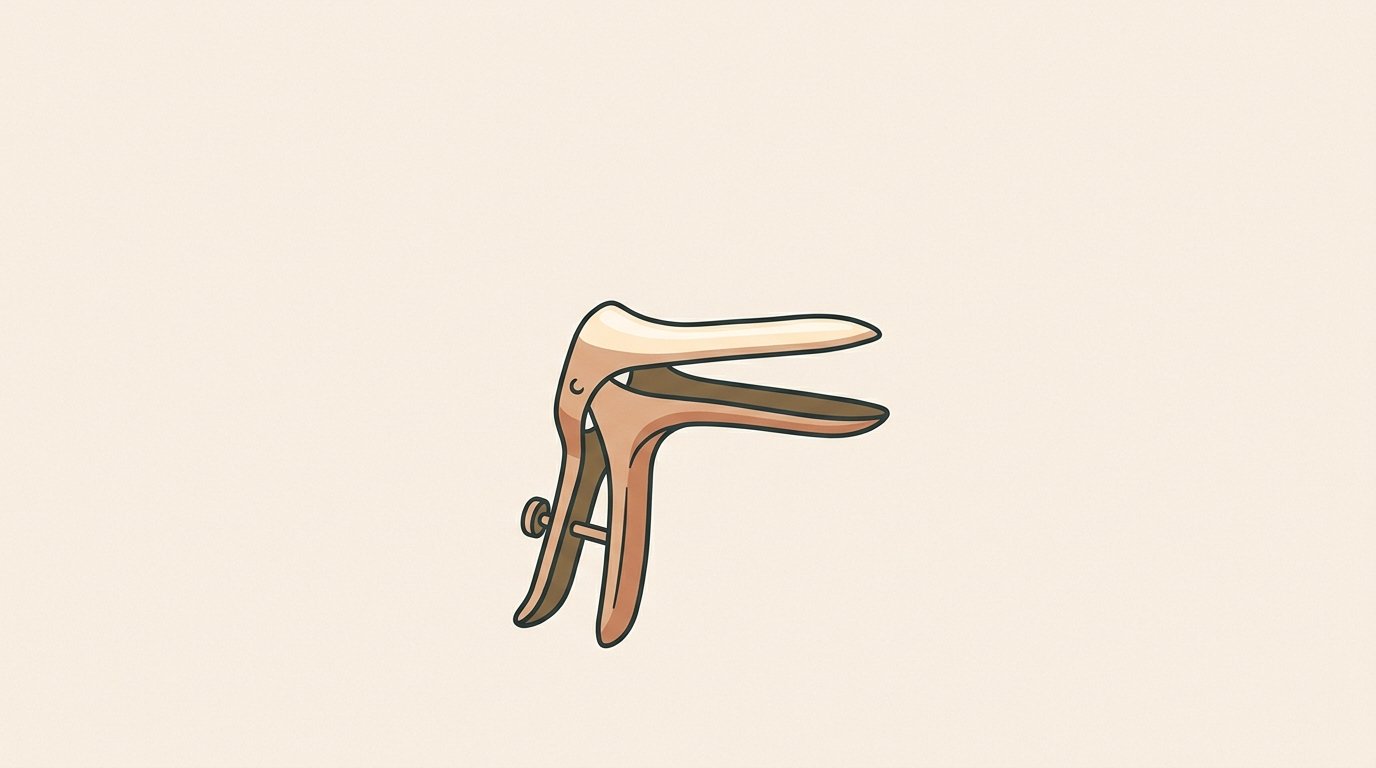
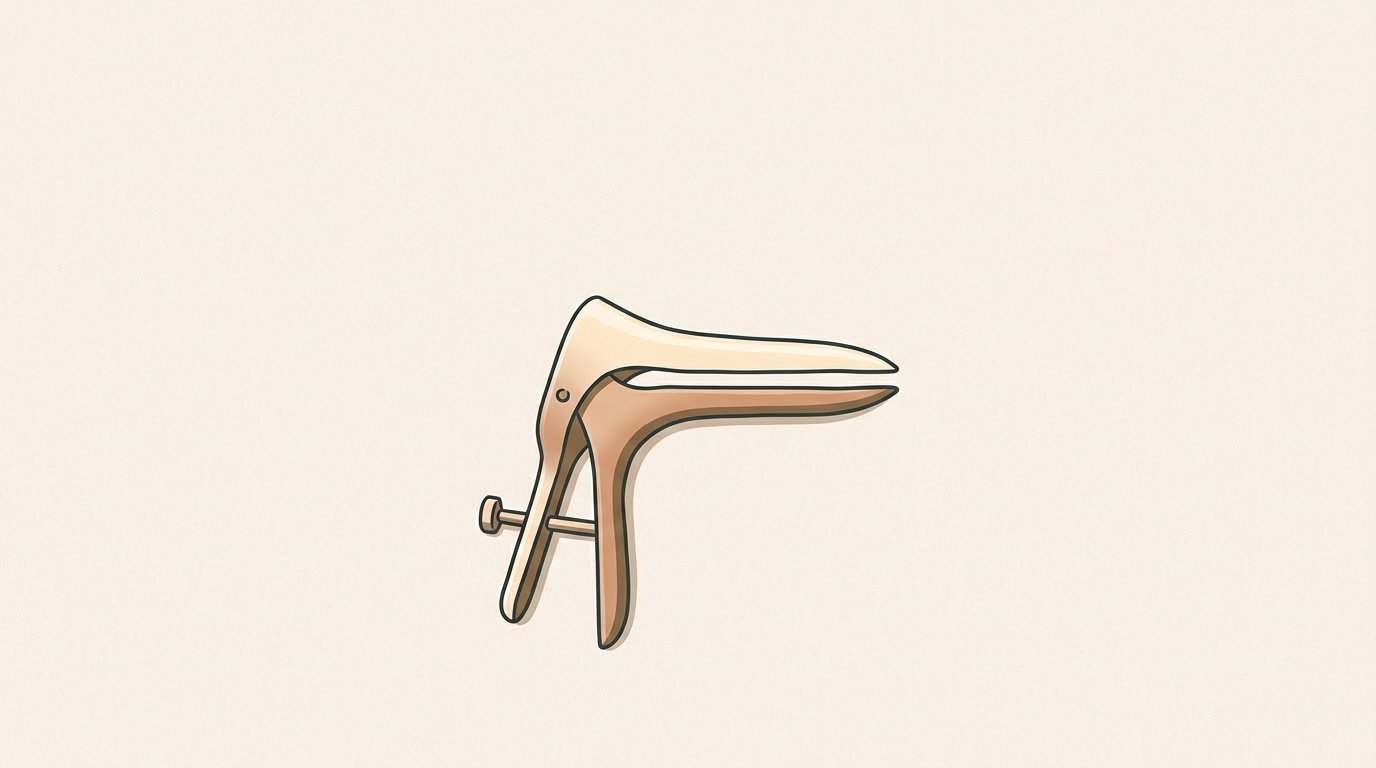
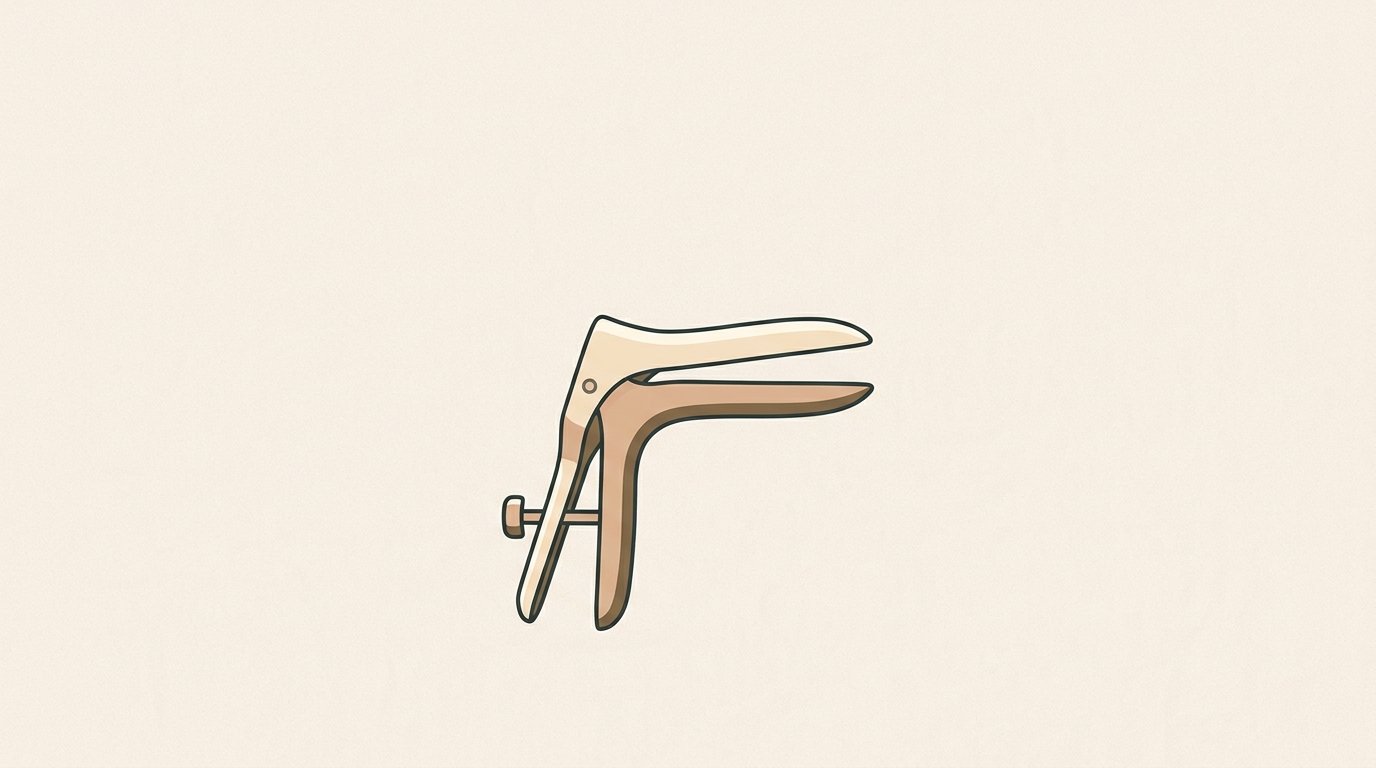
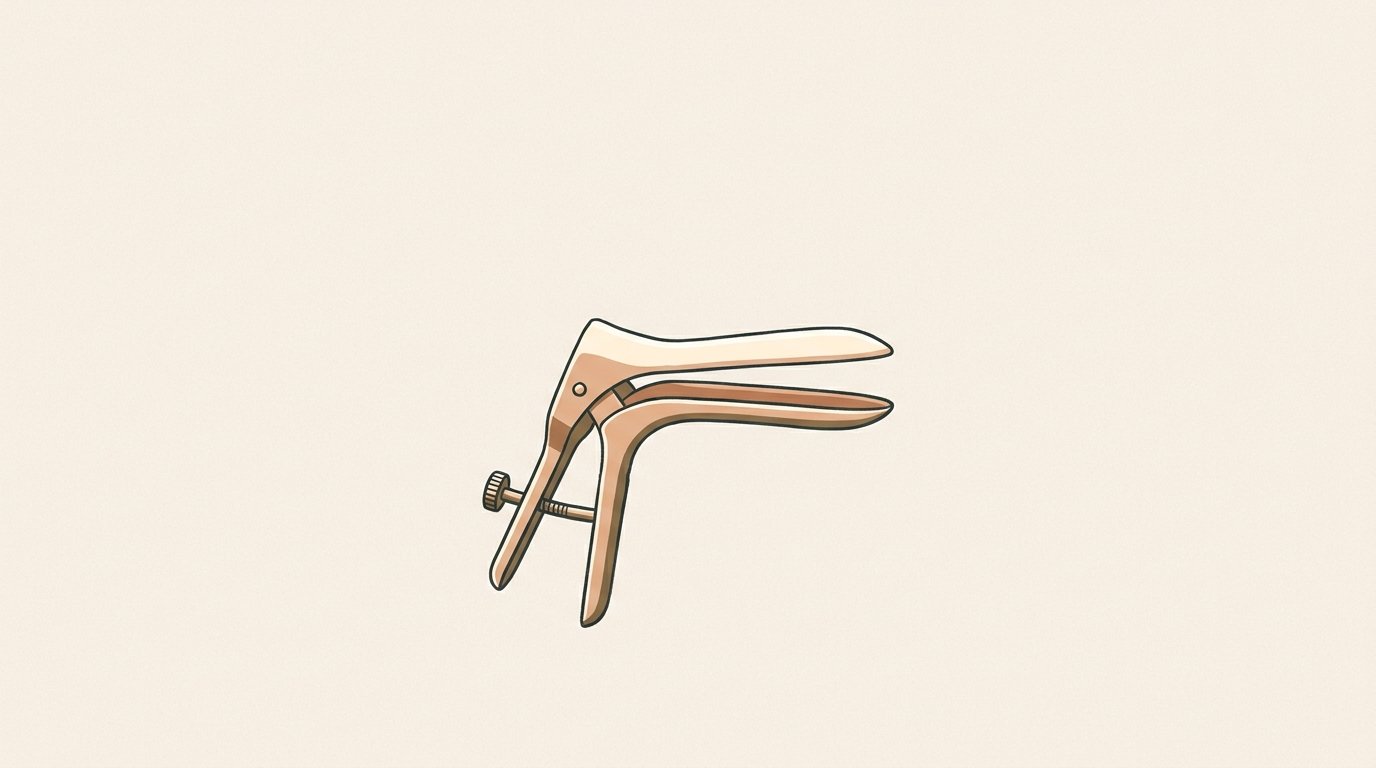
A speculum is placed into the vaginal canal to visualize the cervix.
One-second transitional beat — speculum shown as instrument among instruments, small, floating in generous negative space, handled with clinical discretion.
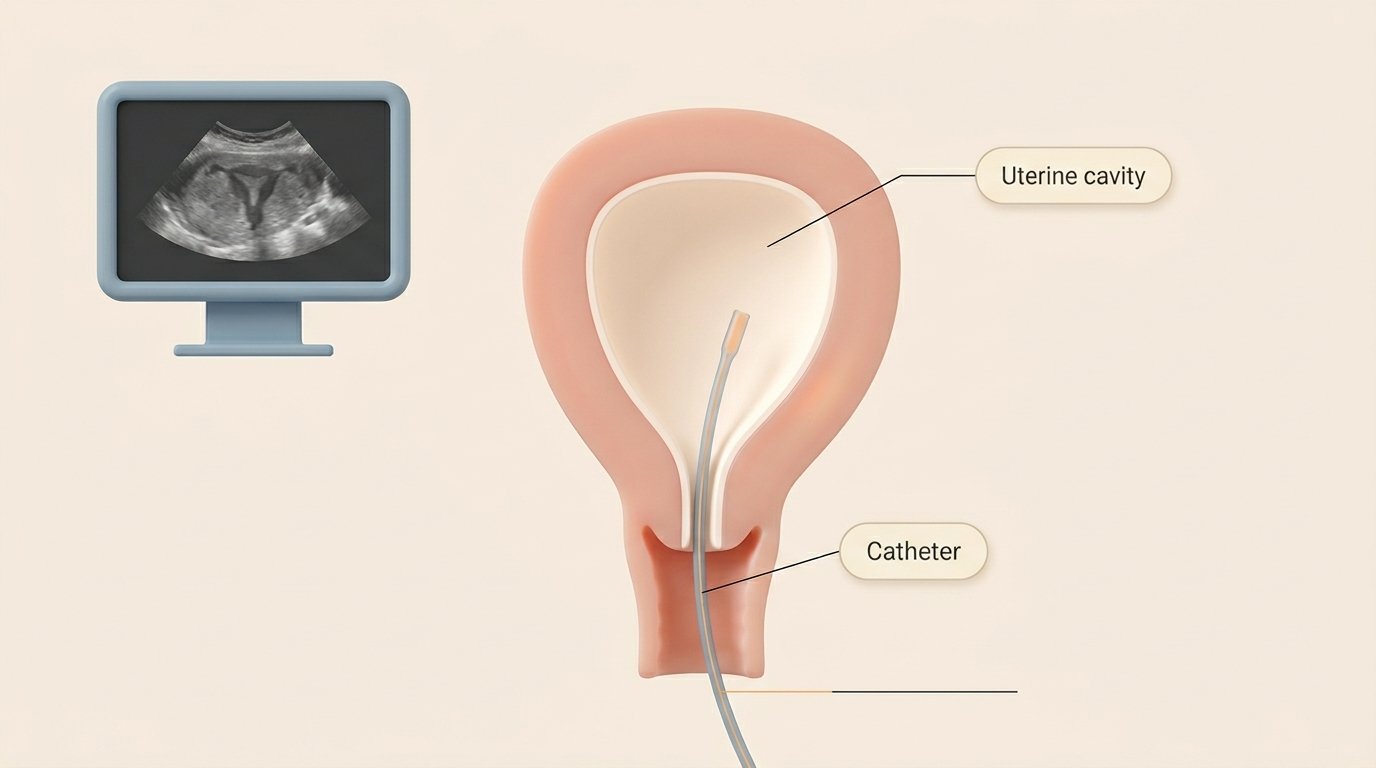
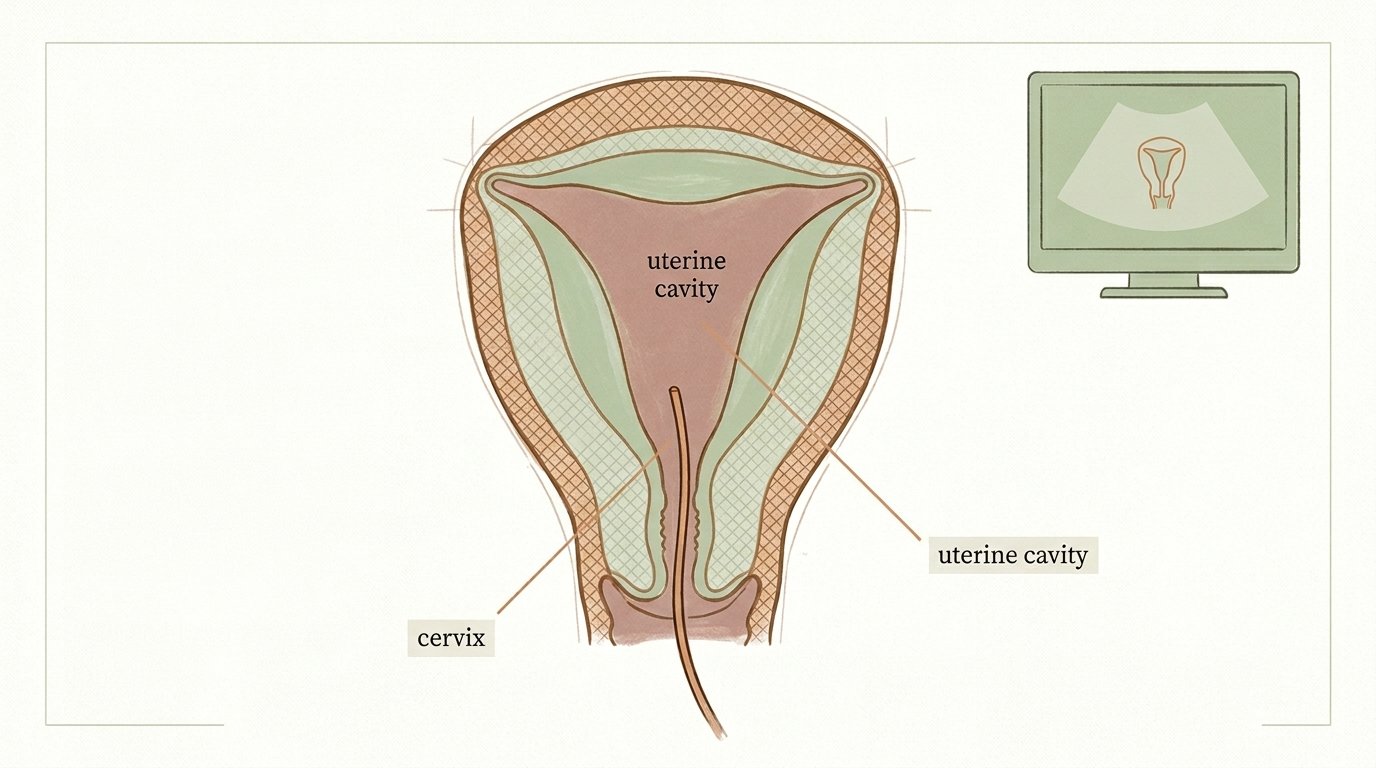
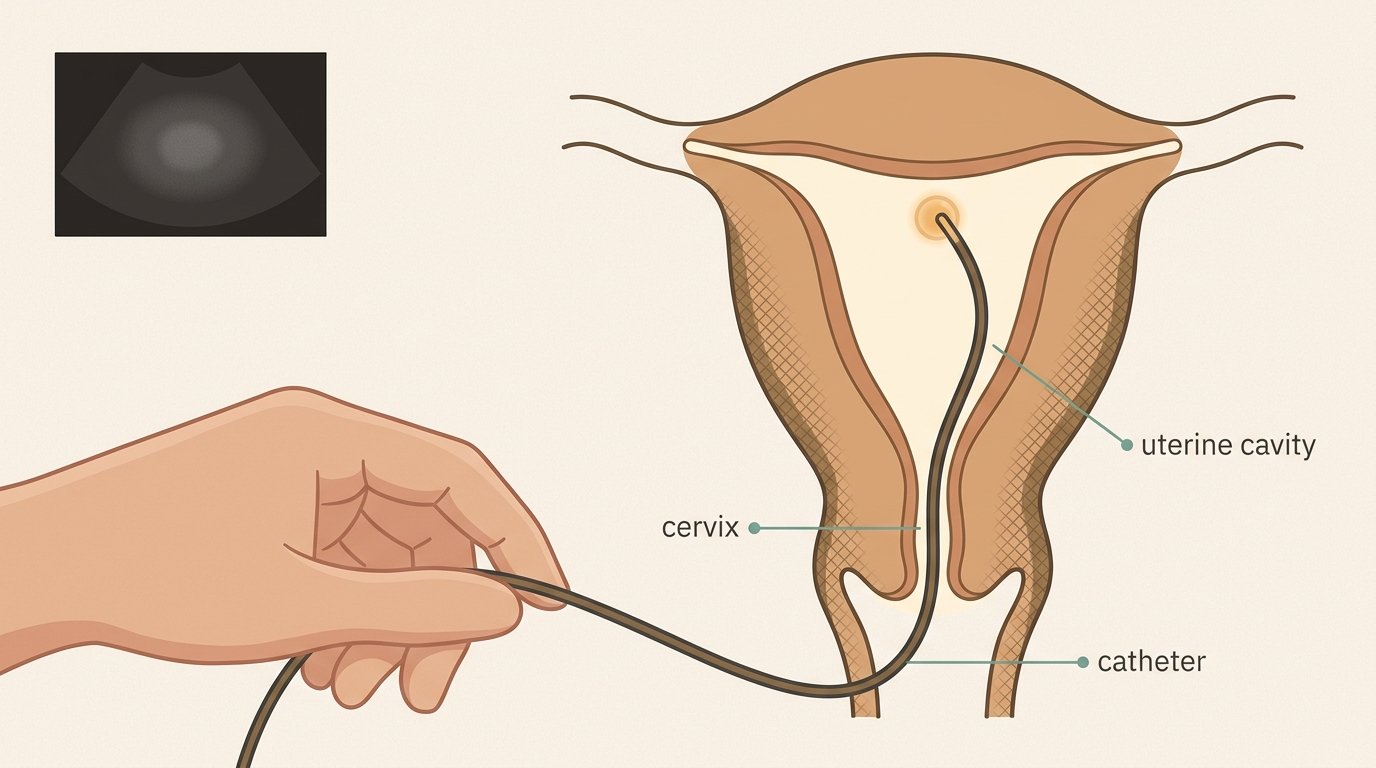
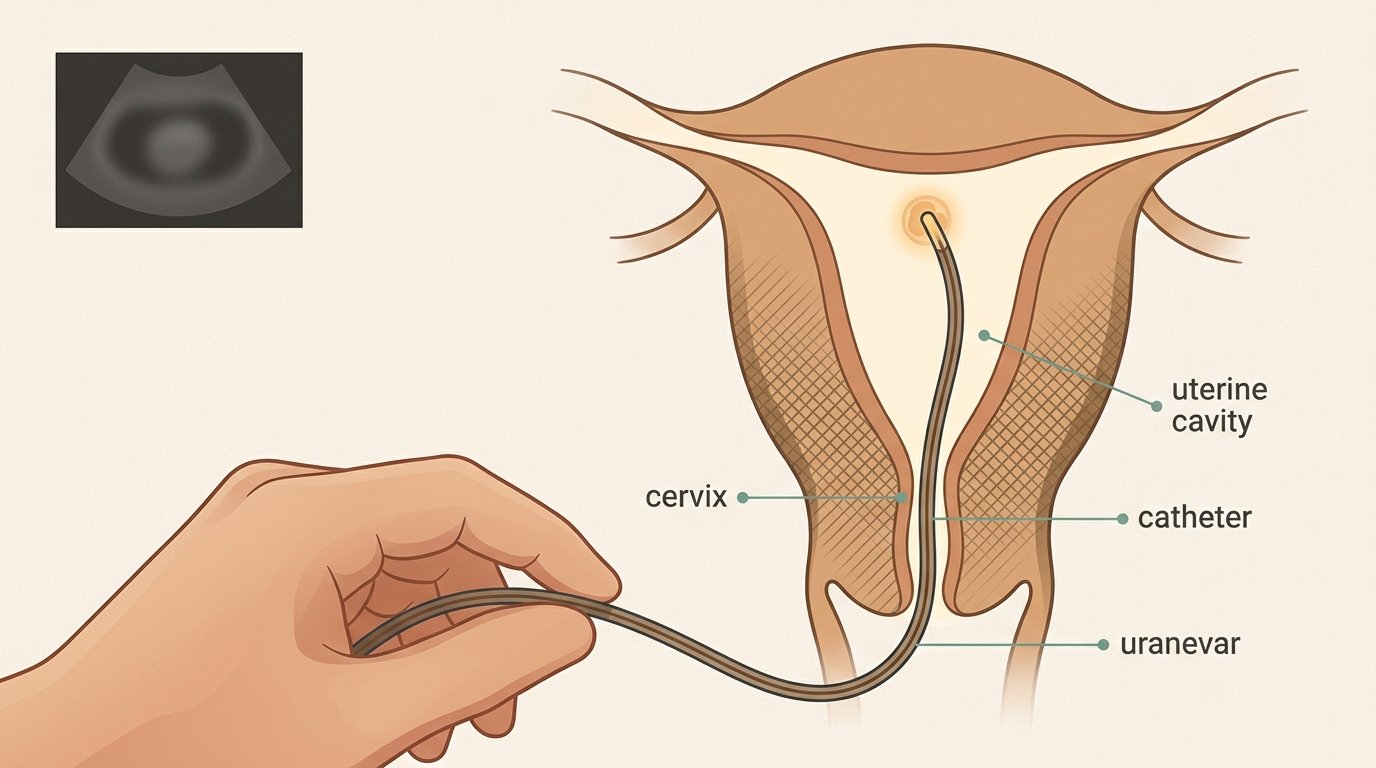
The clinician then threads the catheter through the cervix and into the upper portion of the uterus, often with guidance from an abdominal ultrasound.
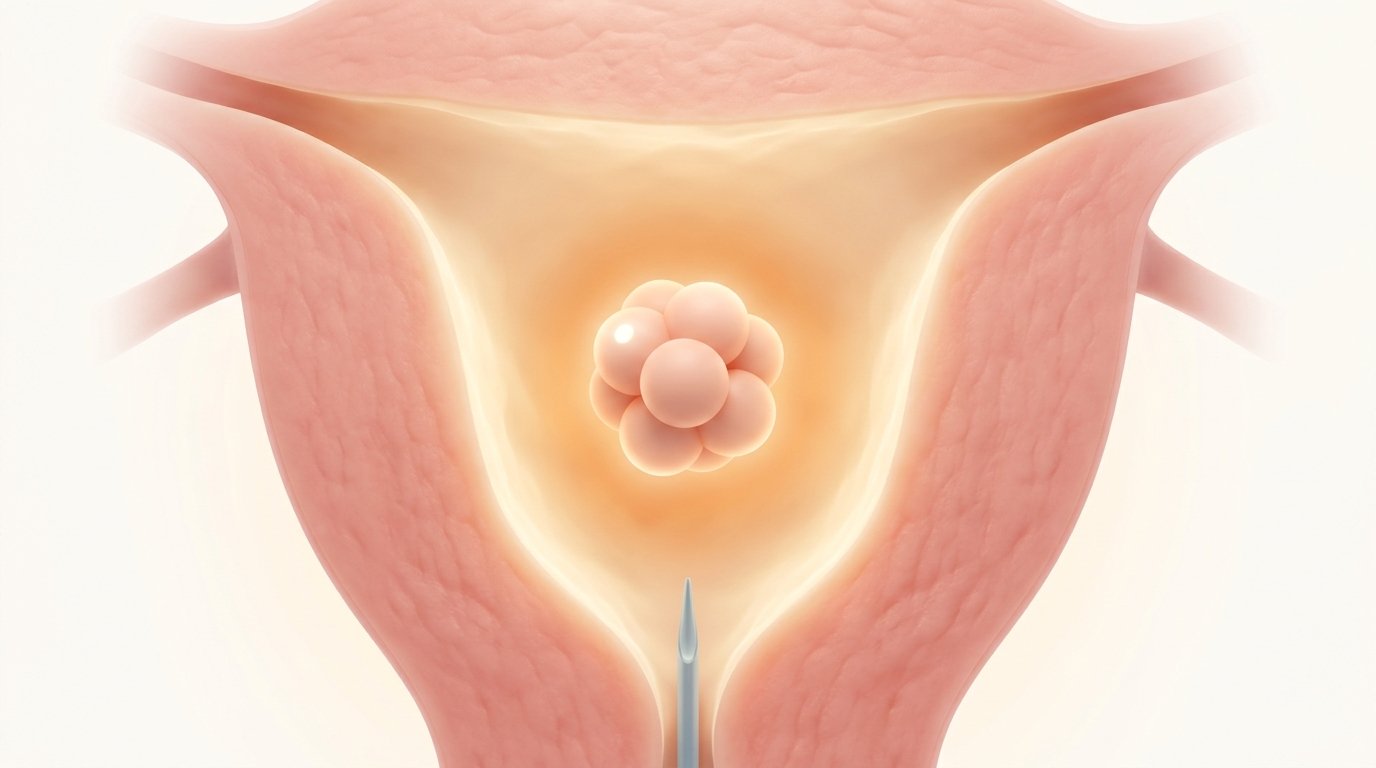
The procedural climax — full uterus cross-section at generous scale, catheter threading through cervix into fundal region, ultrasound inset at upper-left, embryologist hand at foreground lower-left, three callout labels.
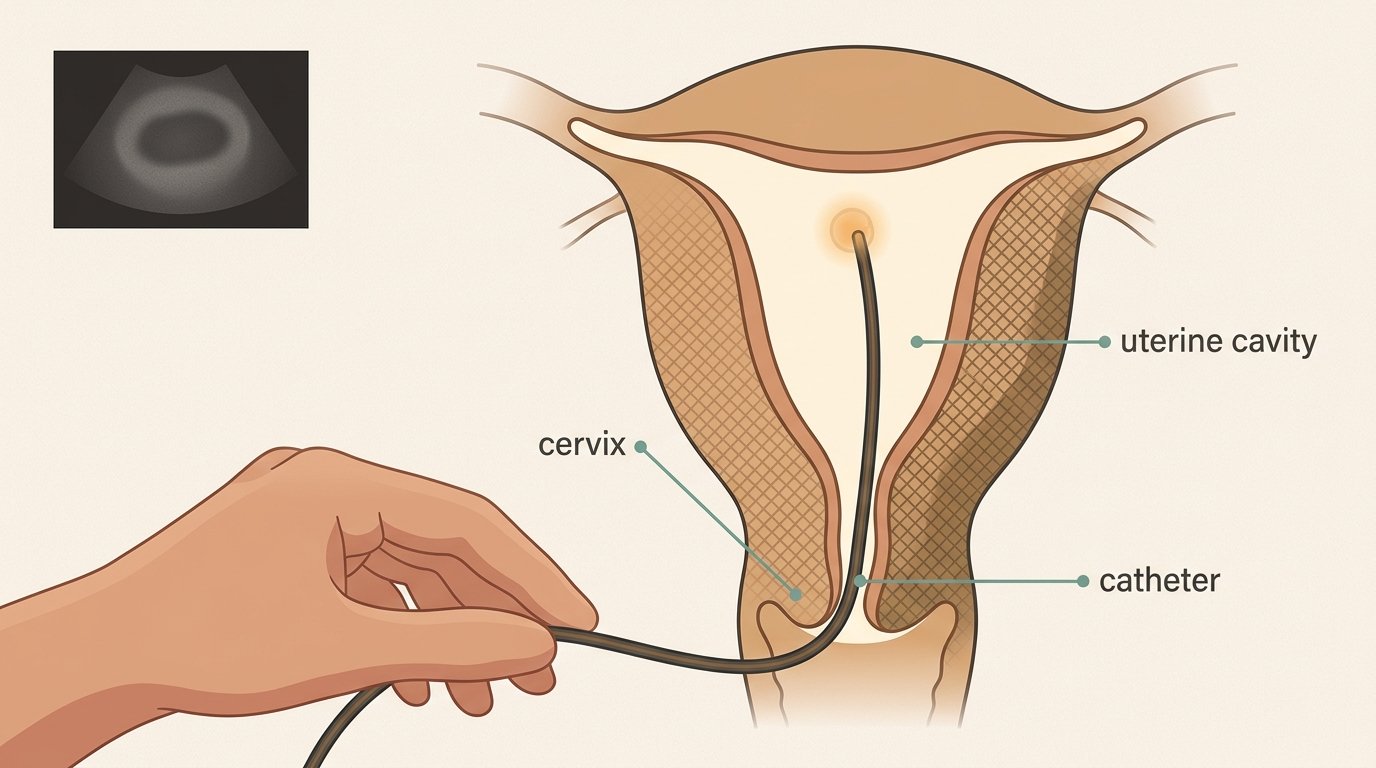
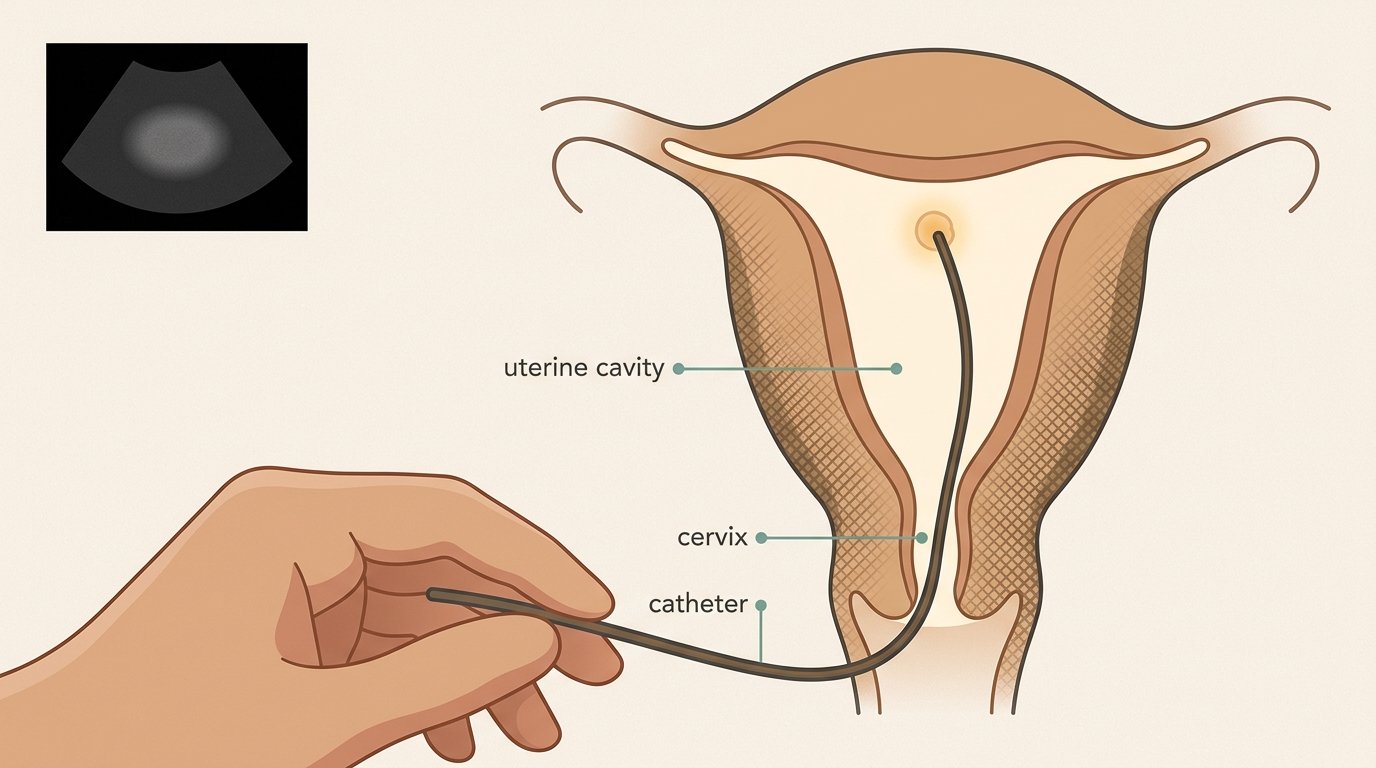
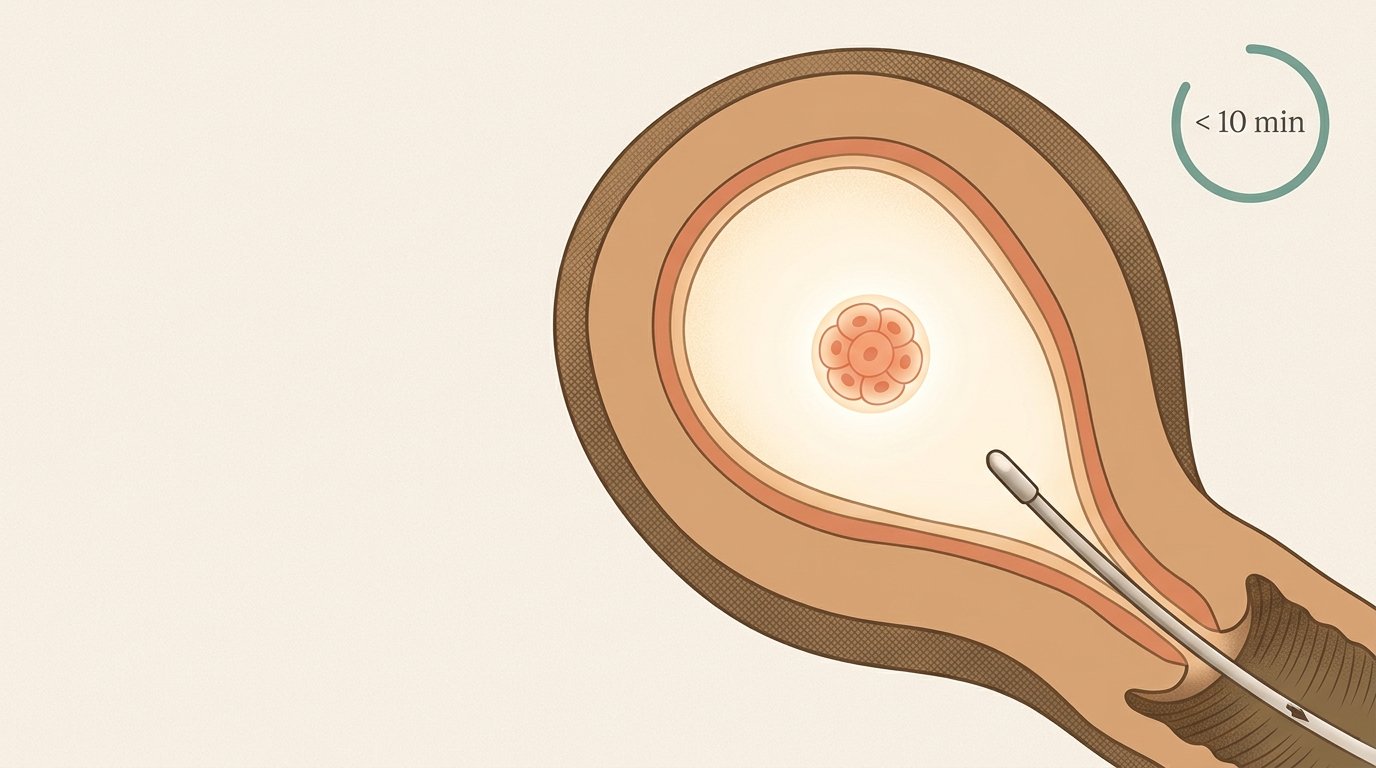
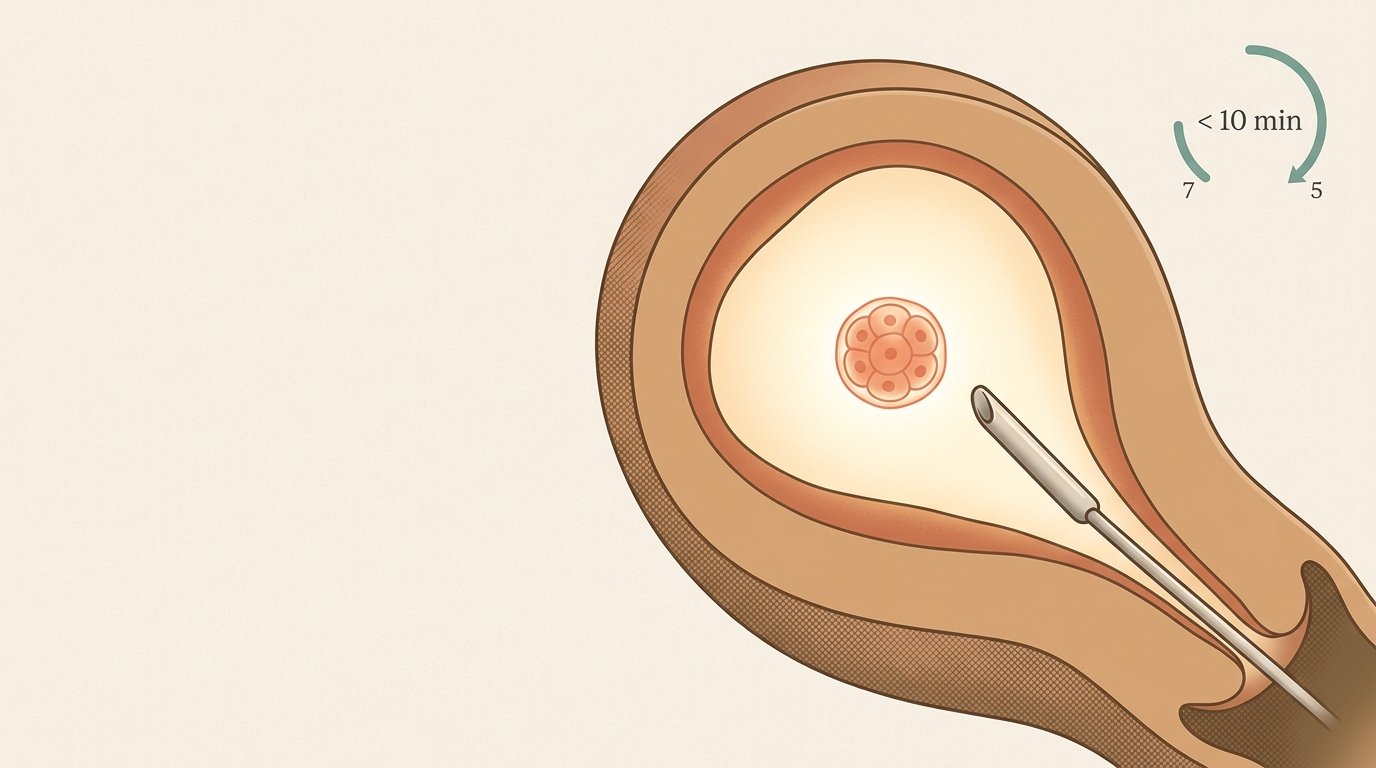
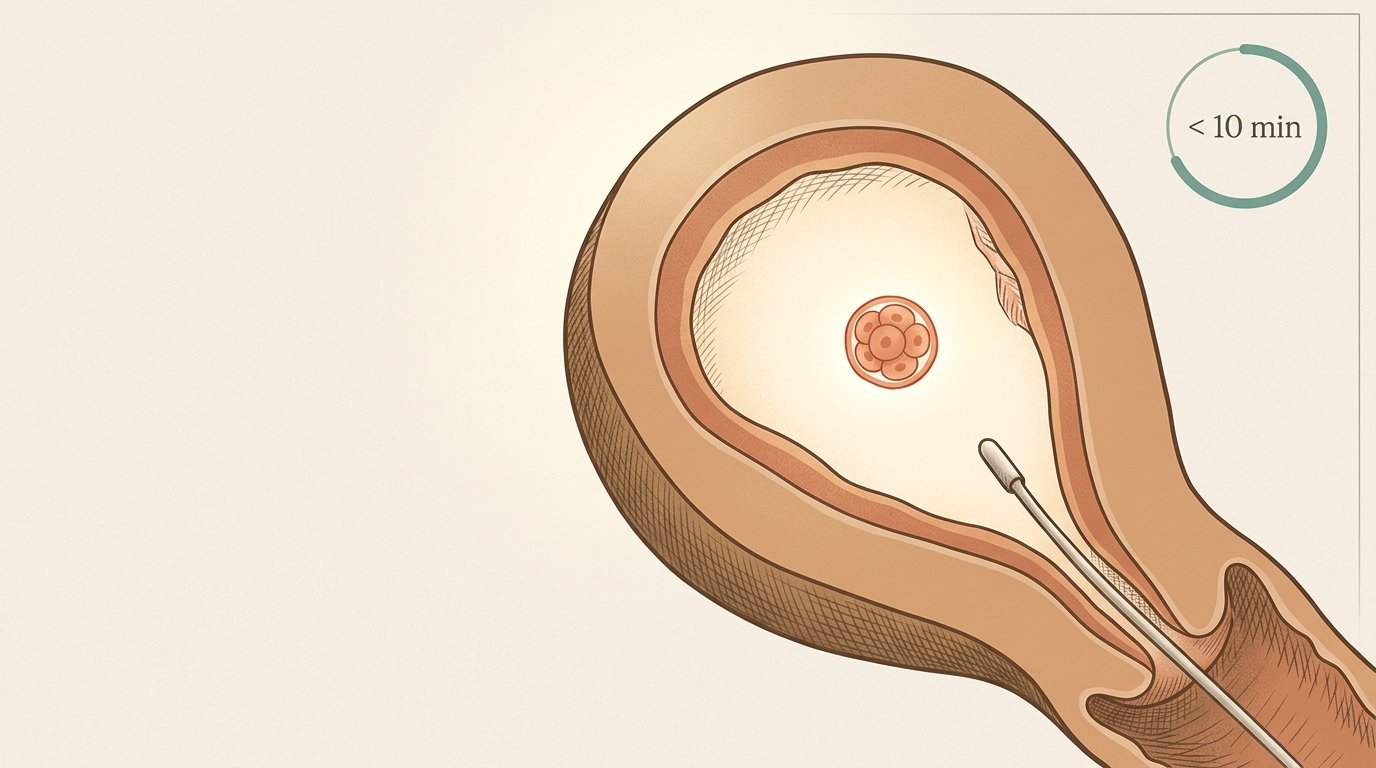
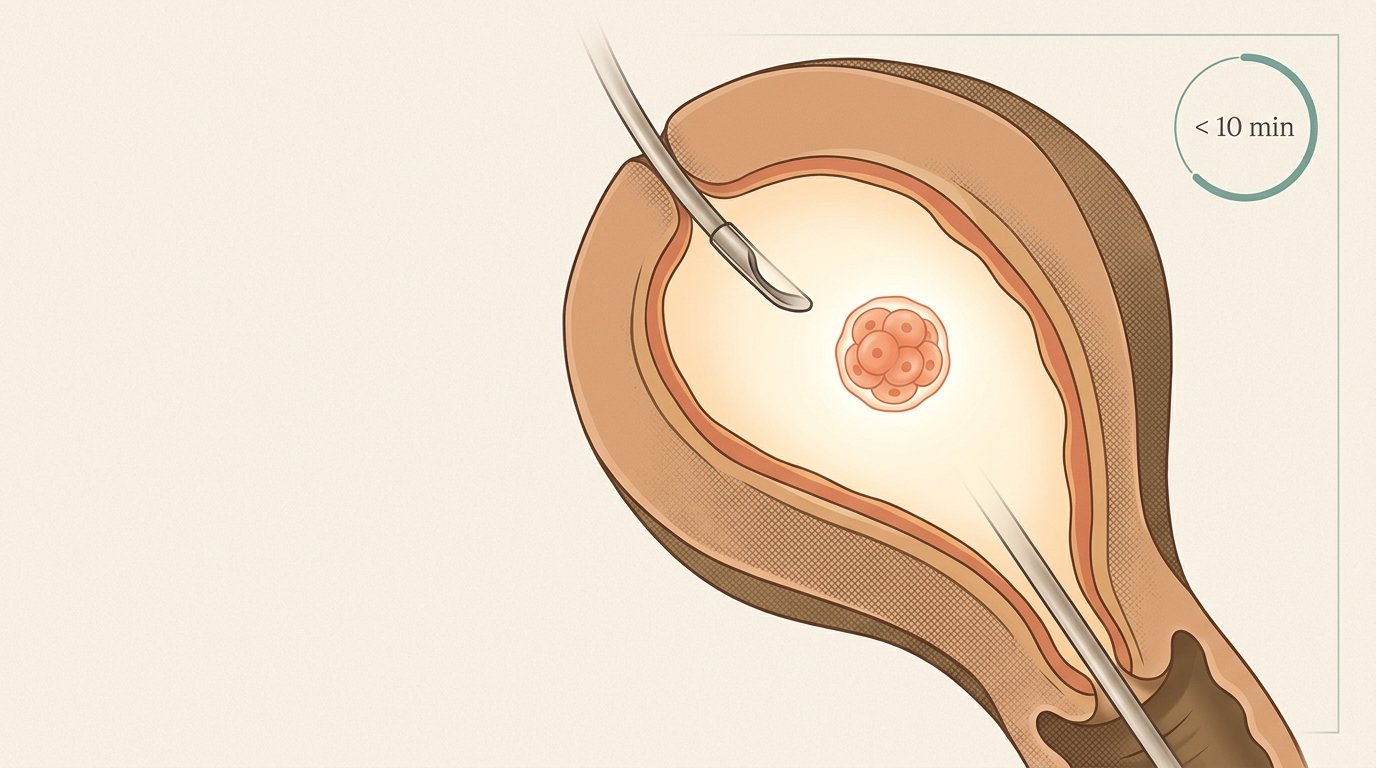
Then the embryo is released into the uterine cavity for implantation. The procedure typically takes less than 10 minutes.
The emotional peak — embryo releases from catheter tip and floats free in the luminous uterine cavity; catheter retreats; time motif arc appears; no hands in frame.
Following the embryo transfer, your medical team will provide comprehensive instructions on next steps leading up to the pregnancy test.
Hopeful, reserved closer — the time motif arc centered with typographic elements only; no anatomy, no instruments; the embryo has been delivered and is no longer the visual subject.


Every element has volume, temperature, and life. Soft 3D rendering gives biological forms a tactile warmth that flat illustration cannot. Sits closer to Buck Studio / Giant Ant than to a Pixar short.
NPR science correspondent × fertility specialist. 130–140 wpm, measured. Subtle upward lift on reassurance lines. The brightness of a contemporary wellness brand voice without performed softness.
Read full voice prompt →The frozen embryo transfer.
Warm Cream Canvas title card; Nunito Bold centered at 48% vertical; Sage Promise biomorphic background blob; embryo cluster half-materializing at center-bottom by final frame.


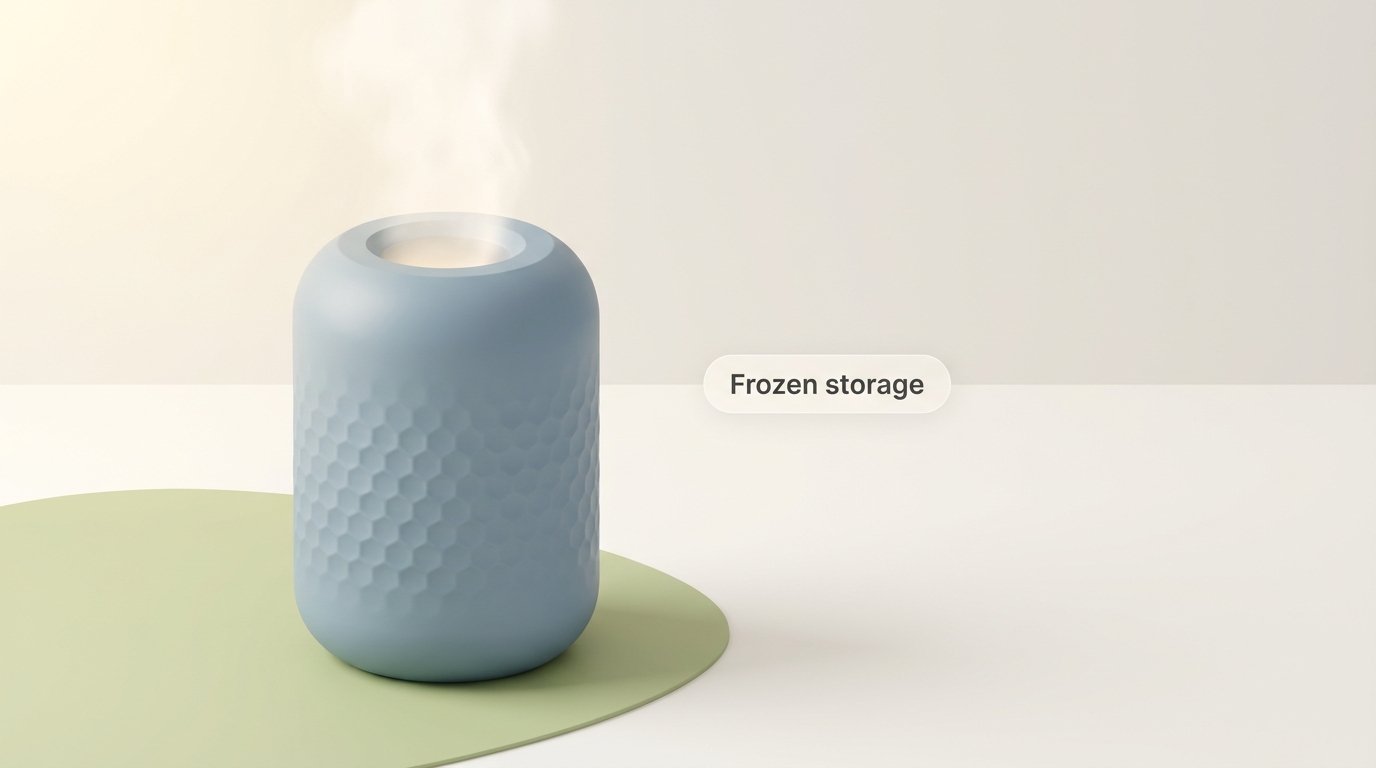
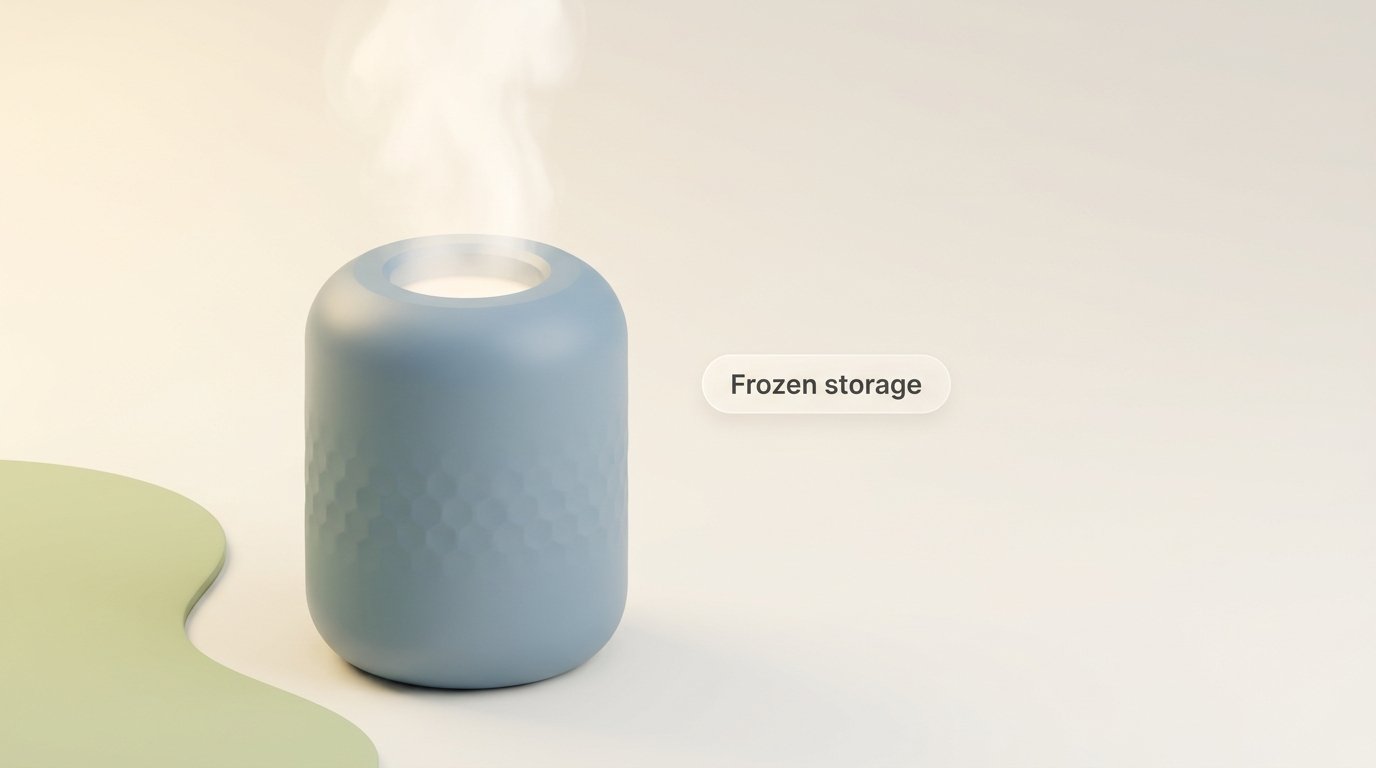
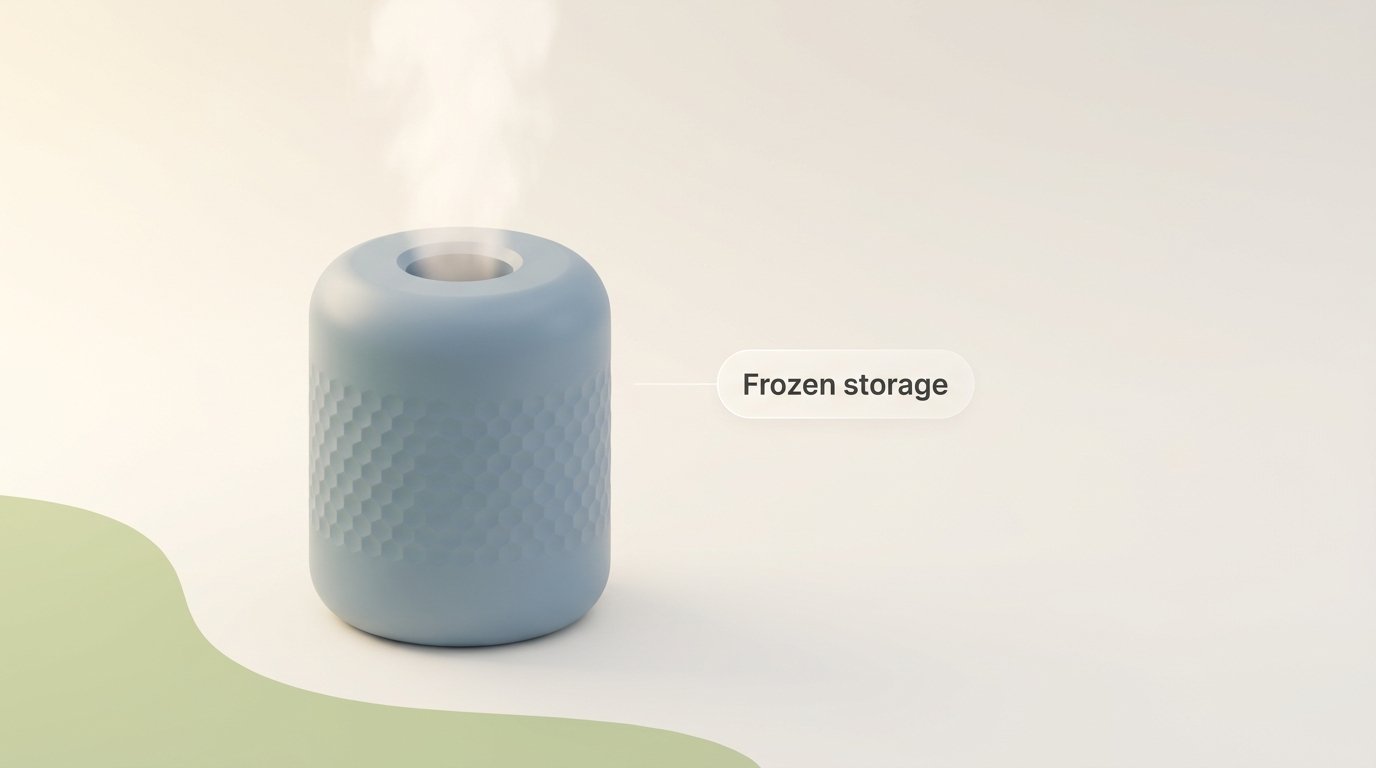
On the day of your transfer, your frozen embryo or embryos will be thawed in the laboratory.
Cryogenic dewar at left-center on a laboratory benchtop; Candlelight vapor rising from open top; Frozen storage callout label at right; Sage Promise blob anchors lower-left depth.


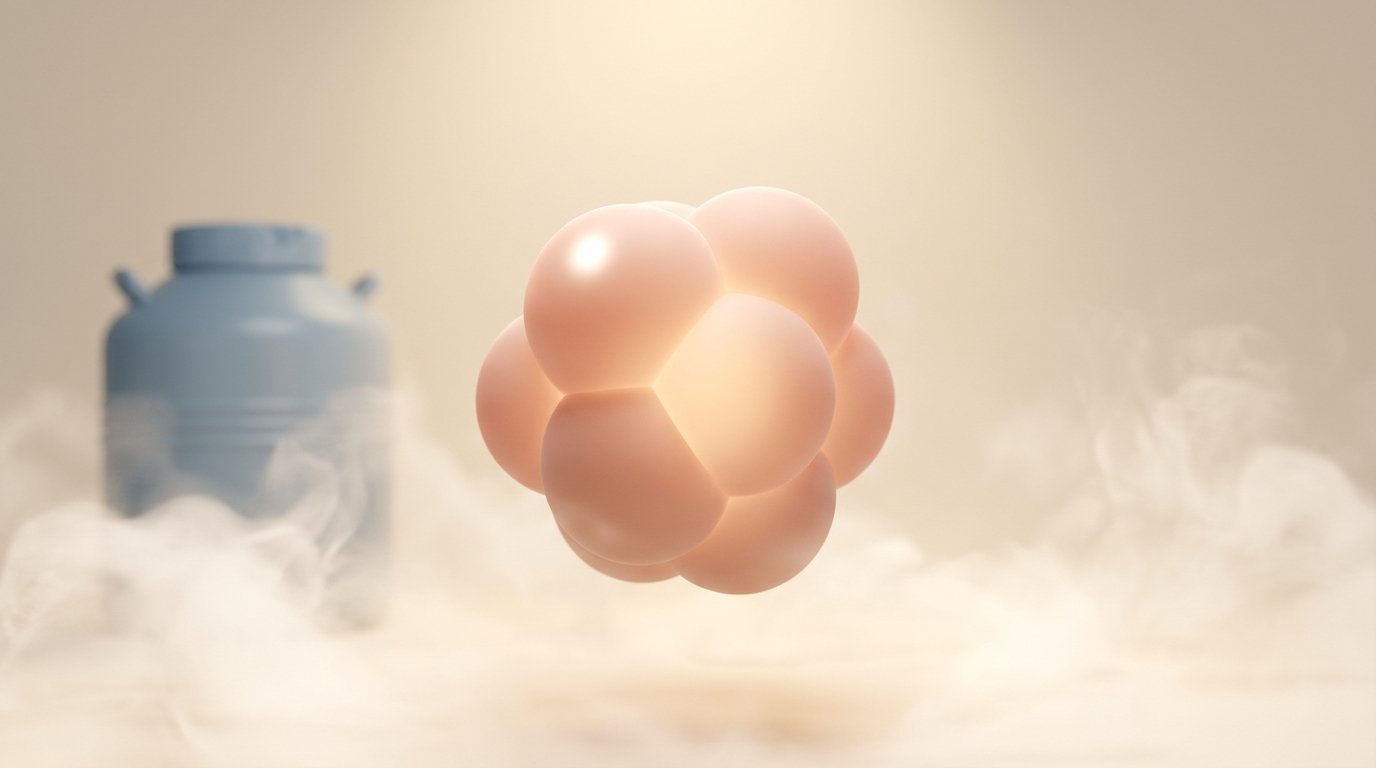
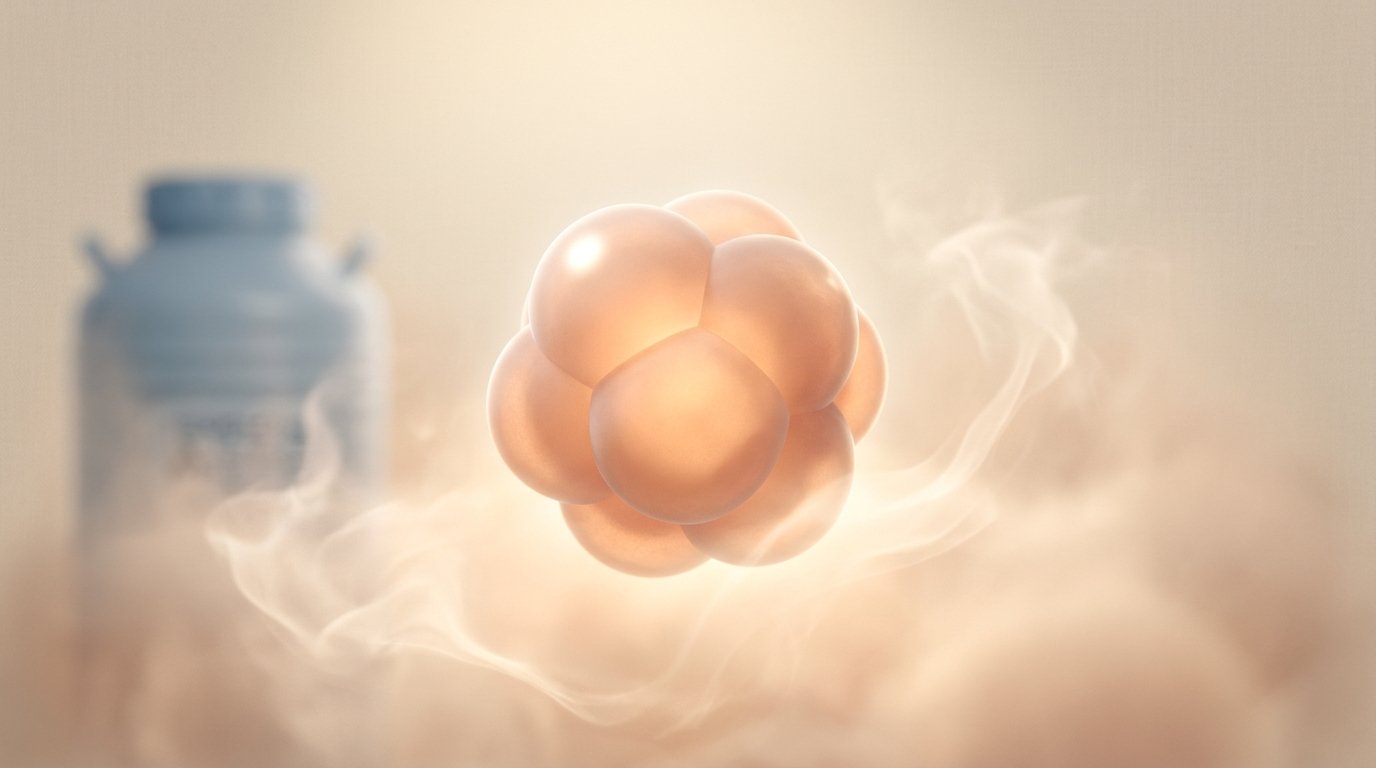
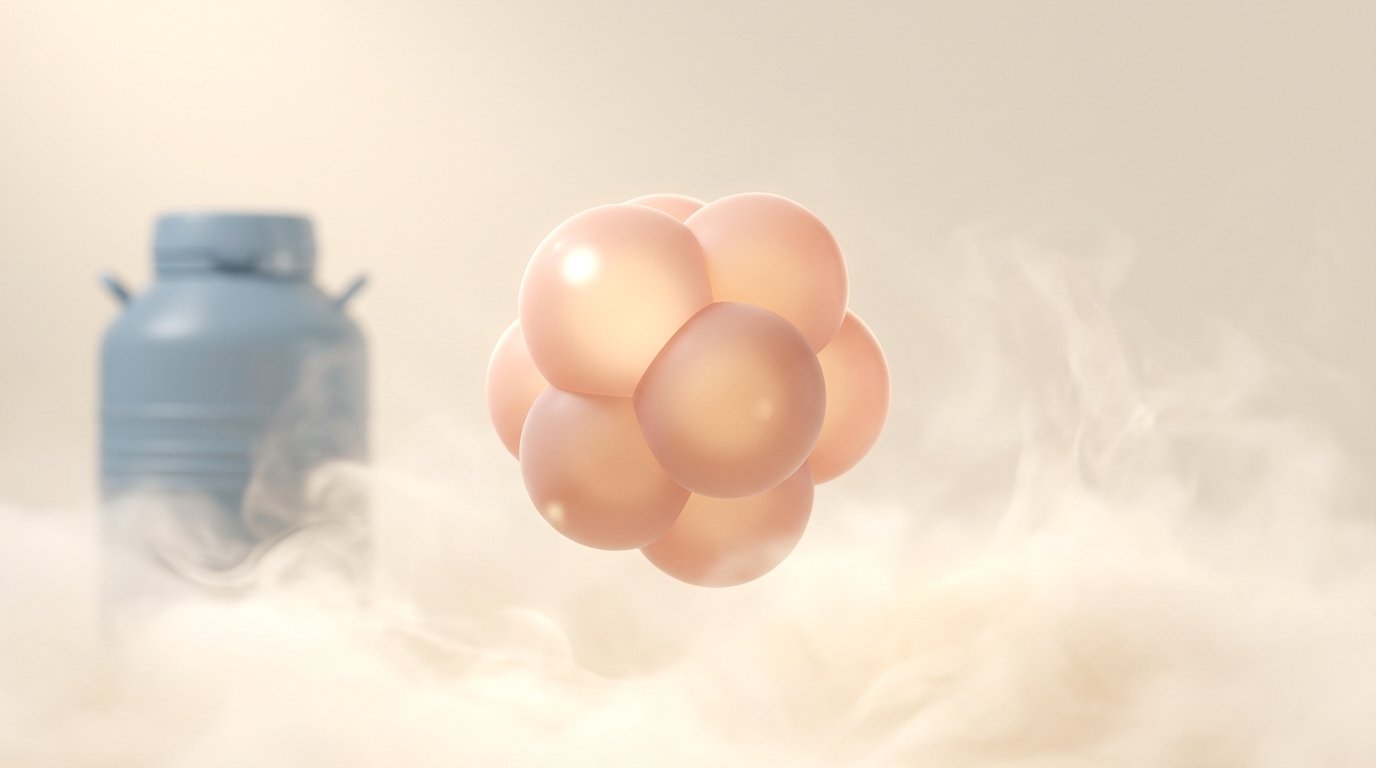
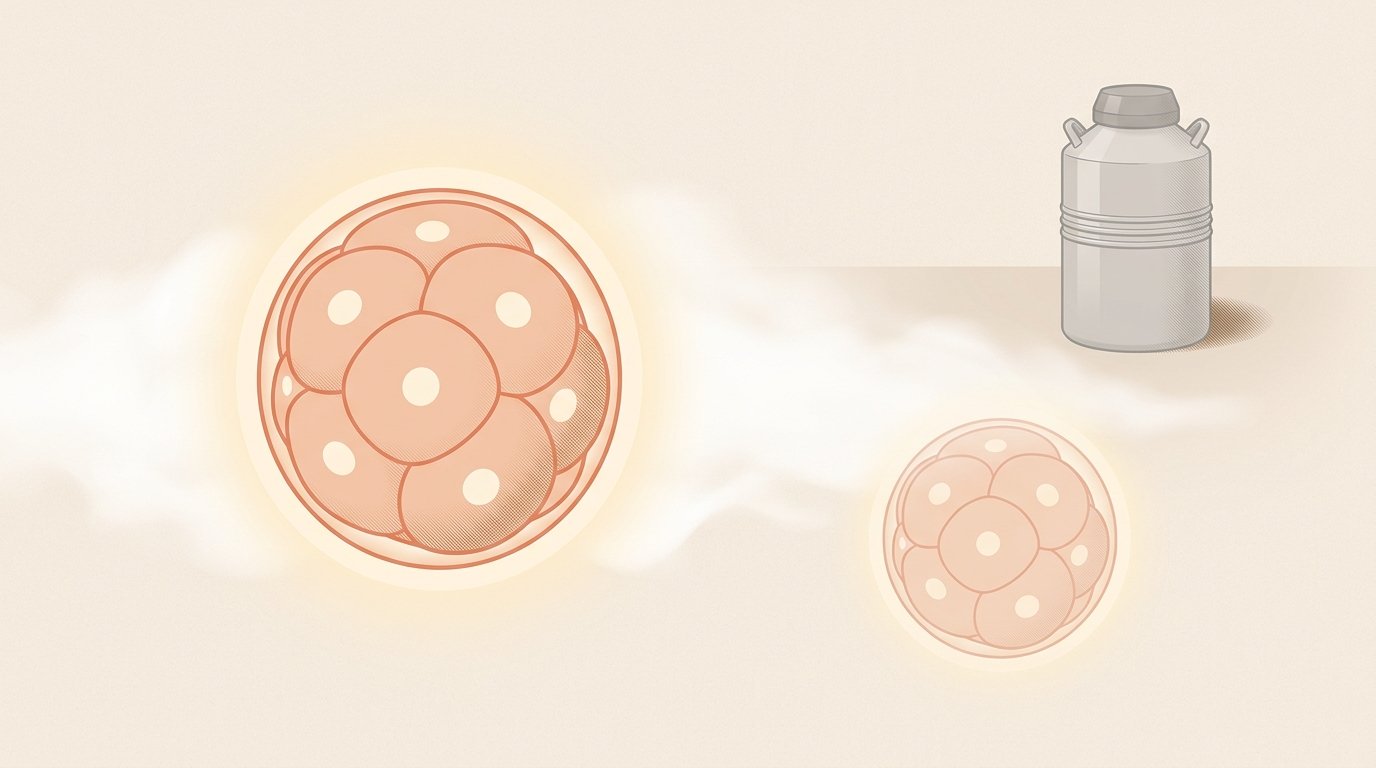
Freezing and thawing technology has improved significantly, but there's still a risk that the embryo will not survive the thaw.
Embryo cluster suspended in warm Candlelight vapor field — luminous, hopeful; a second dewar soft-focused at 20% opacity in background implies reserve embryos; warmth reads as transformation, not danger.


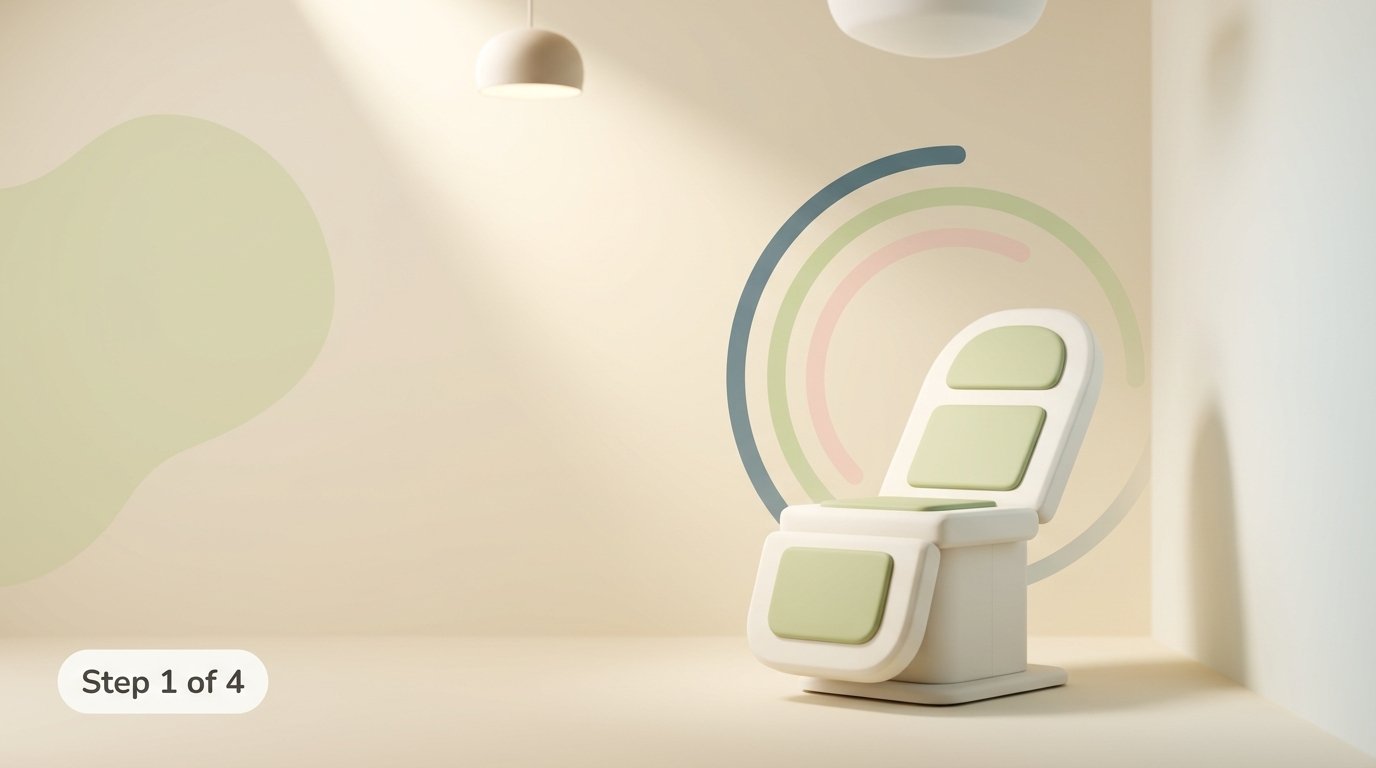
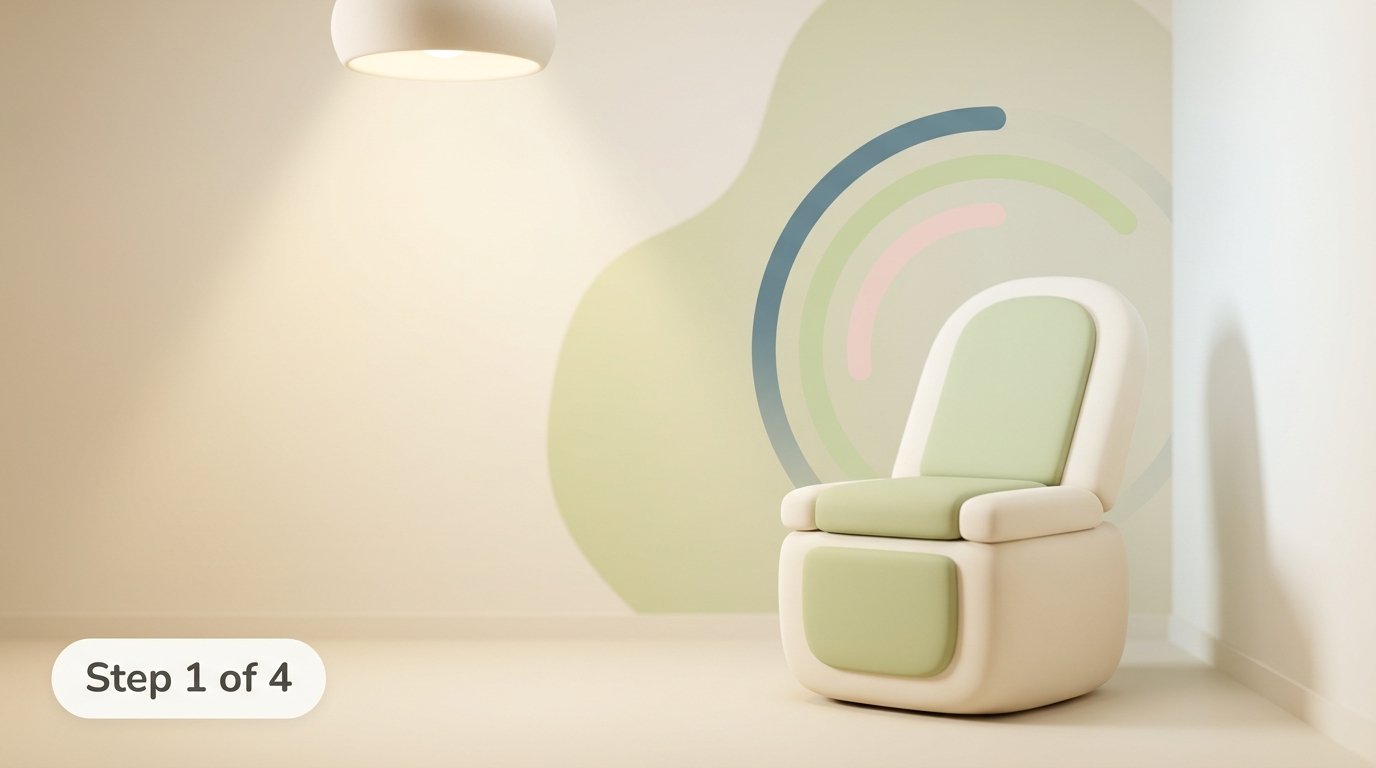
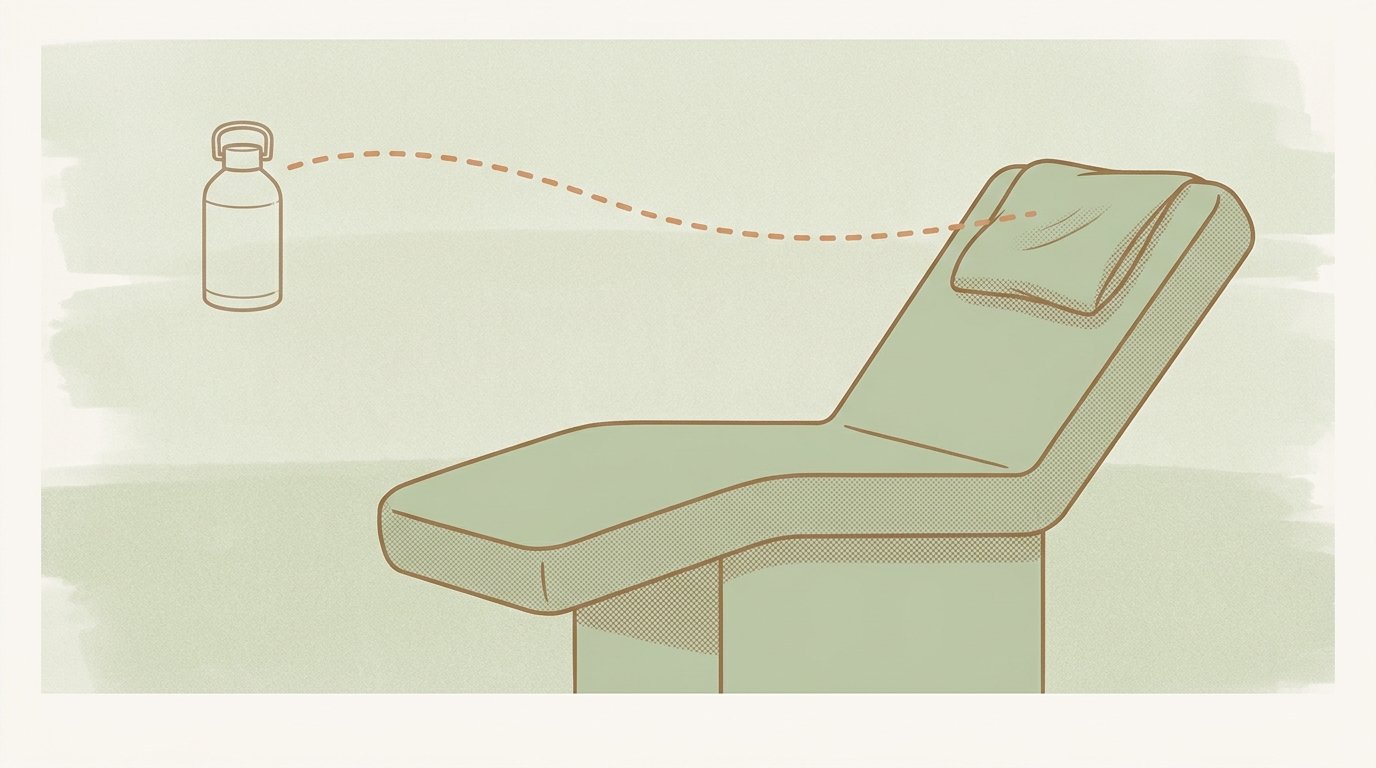
If this occurs and you have extra embryos in storage, there will still be time to thaw an additional embryo.
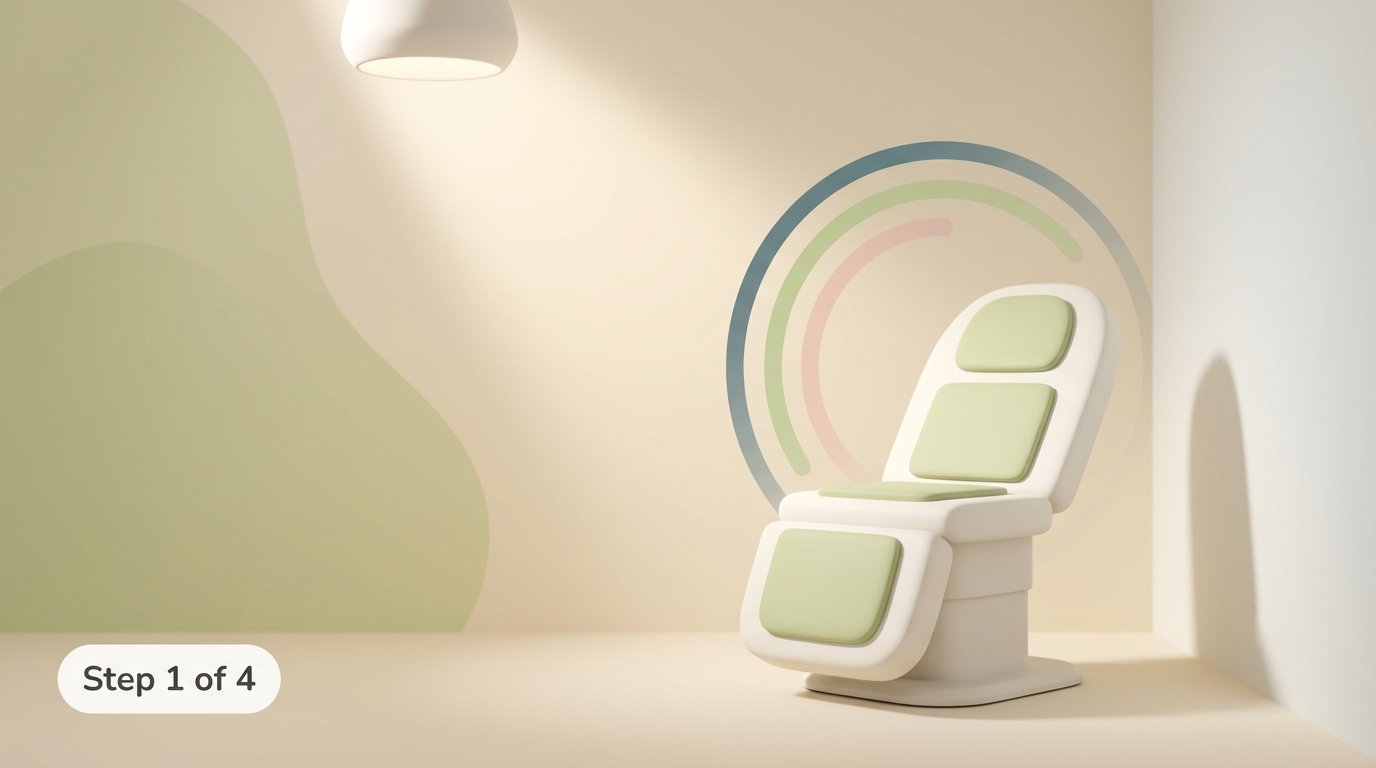
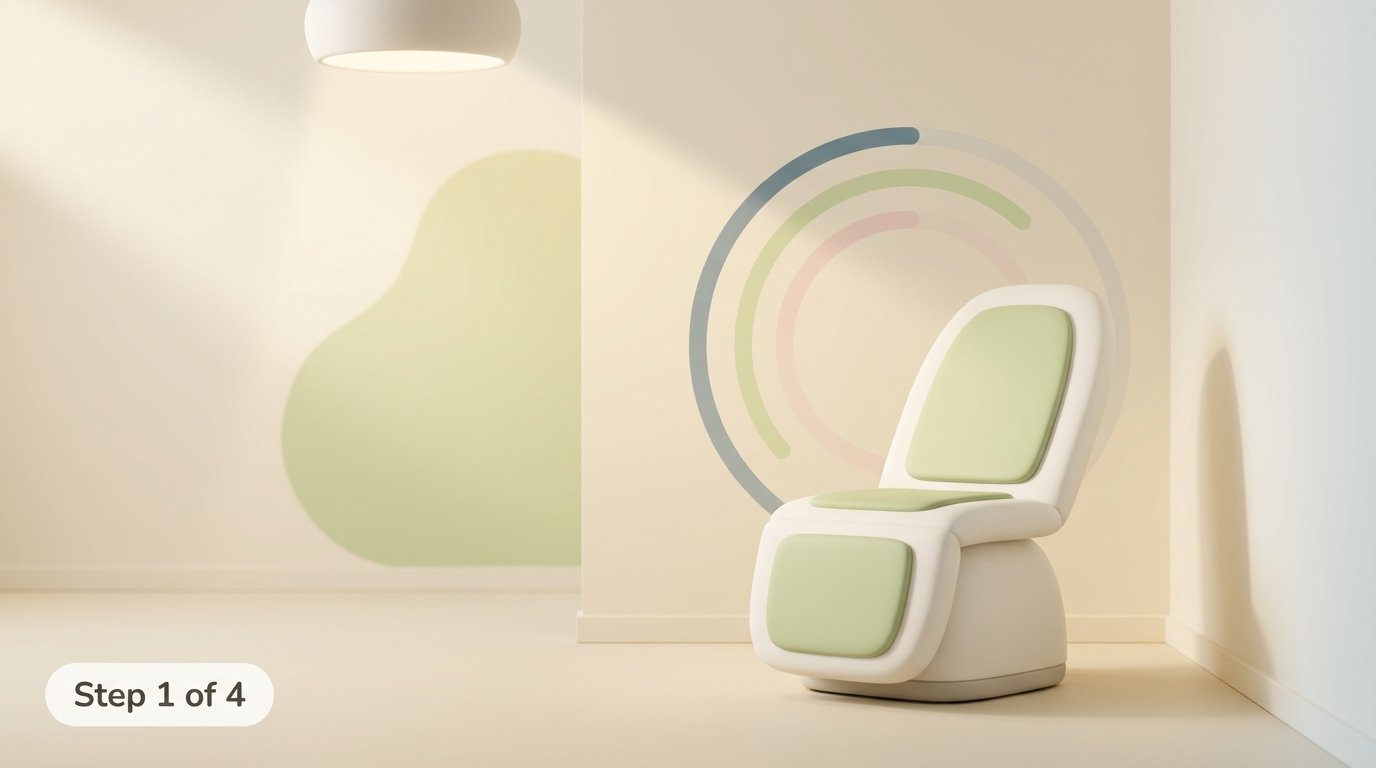
Clinical exam room in 3/4-perspective — rounded chair, soft pendant light, Cream Canvas walls; Time motif arc ring at 20% opacity in background; step-label badge lower-left.


The transfer procedure is simple and nearly painless, and in the vast majority of cases, sedation is not required.
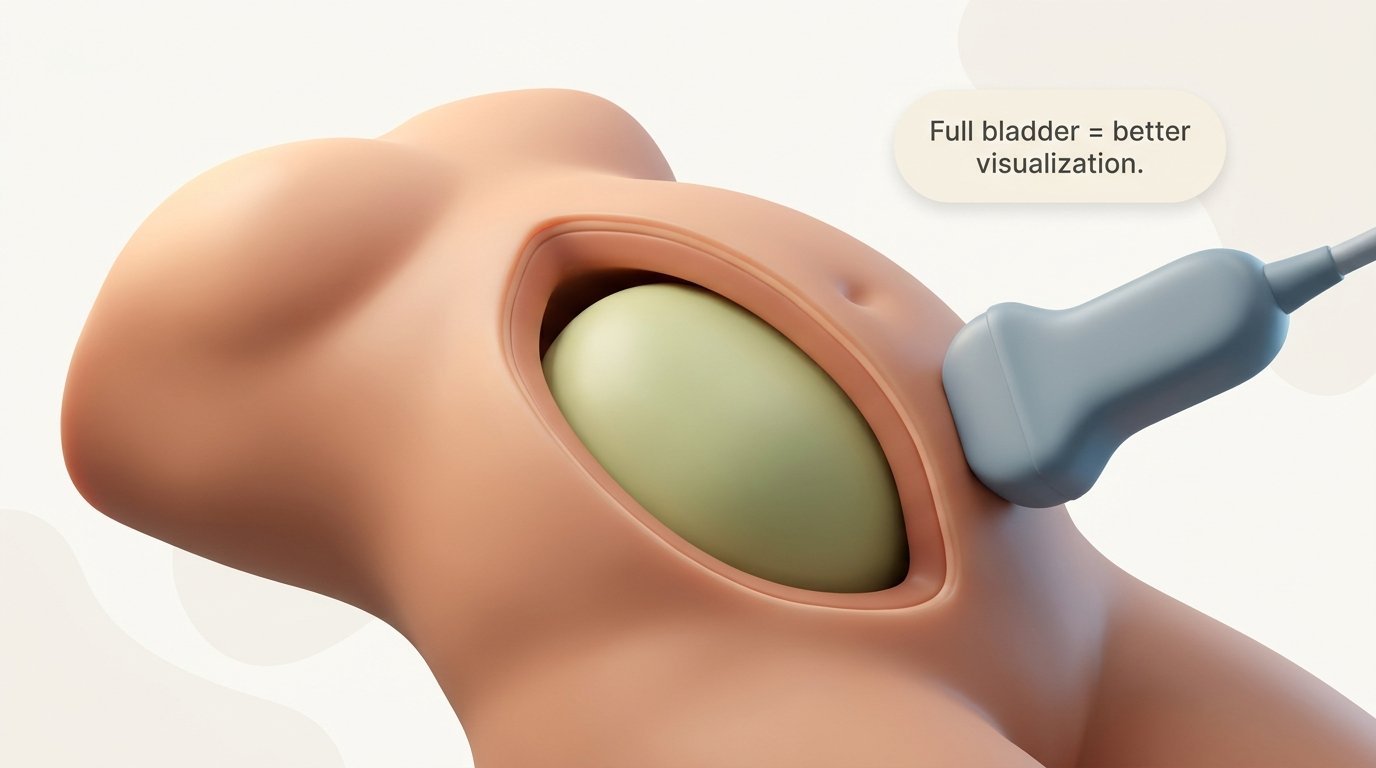
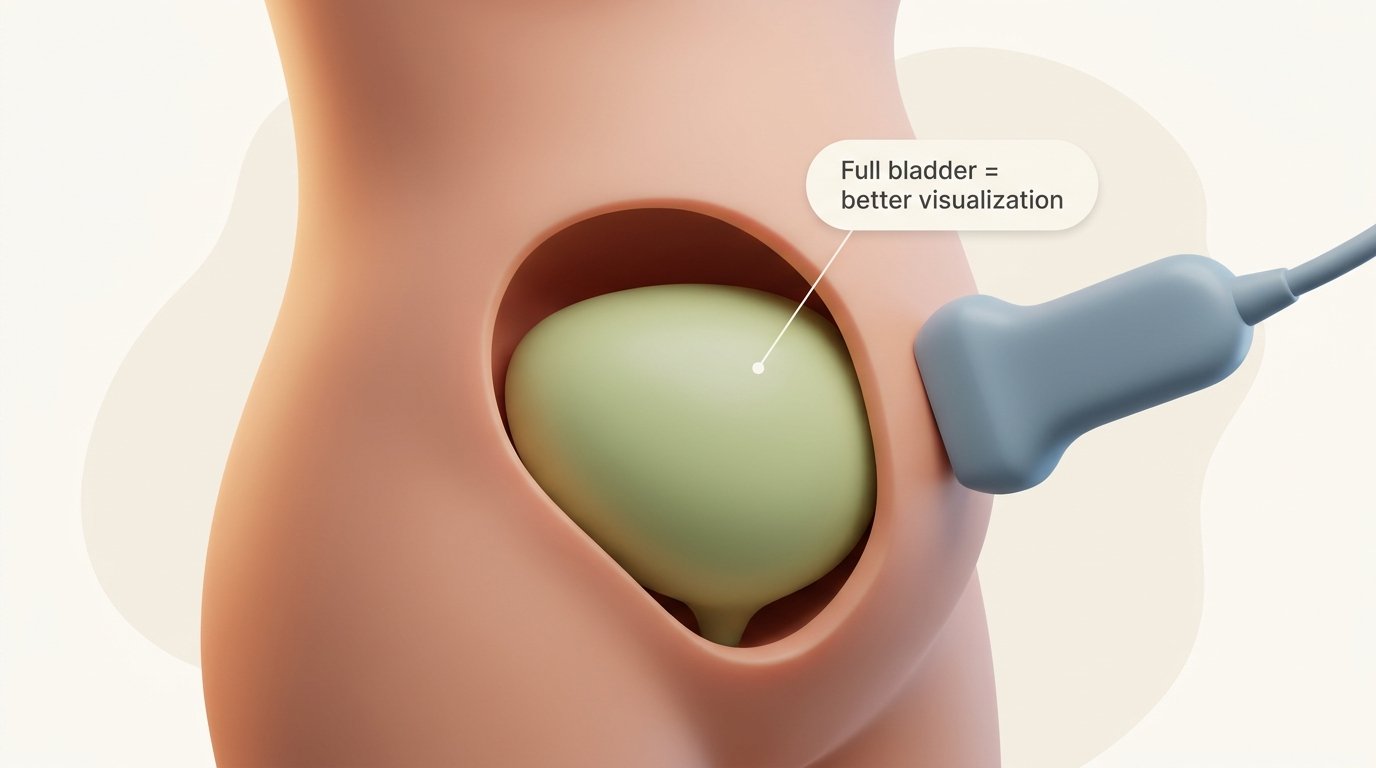
Simplified 3D torso cross-section in representational style; Sage Promise bladder volume visible; Mineral Blue ultrasound probe at exterior surface; single annotation callout.


You must come in with a moderately full bladder, which will allow your medical team to better visualize the uterus using abdominal ultrasound.
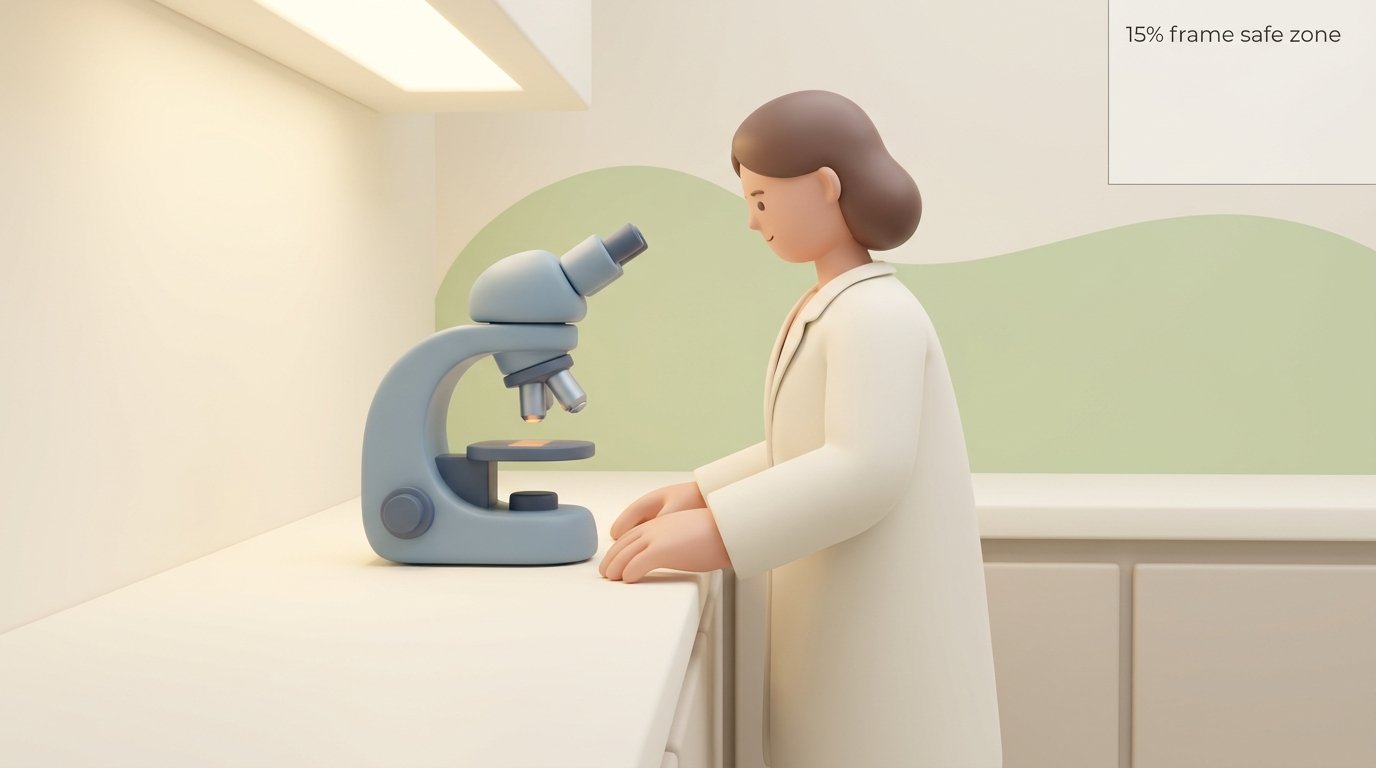
Laboratory benchtop environment; microscope in Mineral Blue at left-third; embryologist figure at right-center in 3/4 angle toward bench; Sage Promise biomorphic accent at 25% opacity in background.


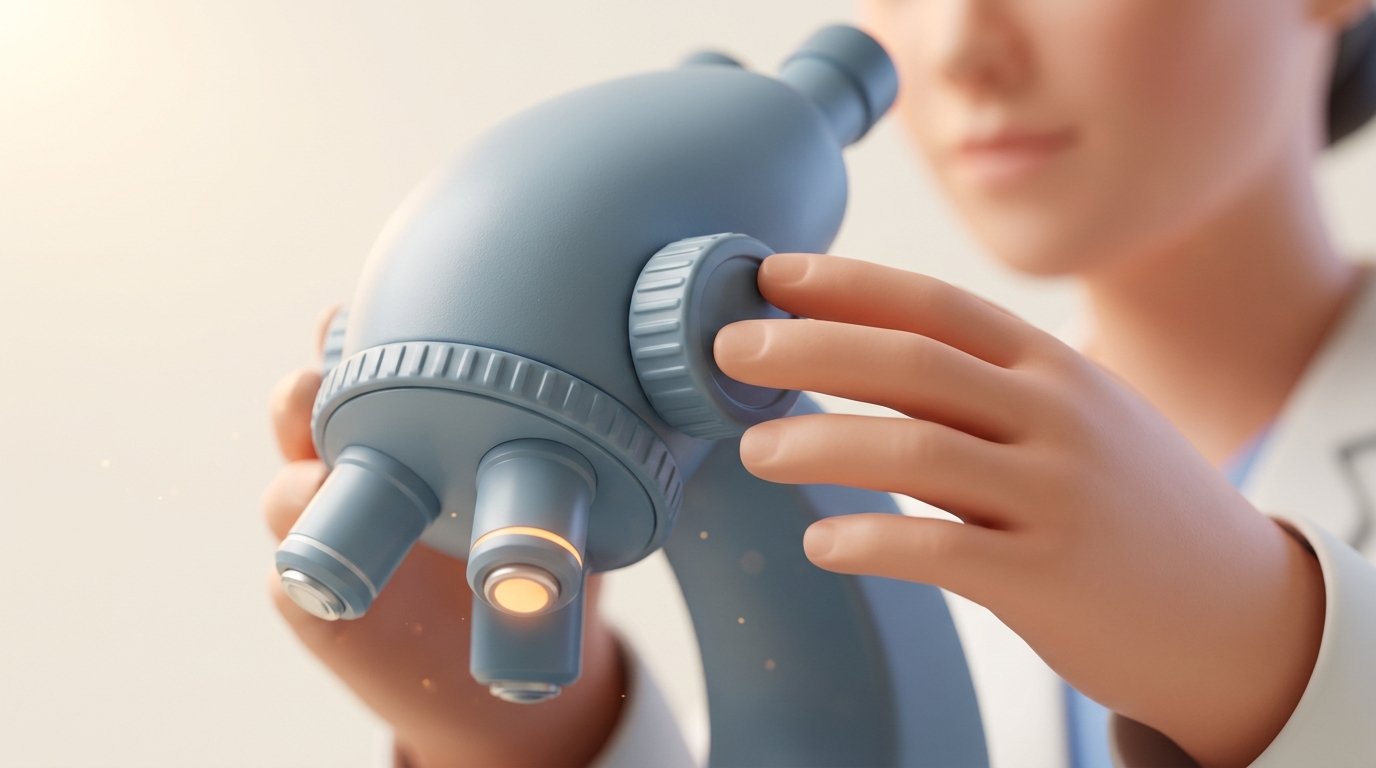
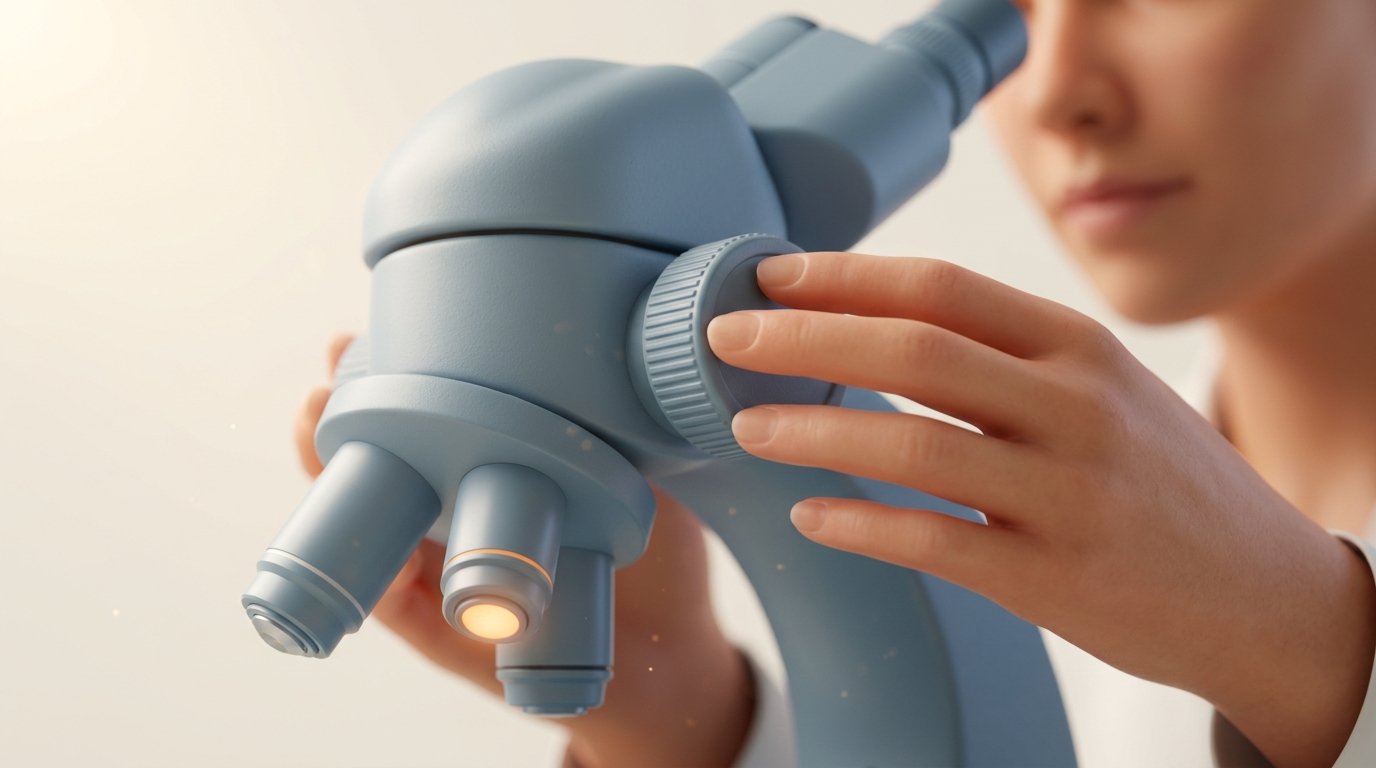
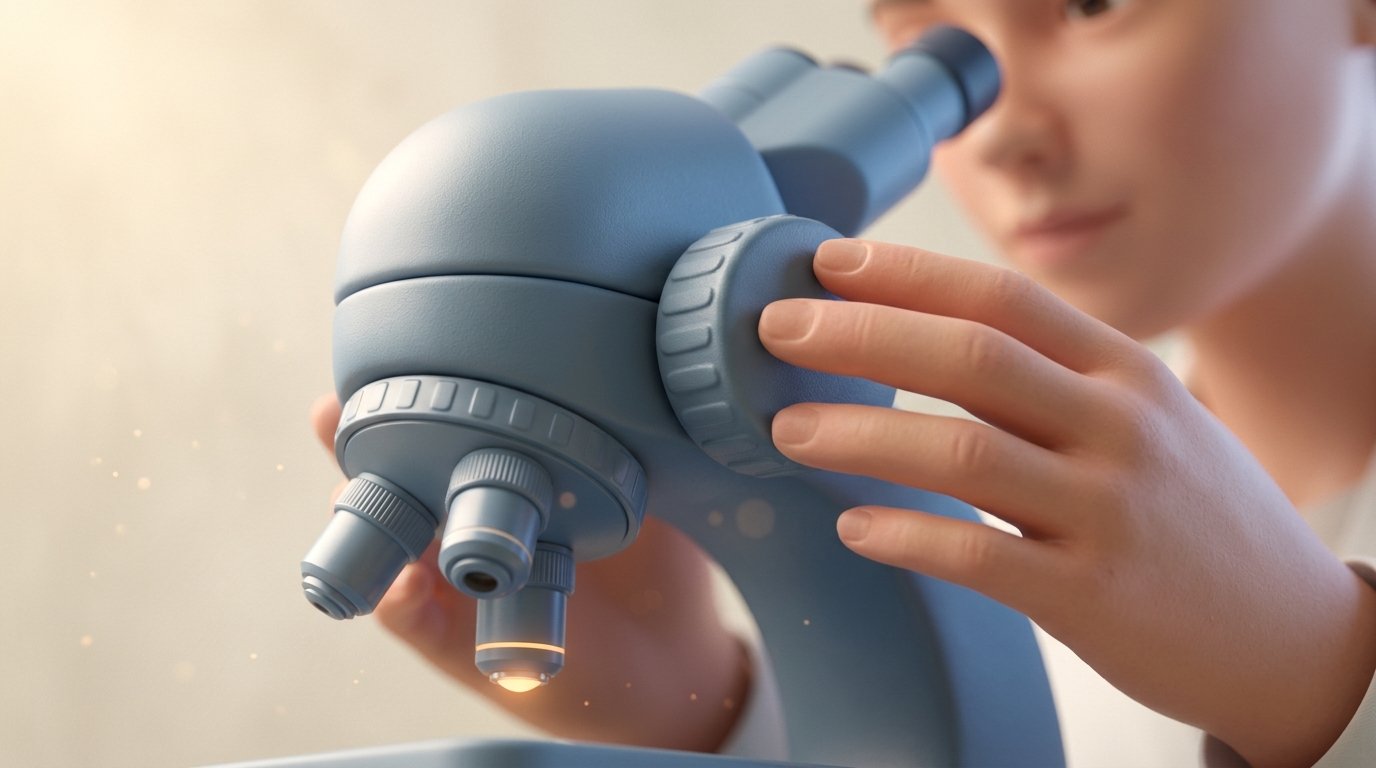
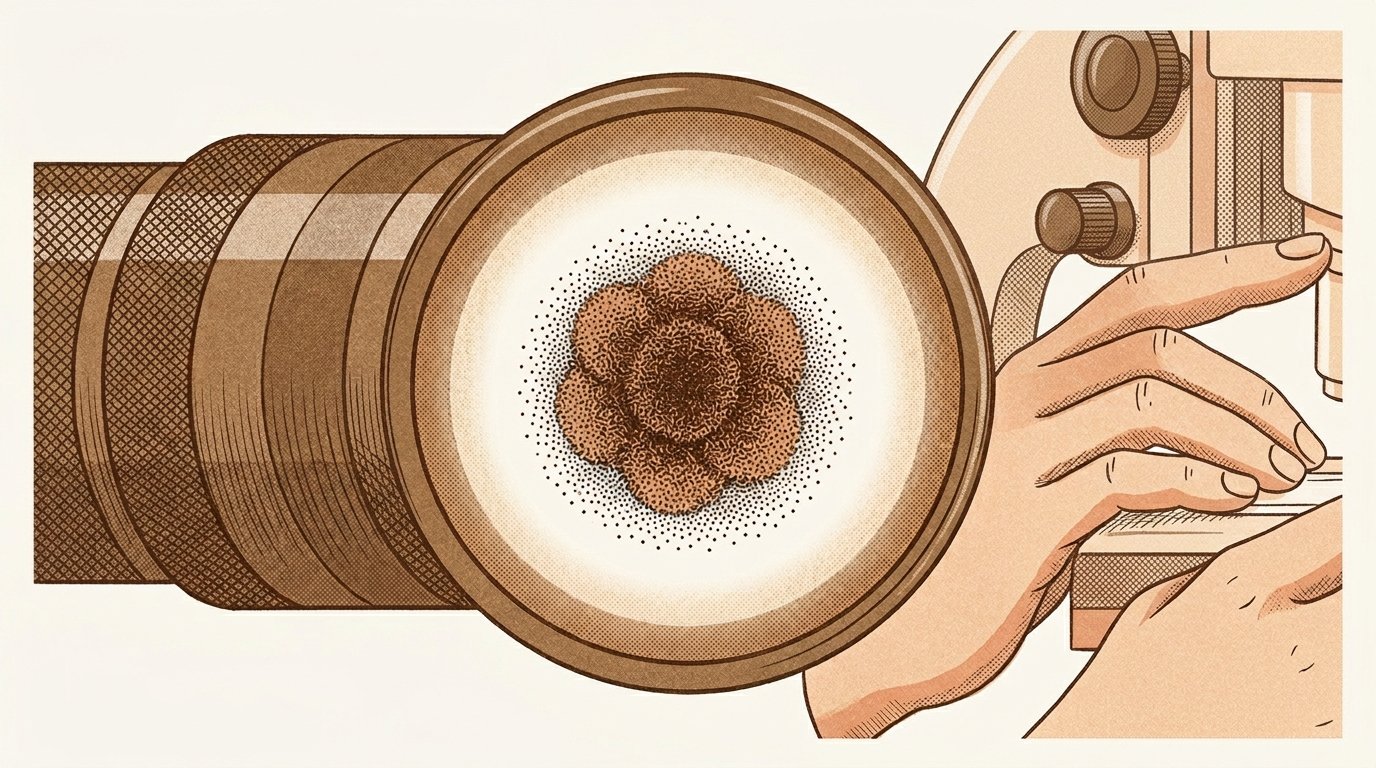
To start the embryo transfer procedure, the embryologist looks at the embryo under a microscope.
Close-up of microscope with embryologist's hands on focus wheel; face suggested but soft-focus at eyepiece in upper-right; warm light particles in mid-foreground; Apricot Light reflection on objective lens.


(continuation — embryologist at workstation, instruments laid out)
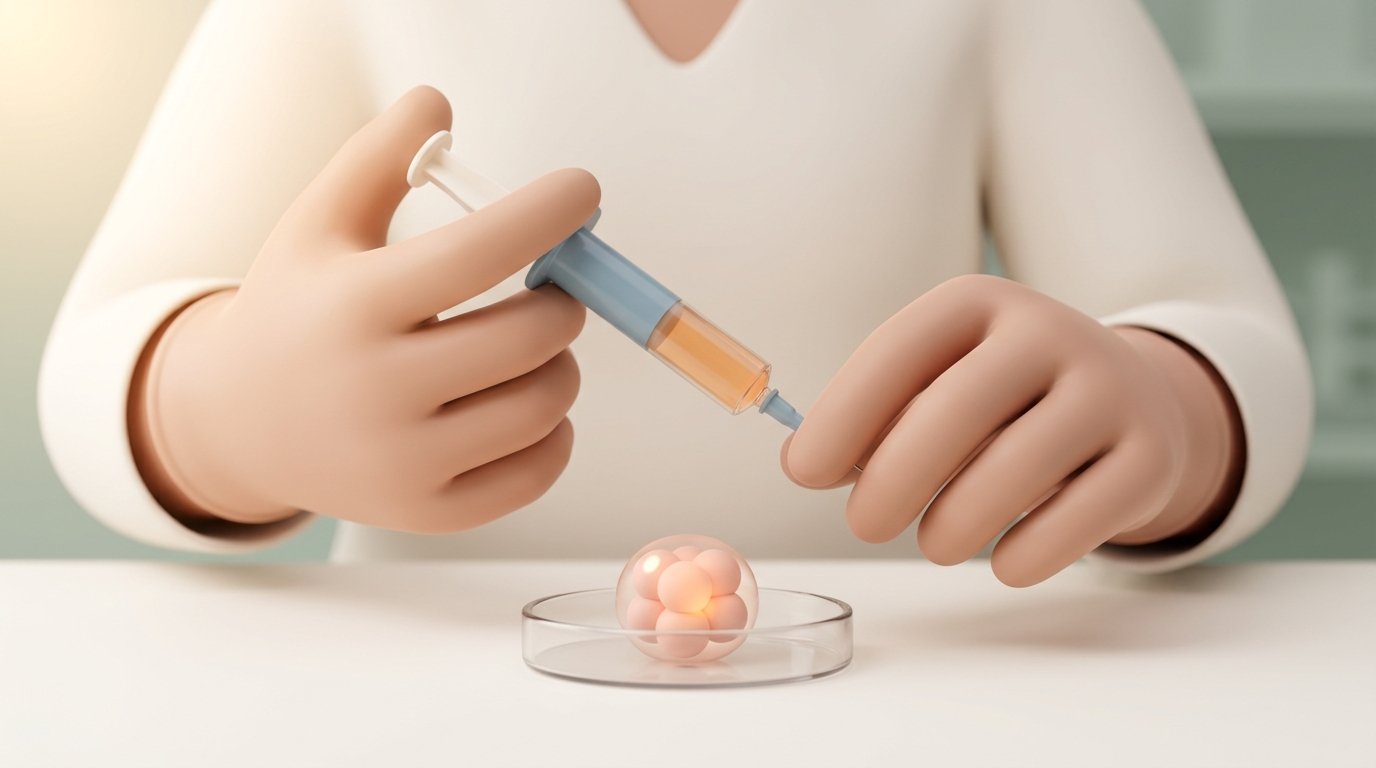
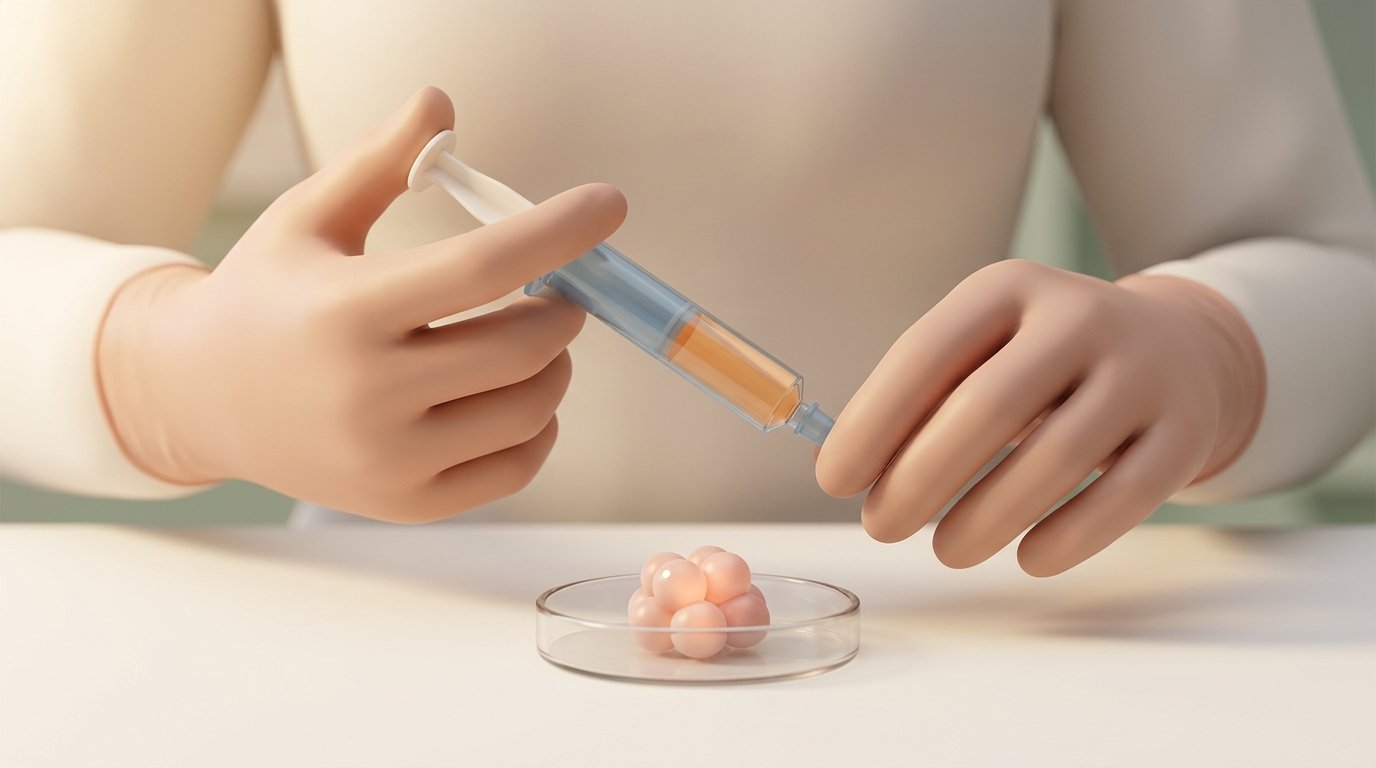
Embryologist's hands hold the syringe at mid-frame close-up; petri dish with embryo cluster below on benchtop; Apricot Light culture media visible through translucent syringe body; plunger at neutral position.


Using a small syringe, the embryologist draws the embryo and a small amount of culture media into the thin, flexible transfer catheter.
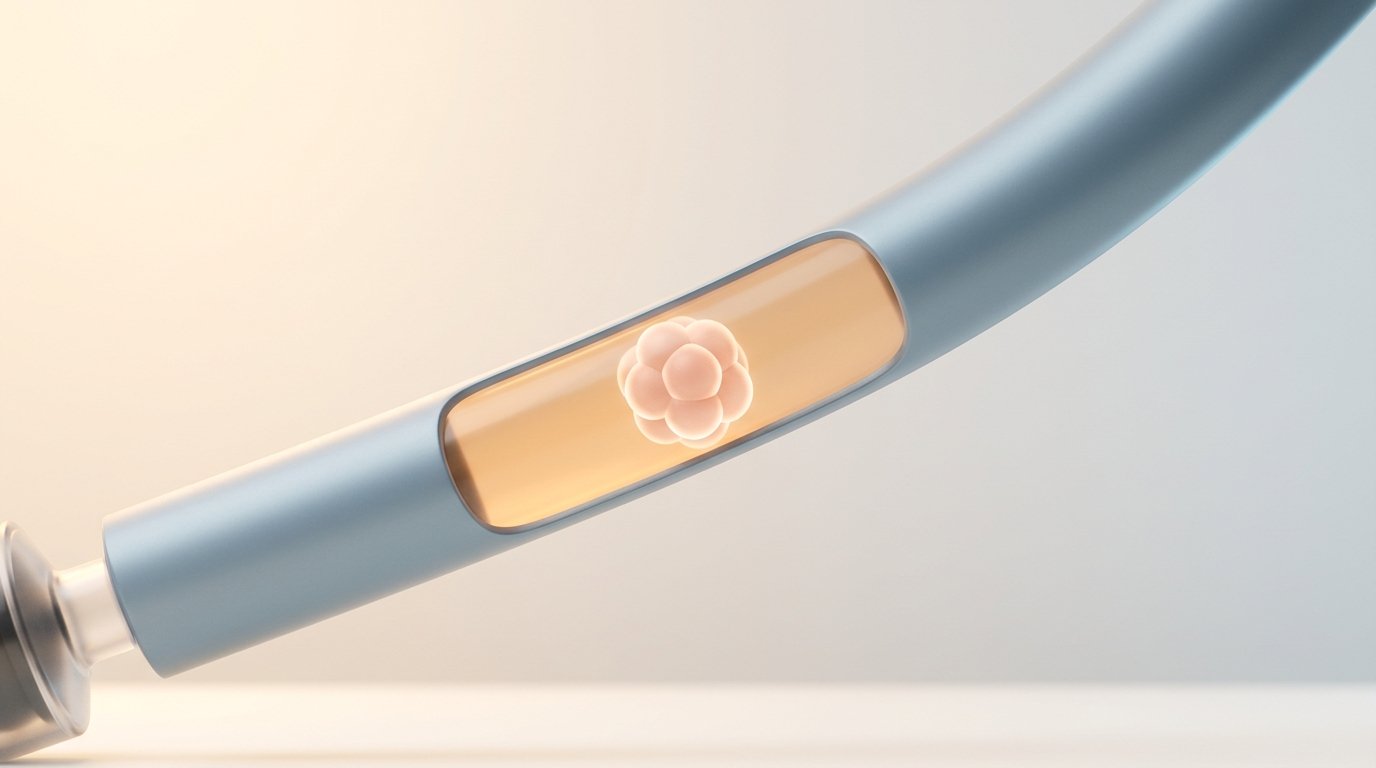
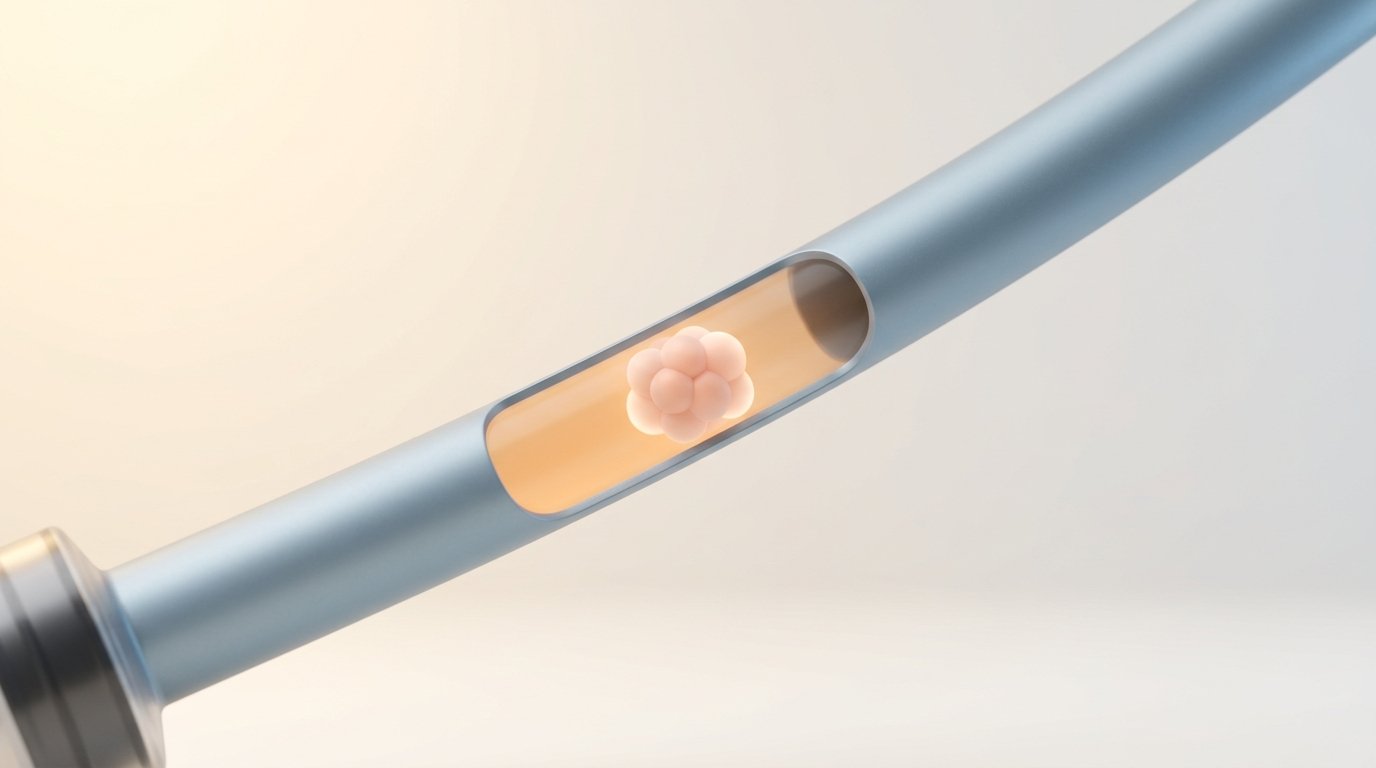
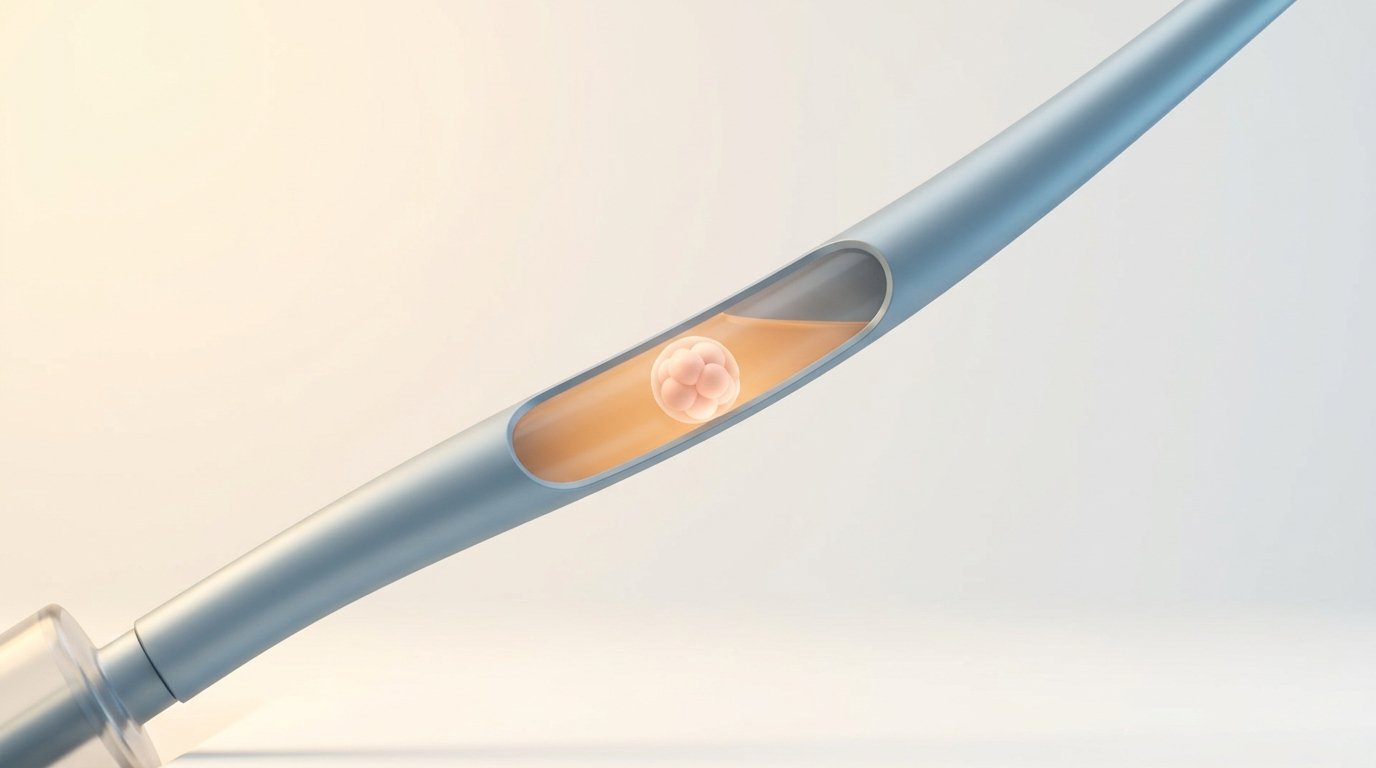
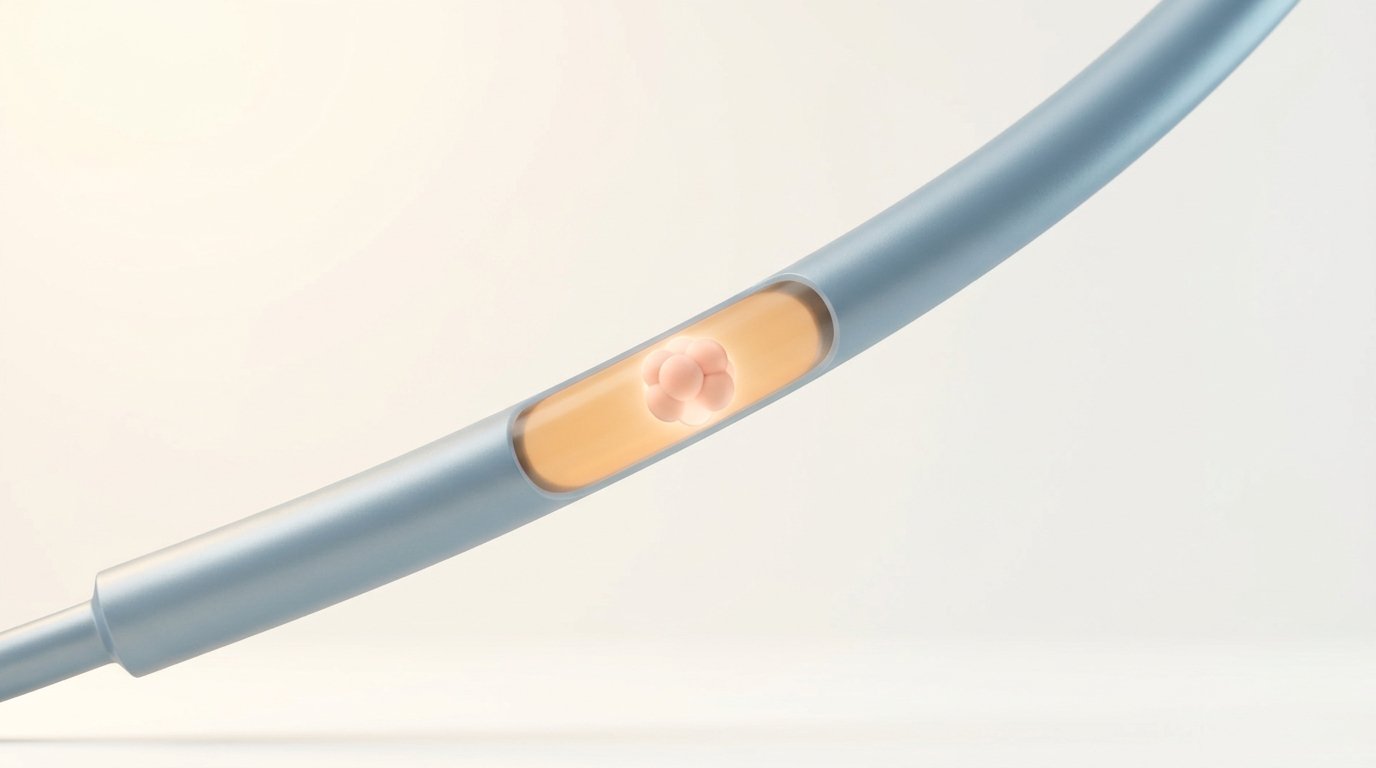
Extreme macro close-up; catheter running diagonally lower-left to upper-right; embryo cluster visible at 40% along catheter length inside translucent tube; Apricot Light culture media surrounding it.


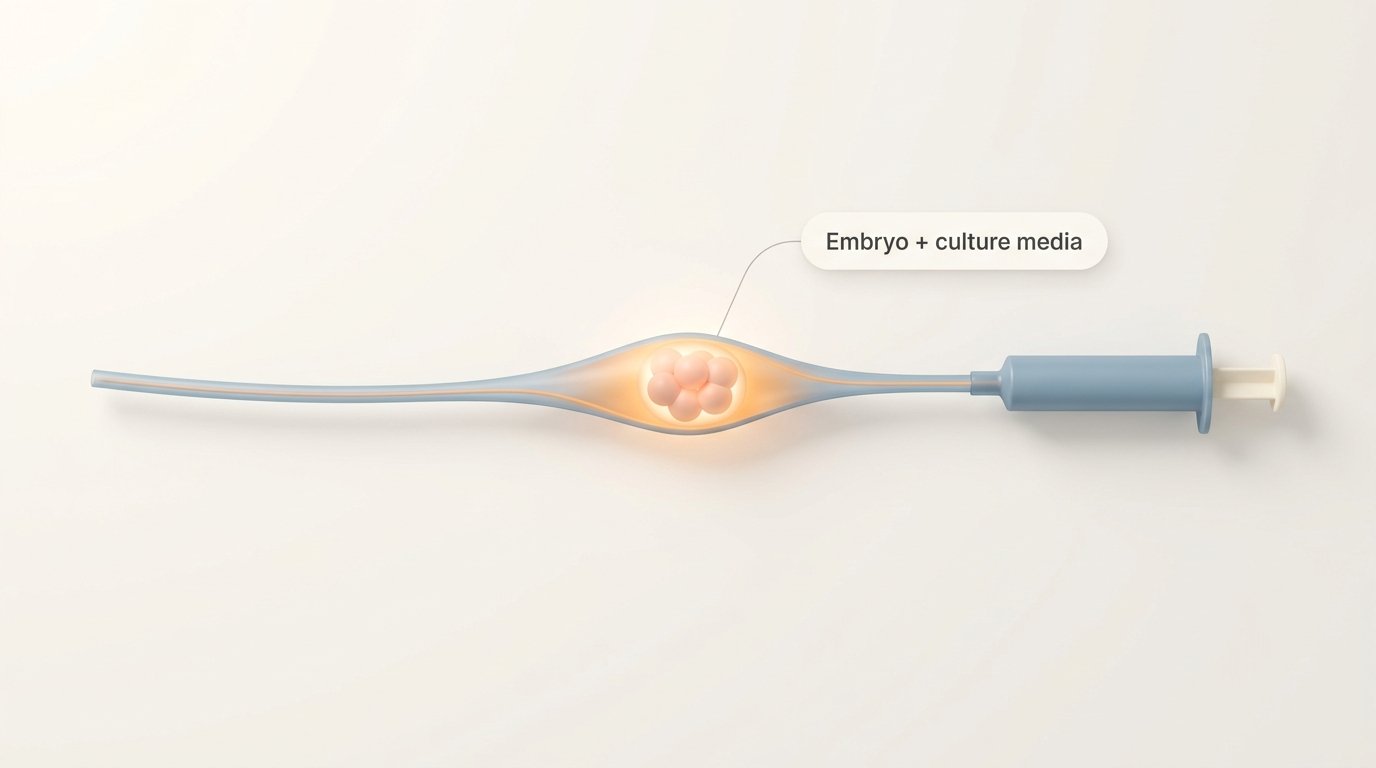
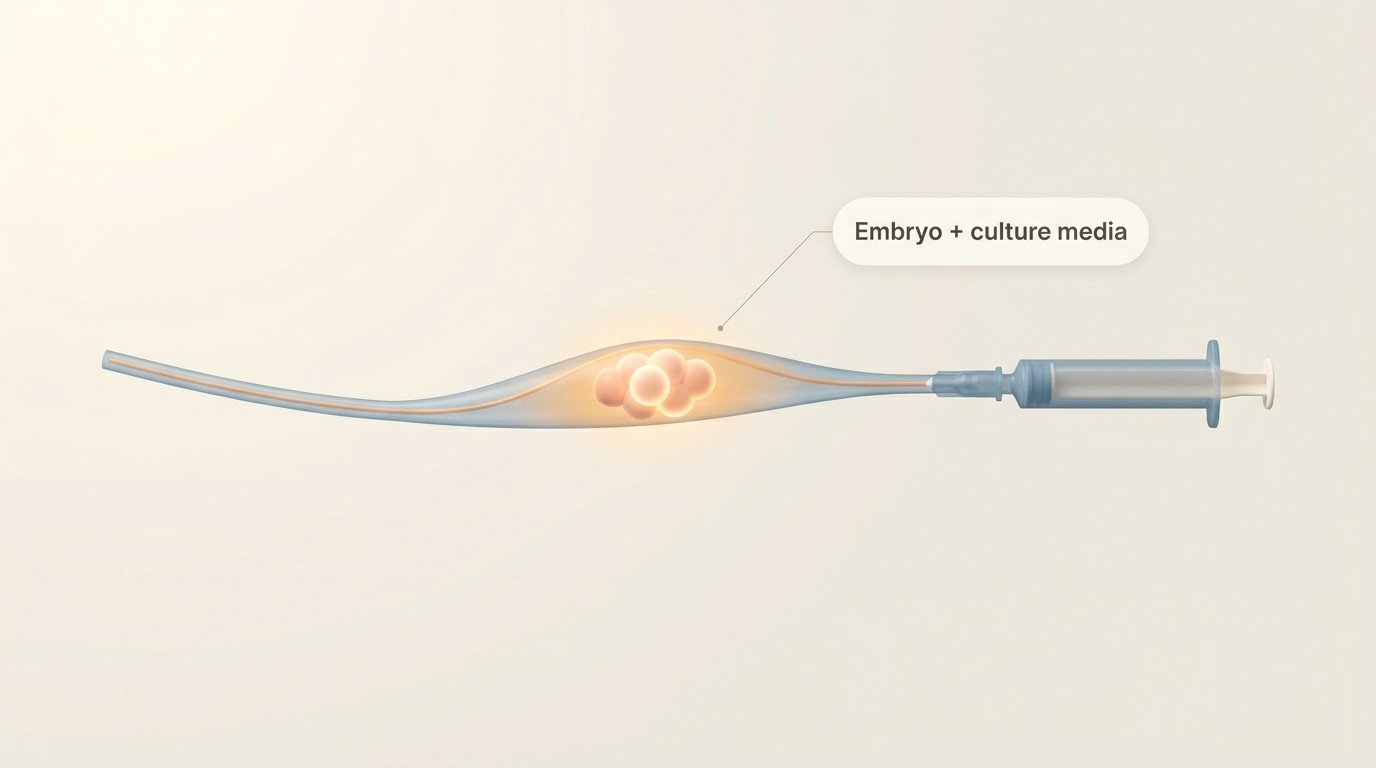
(continuation — catheter fully loaded, embryo and culture media in the catheter)
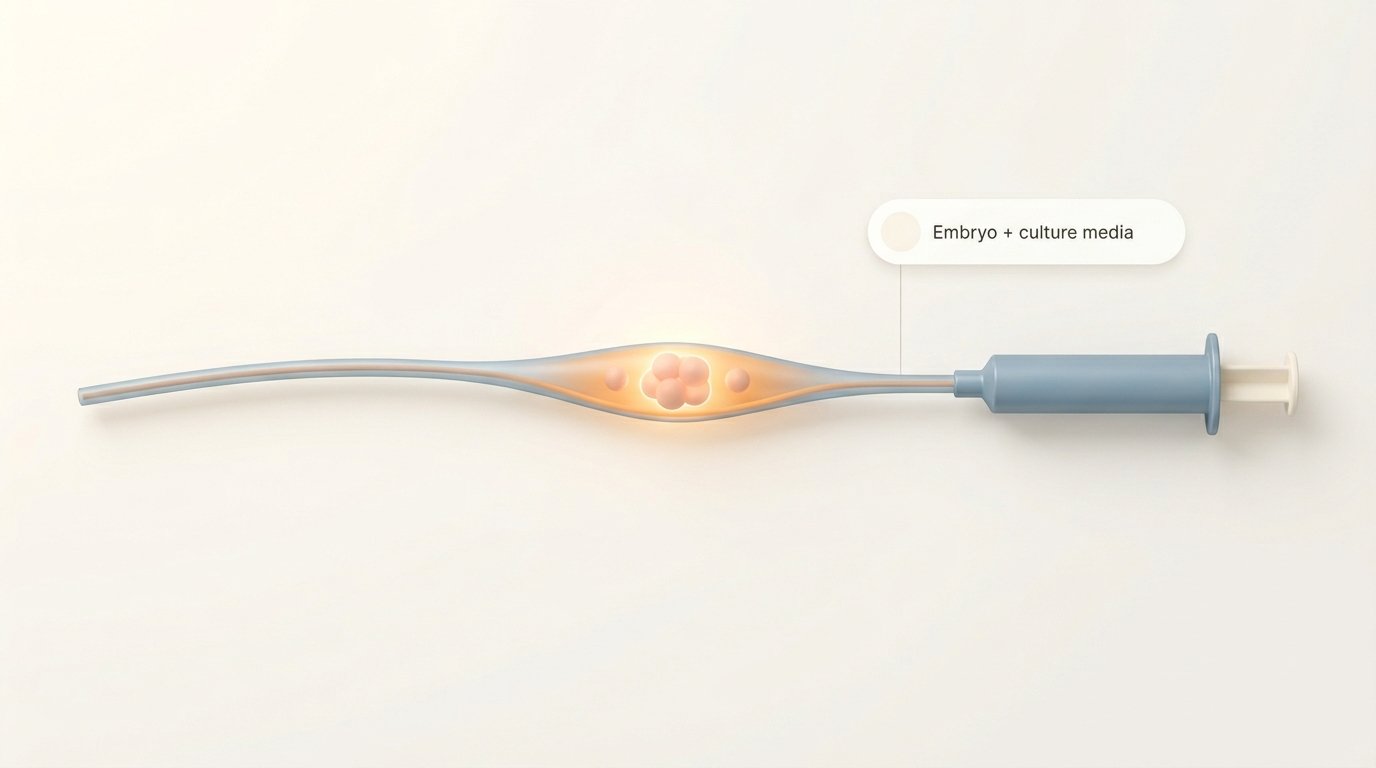
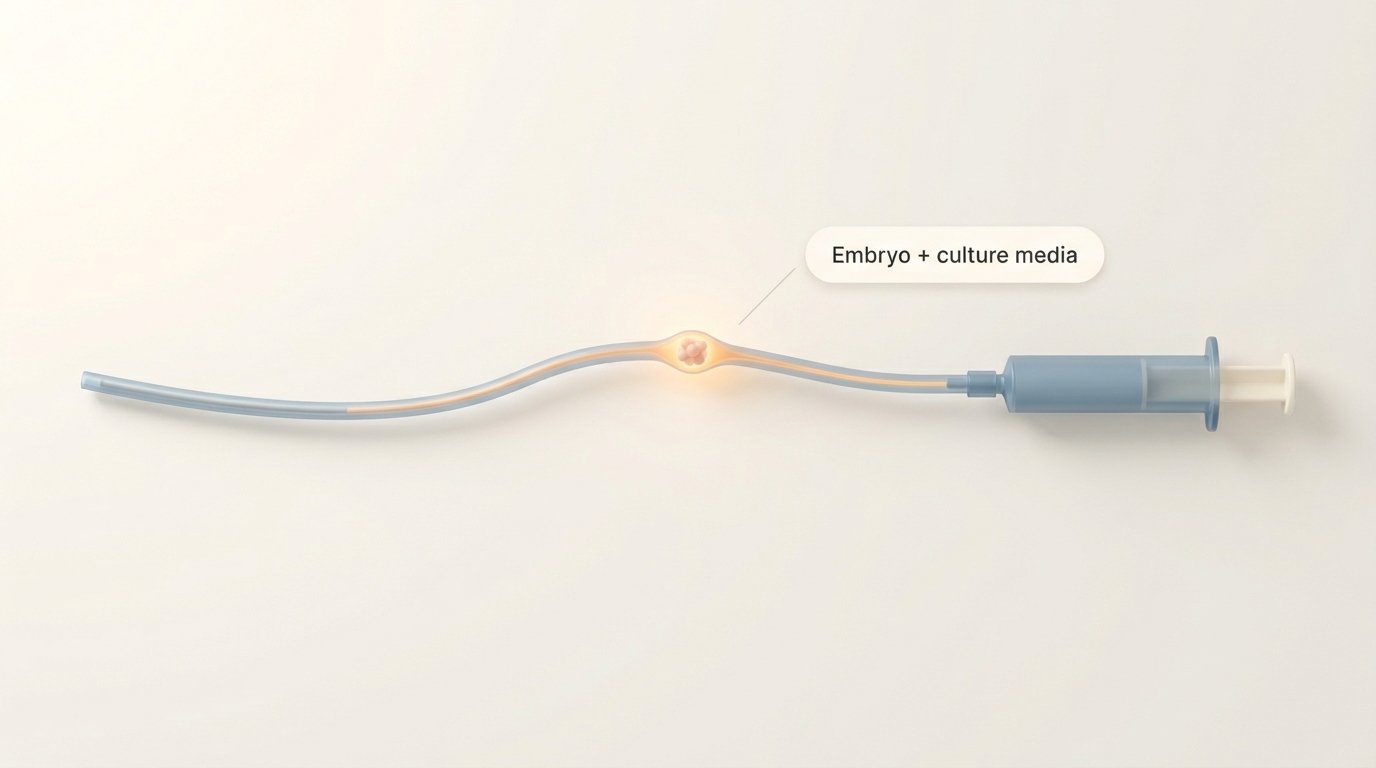
Full-length catheter in horizontal orientation, centered vertically; embryo visible within as Apricot Light warm glow; single annotation callout 'Embryo + culture media'; Cream Canvas background.


(transition beat — instrument detail before procedure begins)
Speculum presented as a clean instrument on Cream Canvas surface; Mineral Blue soft 3D form in 3/4 angle; brief, matter-of-fact, no body context. (Note: Style 2 places the speculum at S11 instead of S12.)


A speculum is placed into the vaginal canal to visualize the cervix.
Pure transitional dissolve frame; warm Cream Canvas with Sage Promise biomorphic shape drifting through as a visual breath between instrument and anatomy.


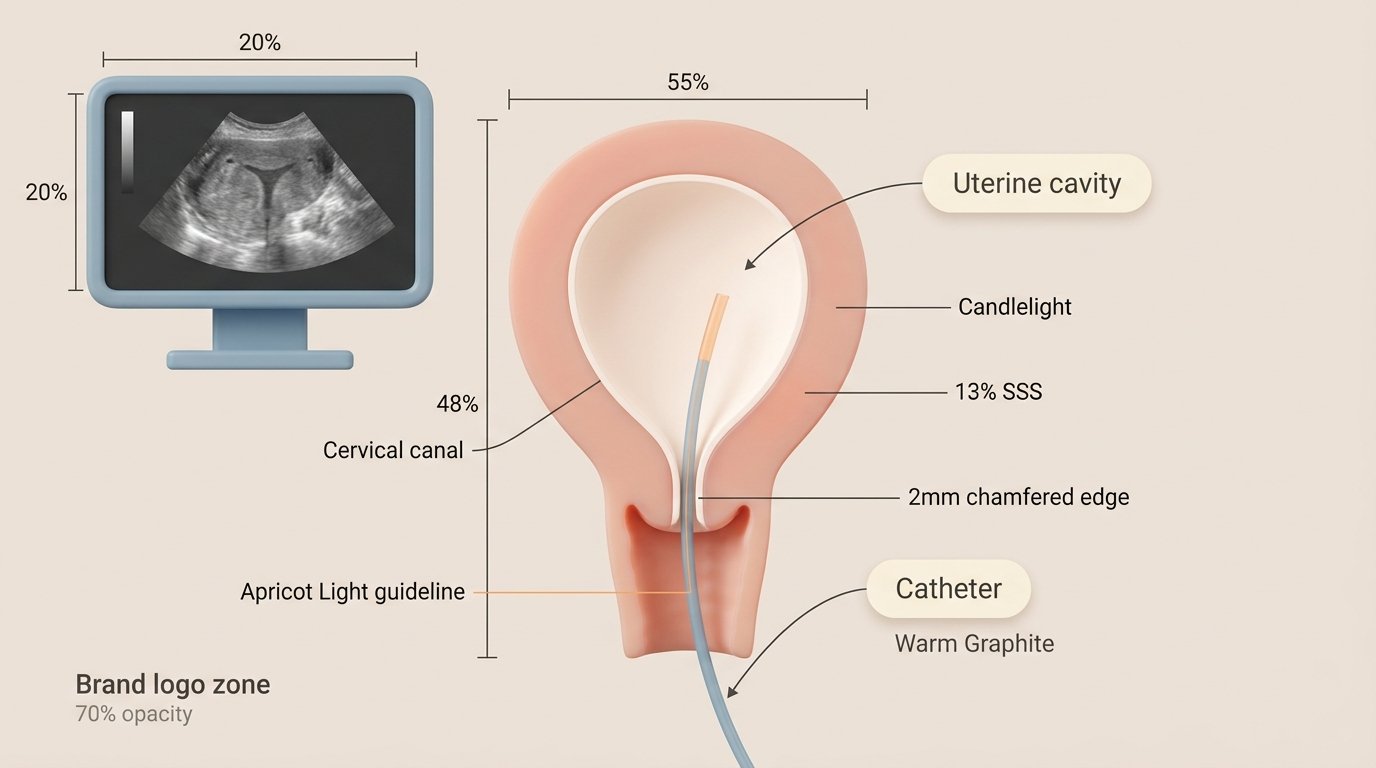
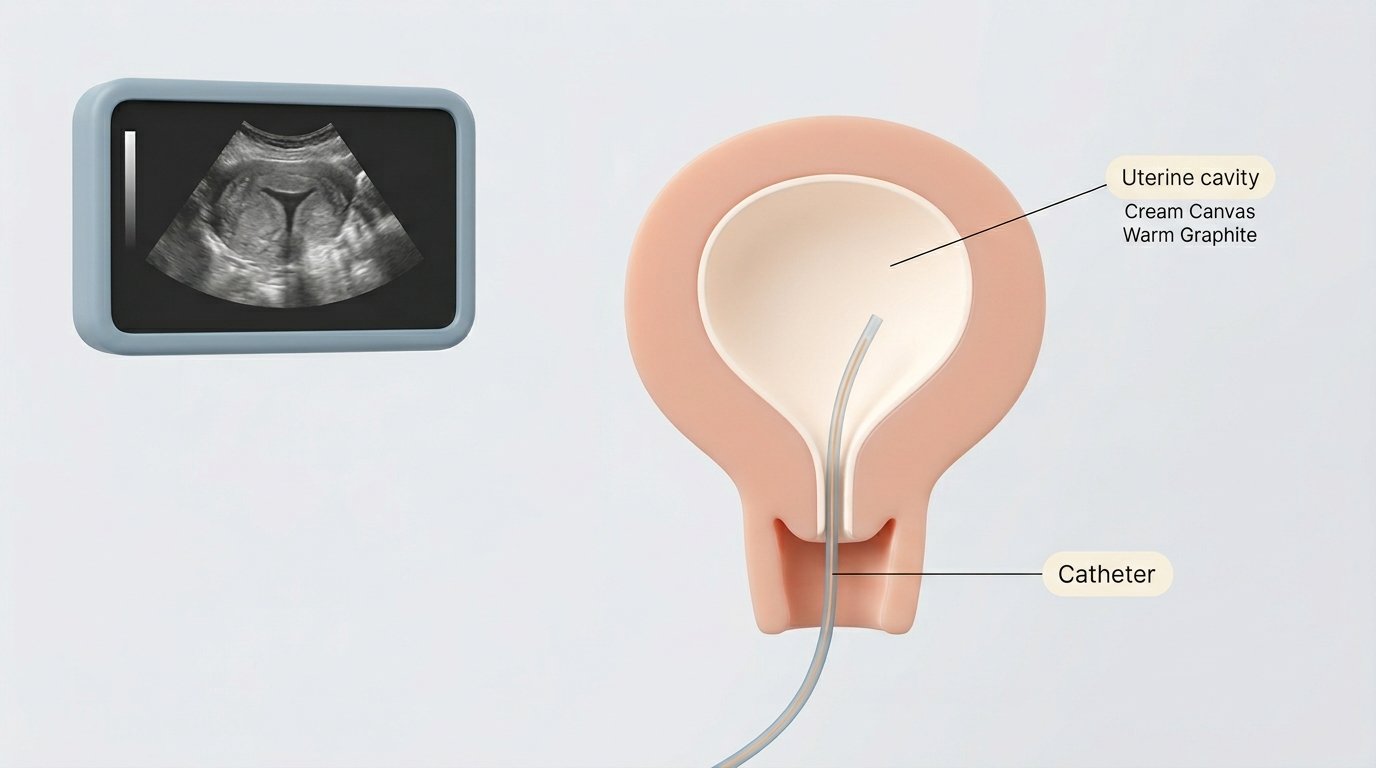
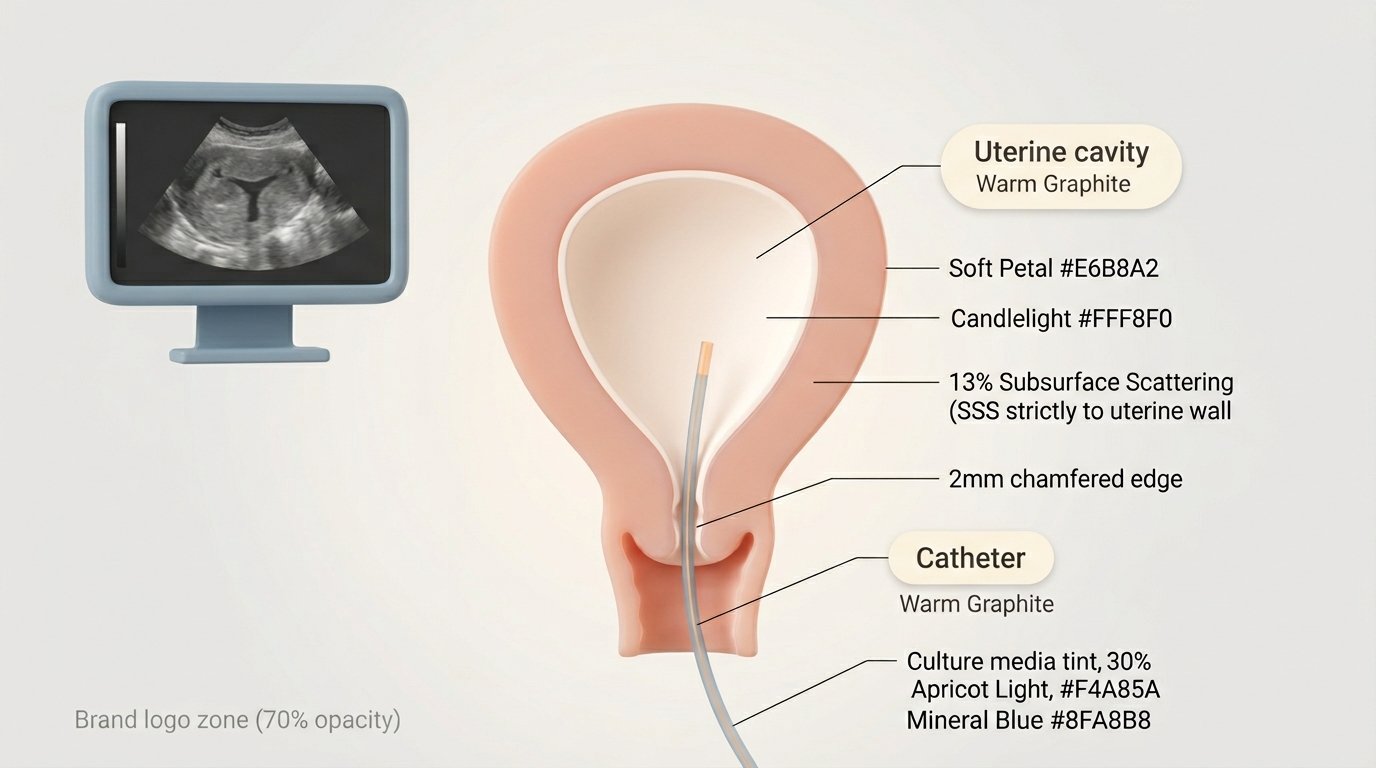
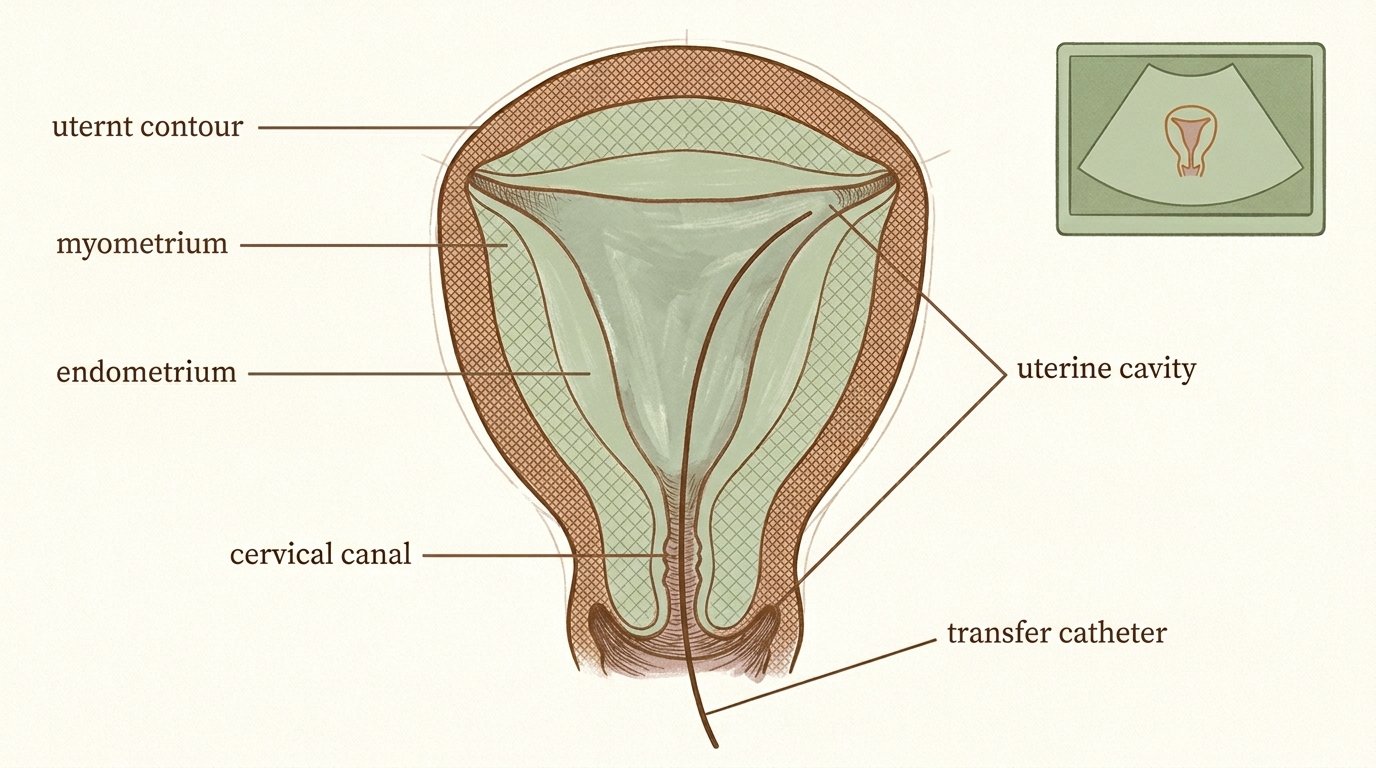
The clinician then threads the catheter through the cervix and into the upper portion of the uterus, often with guidance from an abdominal ultrasound.
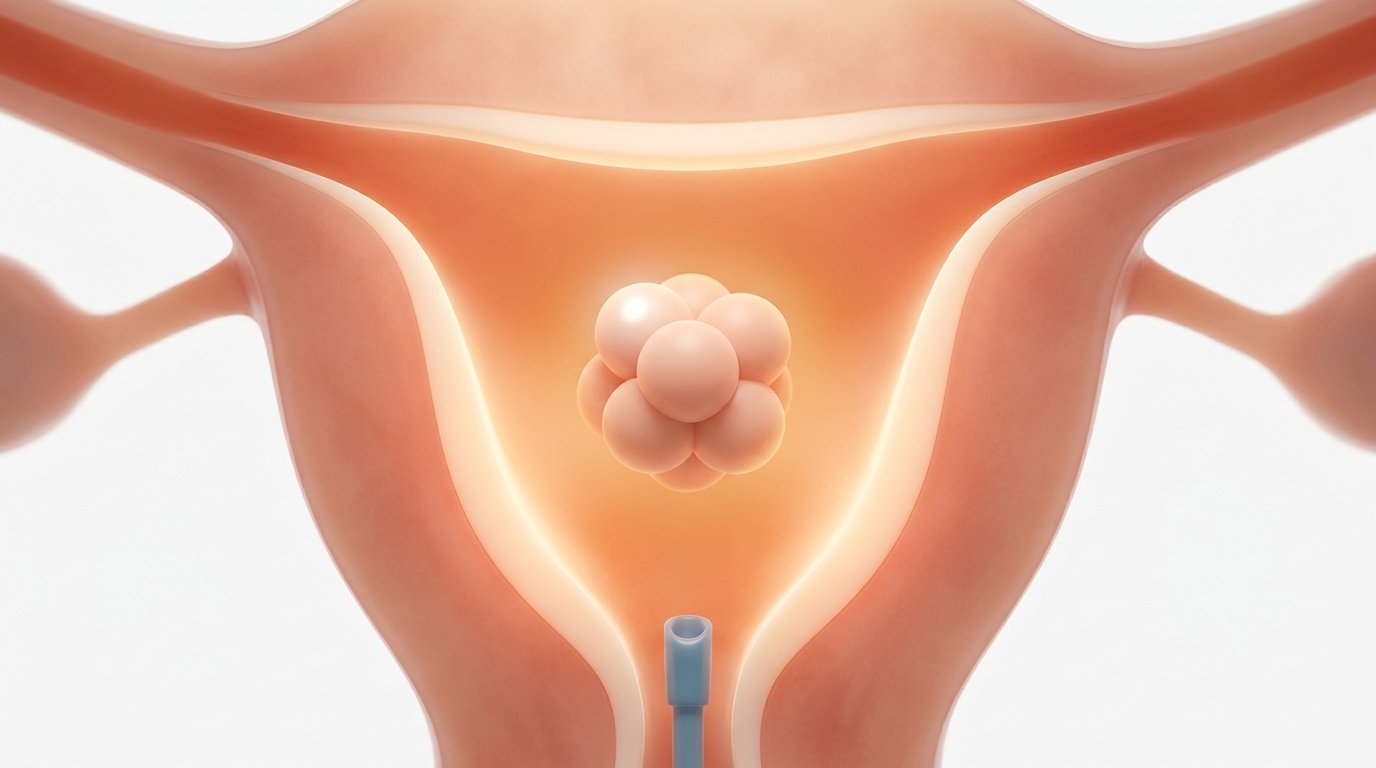
Uterus cross-section in midline cut — Soft Petal exterior, Candlelight interior cavity; catheter threads from below in Mineral Blue; Apricot Light guideline traces procedure path; ultrasound monitor inset upper-left; max 2 annotation callouts.


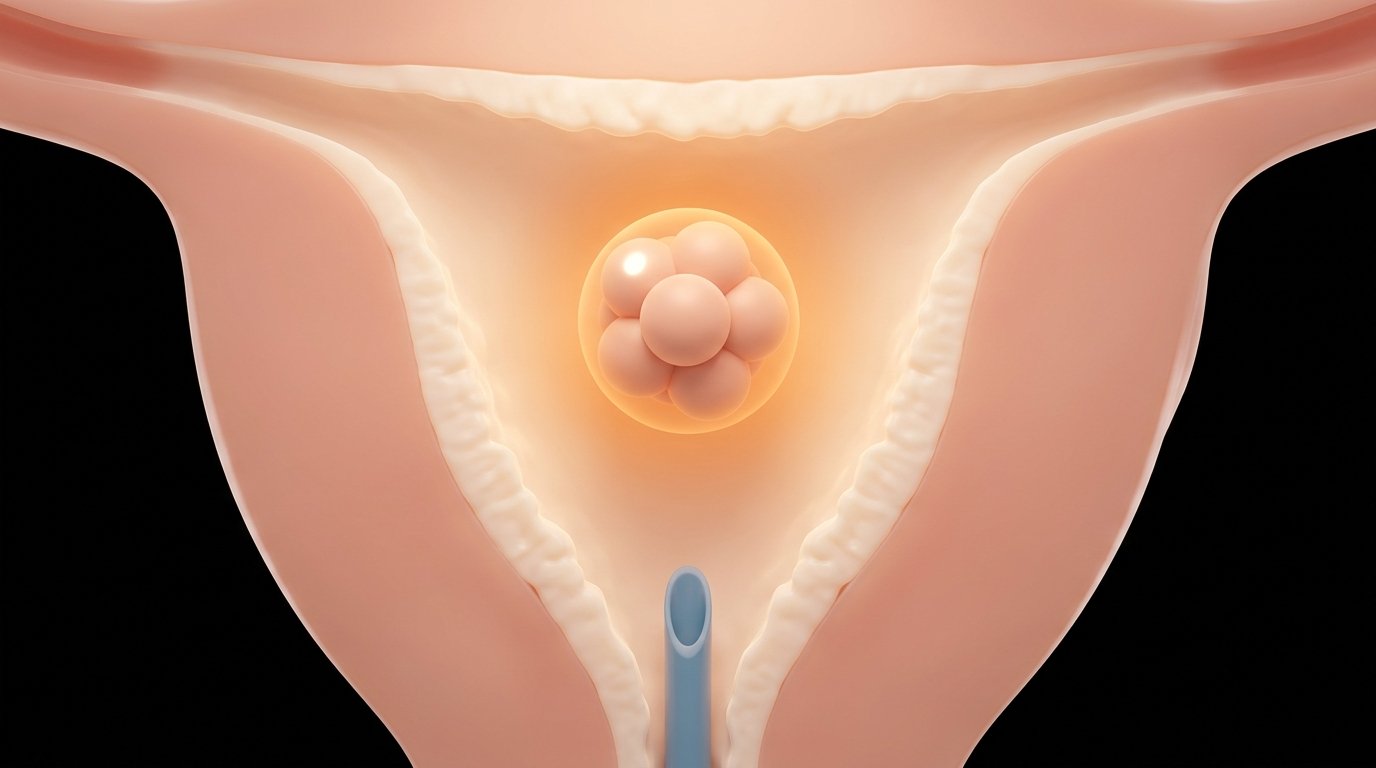
Then the embryo is released into the uterine cavity for implantation. The procedure typically takes less than 10 minutes.
Intimate uterus cross-section; embryo at maximum luminance emerging from catheter tip; peak SSS 15%, single clean catch-light; bloom 6% at release; Candlelight interior at warmest value; lower-third caption fades in after 3s.


Following the embryo transfer, your medical team will provide comprehensive instructions on next steps leading up to the pregnancy test.
Three-arc Time motif ring centered; five visual library silhouettes orbiting at 20–30% opacity; lower-third 'Your medical team will guide your next steps' in Nunito SemiBold; Sage Promise background at 60% saturation; warmest frame of the sequence.


The visual language of a meticulous scientific illustrator who also reads The New Yorker. Every mark intentional. Every texture felt. Riso-discipline, gouache-wash fills, hand-drawn contour.
Alto-leaning, chest voice resonance, 10–15% slower with breath preserved. The radiologist explaining your scan. Reference: The Daily narrator × senior physician on a long follow-up call.
Read full voice prompt →The frozen embryo transfer.
Title card opener — Crimson Text title in upper two-thirds, a wobbled Tobacco Ink rule at midpoint, embryo stipple form introduced for the first time in the lower-left third on clean Paper White.
style-3-editorial-grain/output-frames-style-3/ and re-run _build_showcase.py.On the day of your transfer, your frozen embryo or embryos will be thawed in the laboratory.
Full cryogenic dewar in center-right, Sage Mist nitrogen vapor rising from mouth, three embryo stipple forms floating partially obscured in vapor — frozen, not yet thawed.
style-3-editorial-grain/output-frames-style-3/ and re-run _build_showcase.py.Freezing and thawing technology has improved significantly, but there's still a risk that the embryo will not survive the thaw.
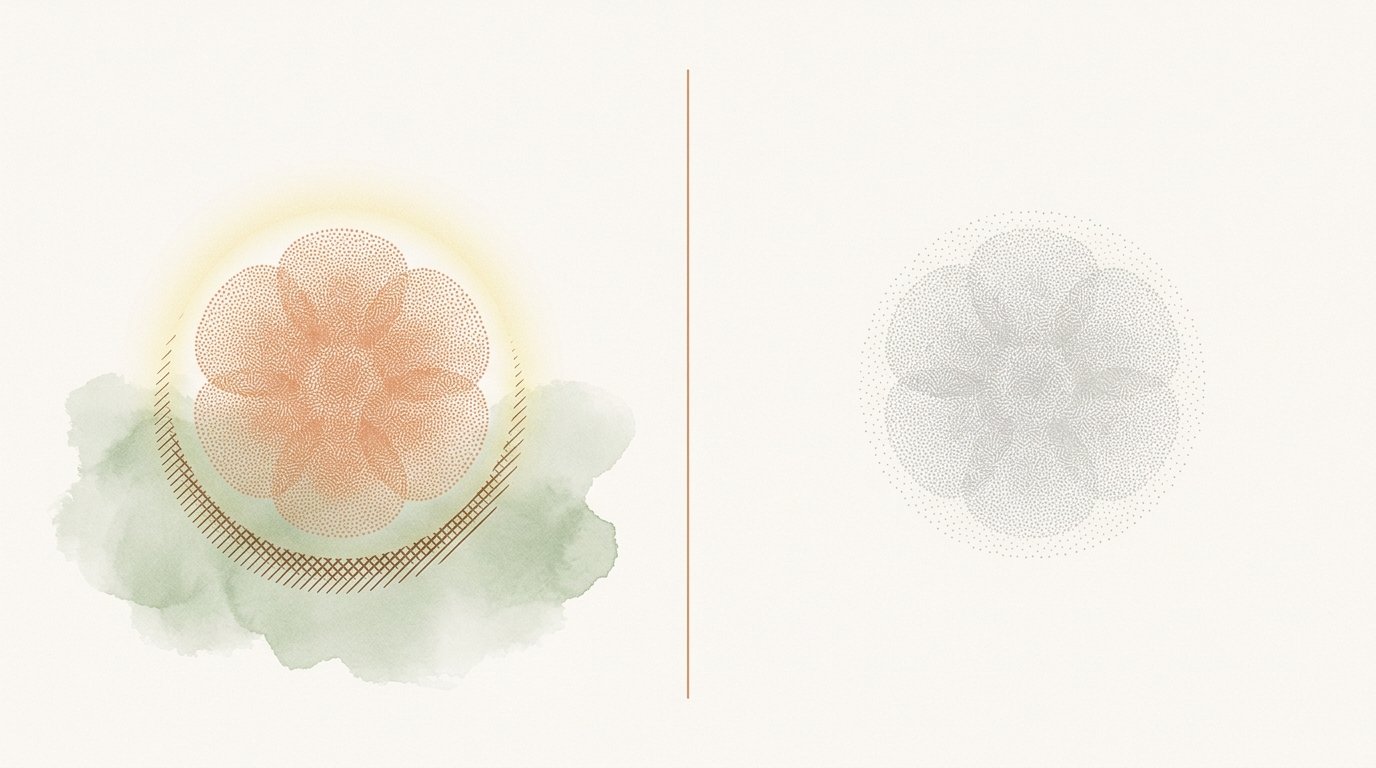
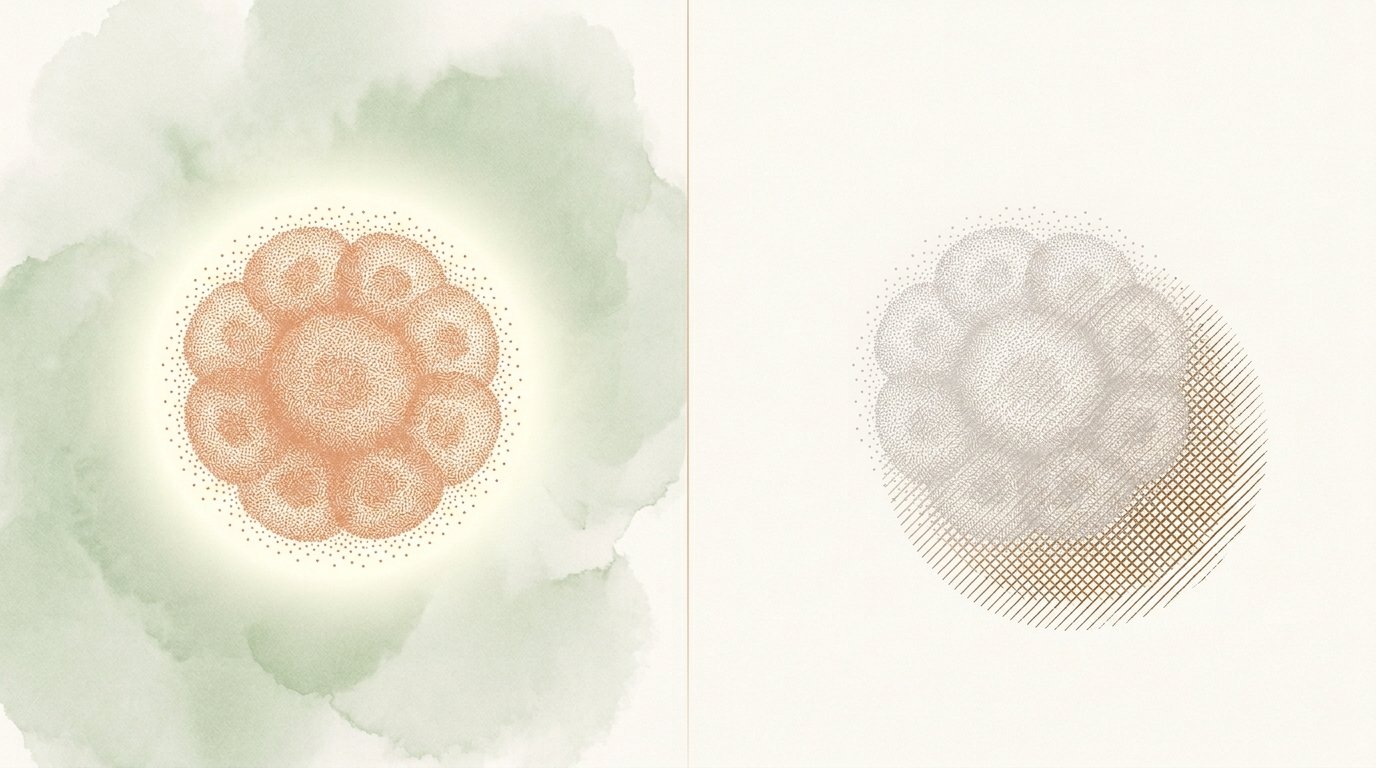
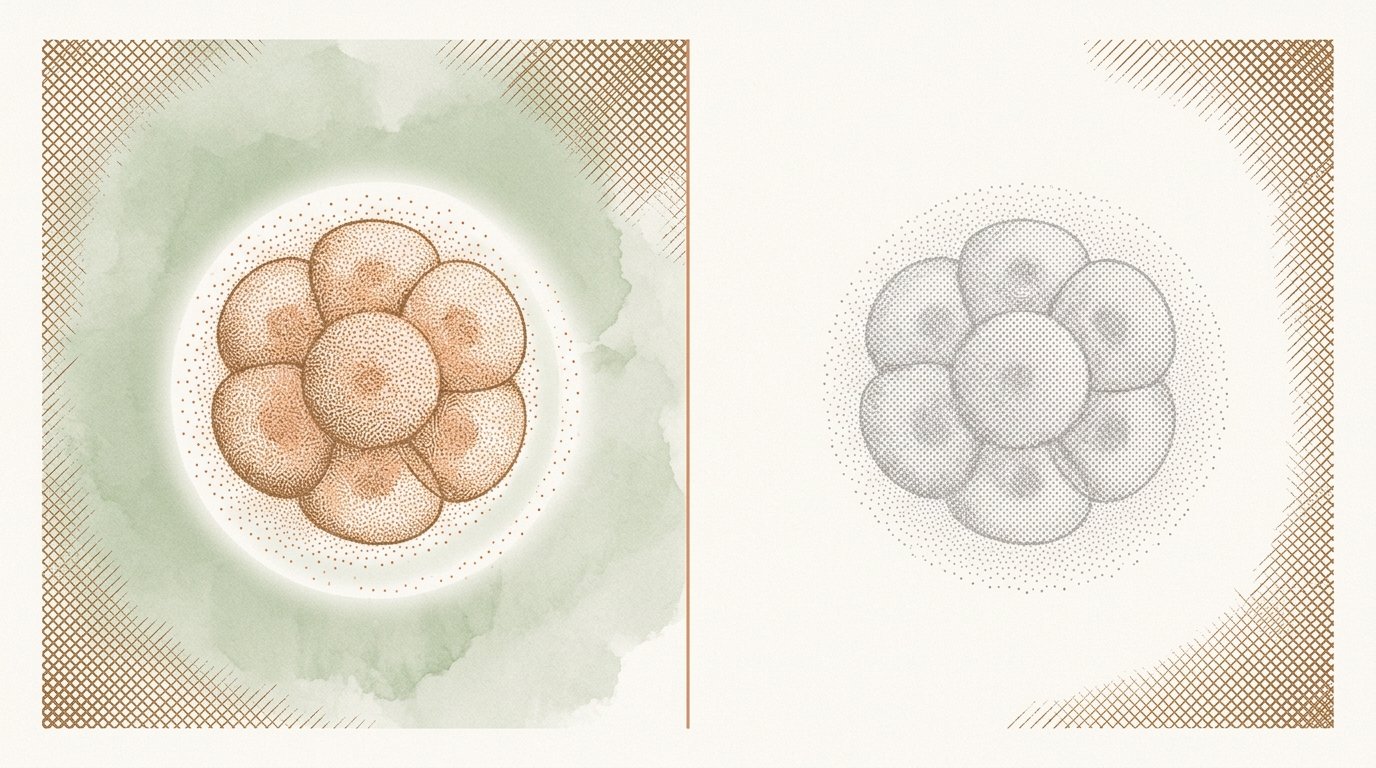
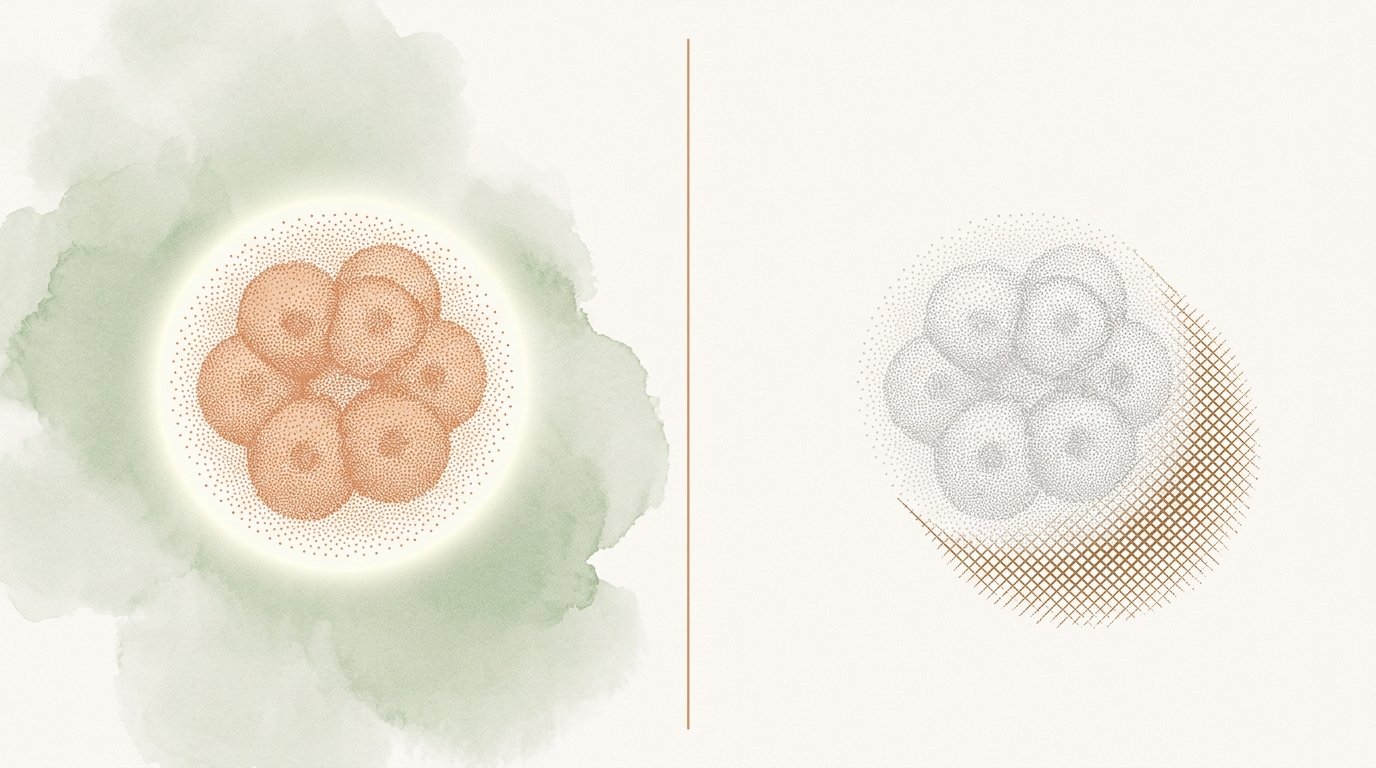
Split horizontal composition — left half shows a living embryo emerging from Sage Mist vapor in full Clay Flush stipple; right half shows a second embryo in ghost-stipple Press Slate at 30% opacity representing the survival risk, separated by a bare Burnished Amber line.


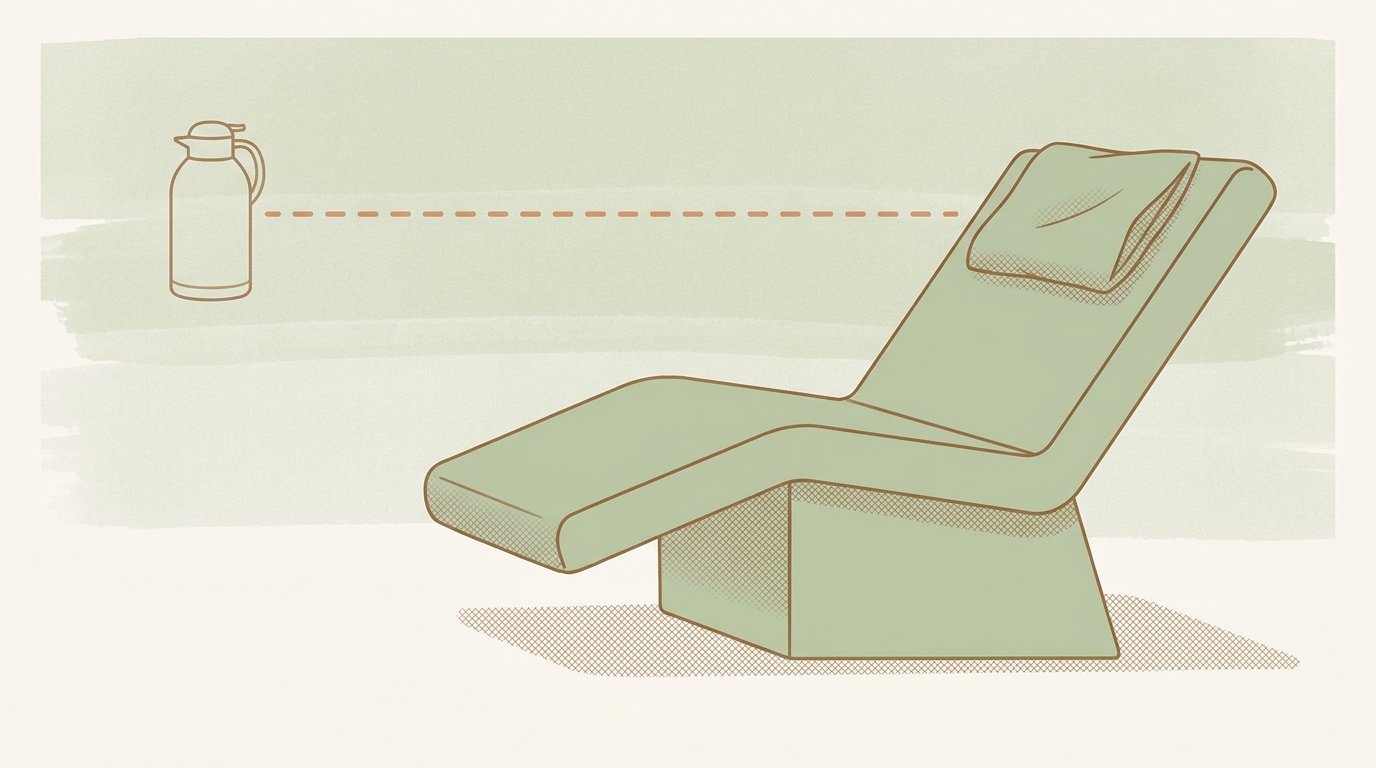
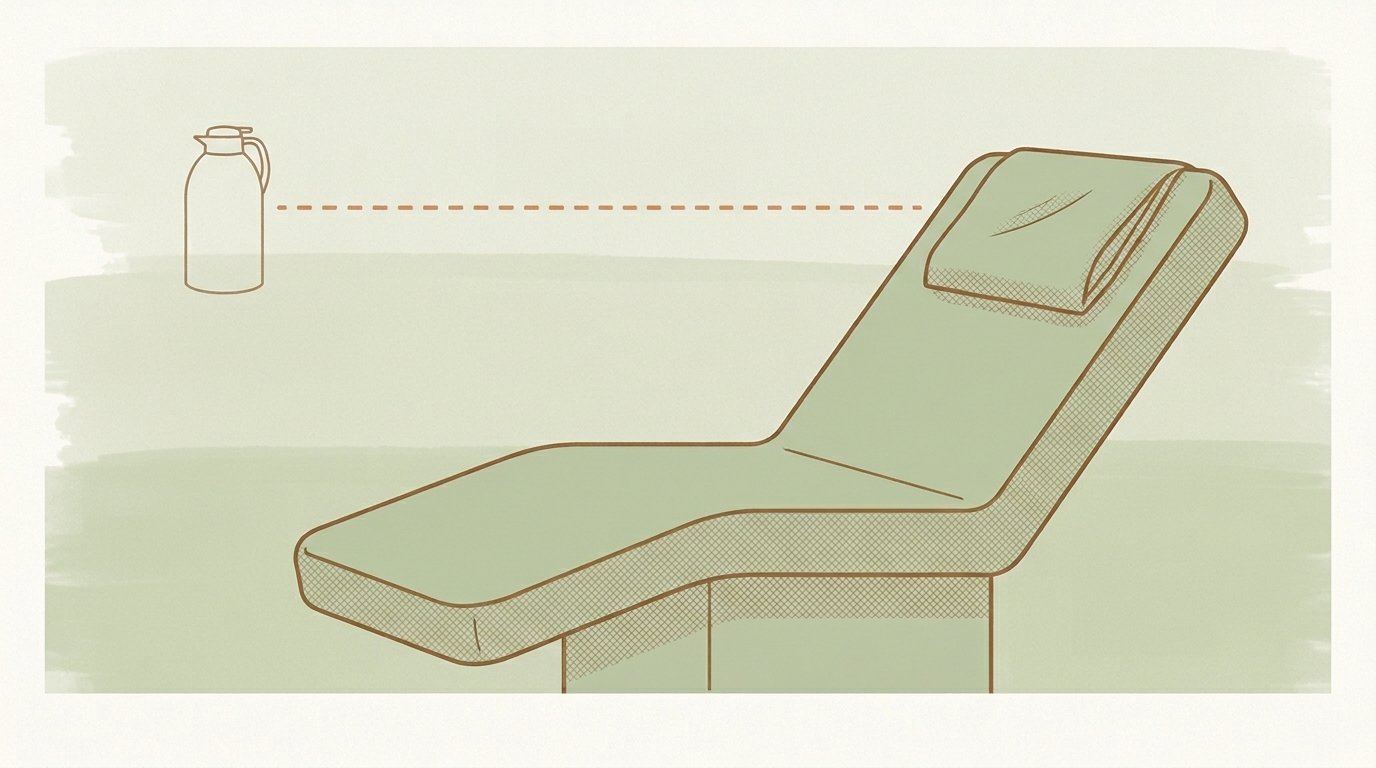
If this occurs and you have extra embryos in storage, there will still be time to thaw an additional embryo.
Exam chair as calm horizontal anchor in right two-thirds, small dewar silhouette upper-left, a Burnished Amber dashed line connecting them — continuity, backup, care. Cross-hatch shadows at their lightest.


The transfer procedure is simple and nearly painless, and in the vast majority of cases, sedation is not required.
Editorial chapter-opening layout — Burnished Amber full-width rule at golden ratio, 'The Transfer' title above in Crimson Text, embryologist hands at rest below the rule on clean Paper White. Hands carry the scene's reassurance.


You must come in with a moderately full bladder, which will allow your medical team to better visualize the uterus using abdominal ultrasound.
Reclining patient torso (no face) in center-right, ultrasound transducer resting on abdomen, fan-shaped Clay Flush beam field extending left with a ghostly uterine outline inside it. Burnished Amber callout labels the procedure.


To start the embryo transfer procedure, the embryologist looks at the embryo under a microscope.
Circular microscope eyepiece left-third as a vignette frame-within-frame — embryo in full Clay Flush stipple with Lantern Vellum halo inside the circle; embryologist hands at microscope stage right. The embryo at its most precious.


(continuation — embryologist at workstation, instruments laid out)
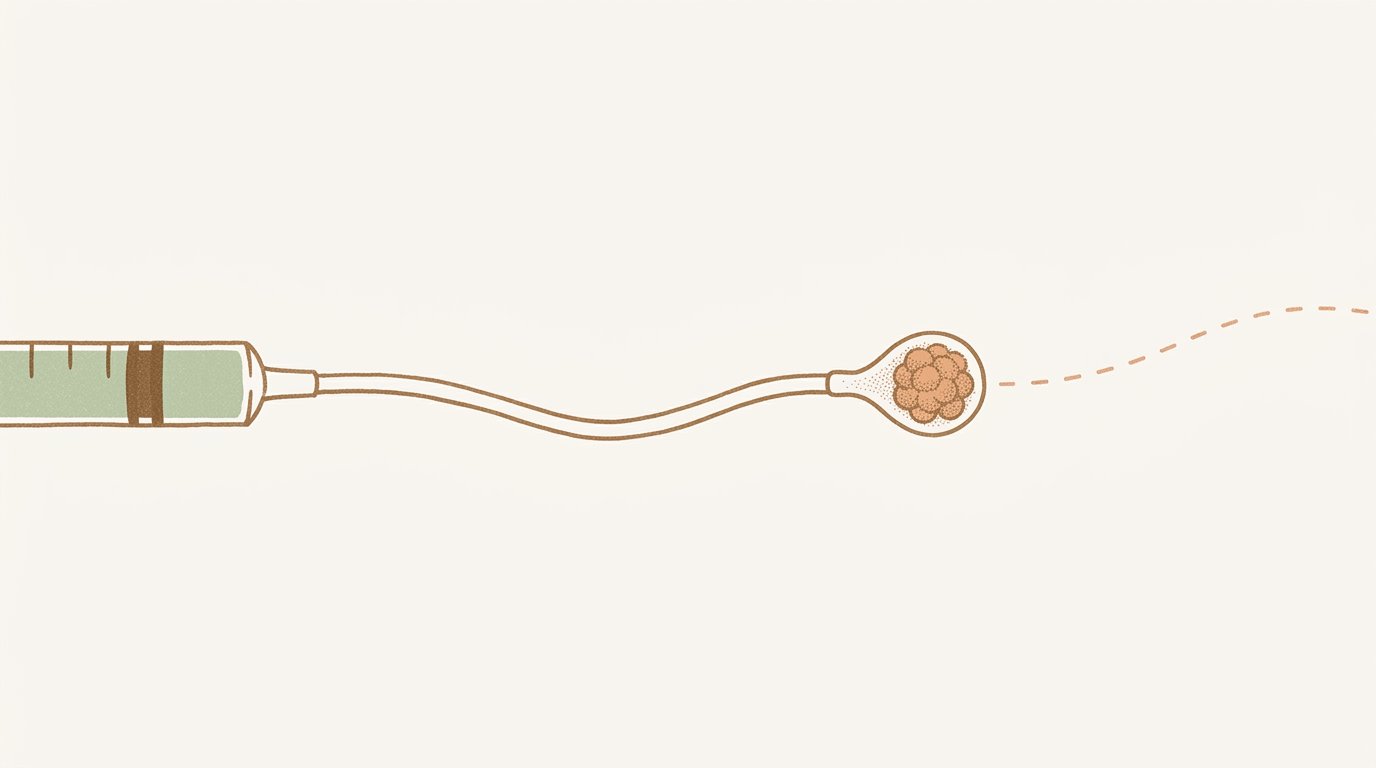
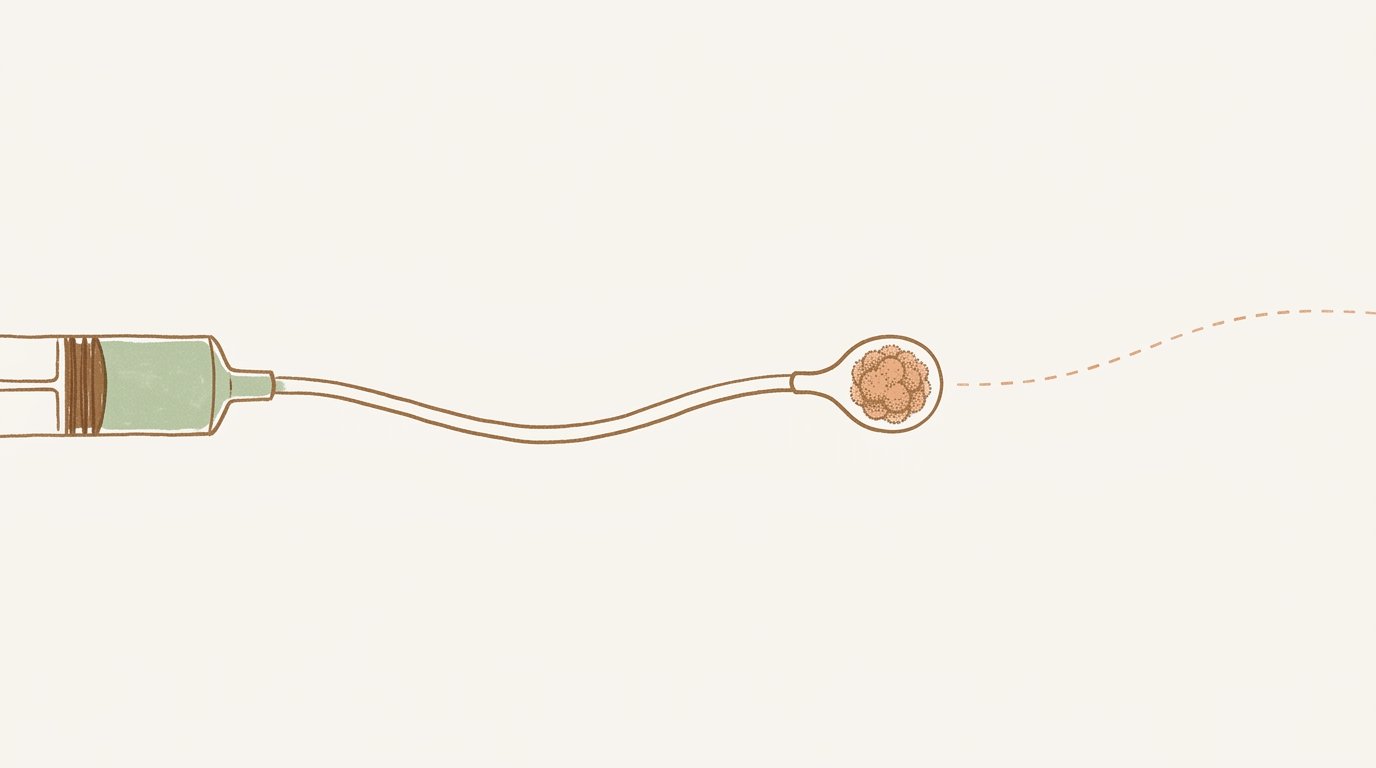
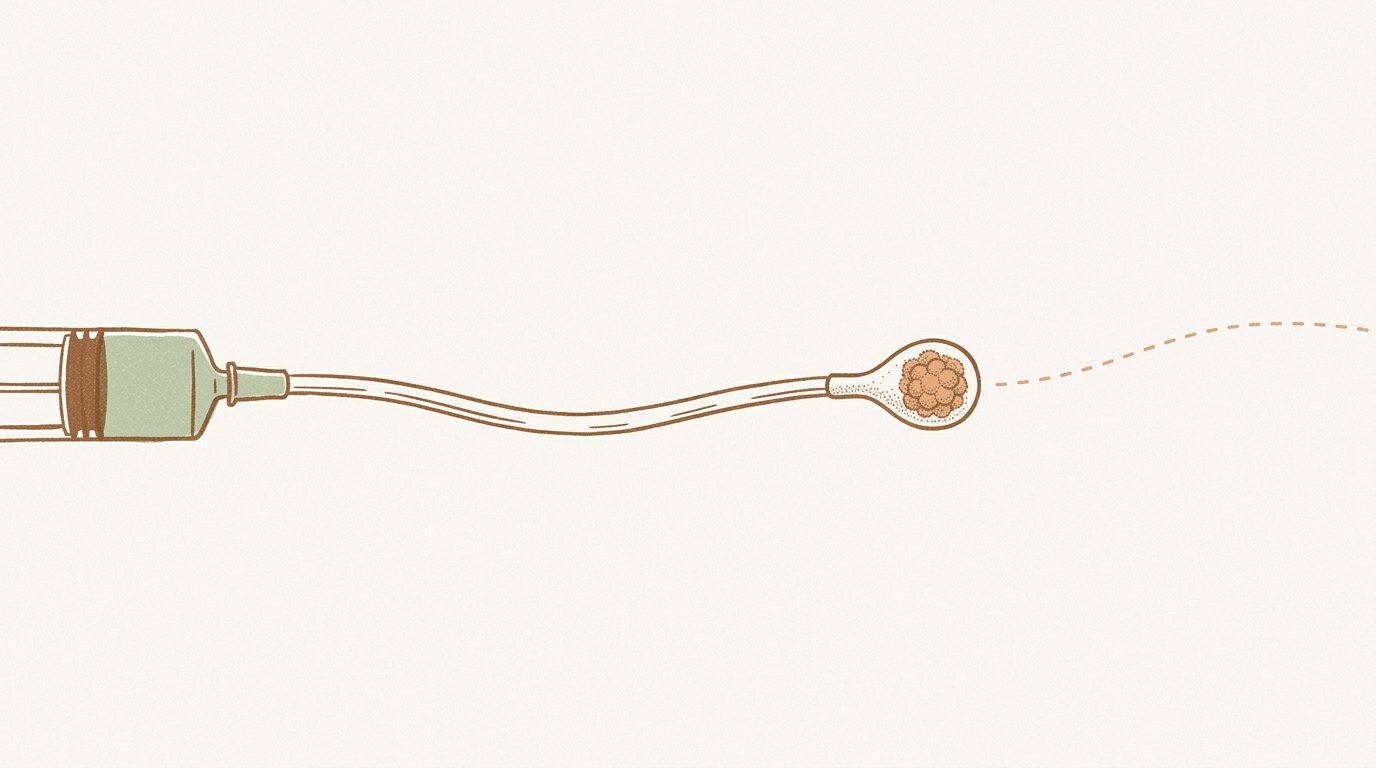
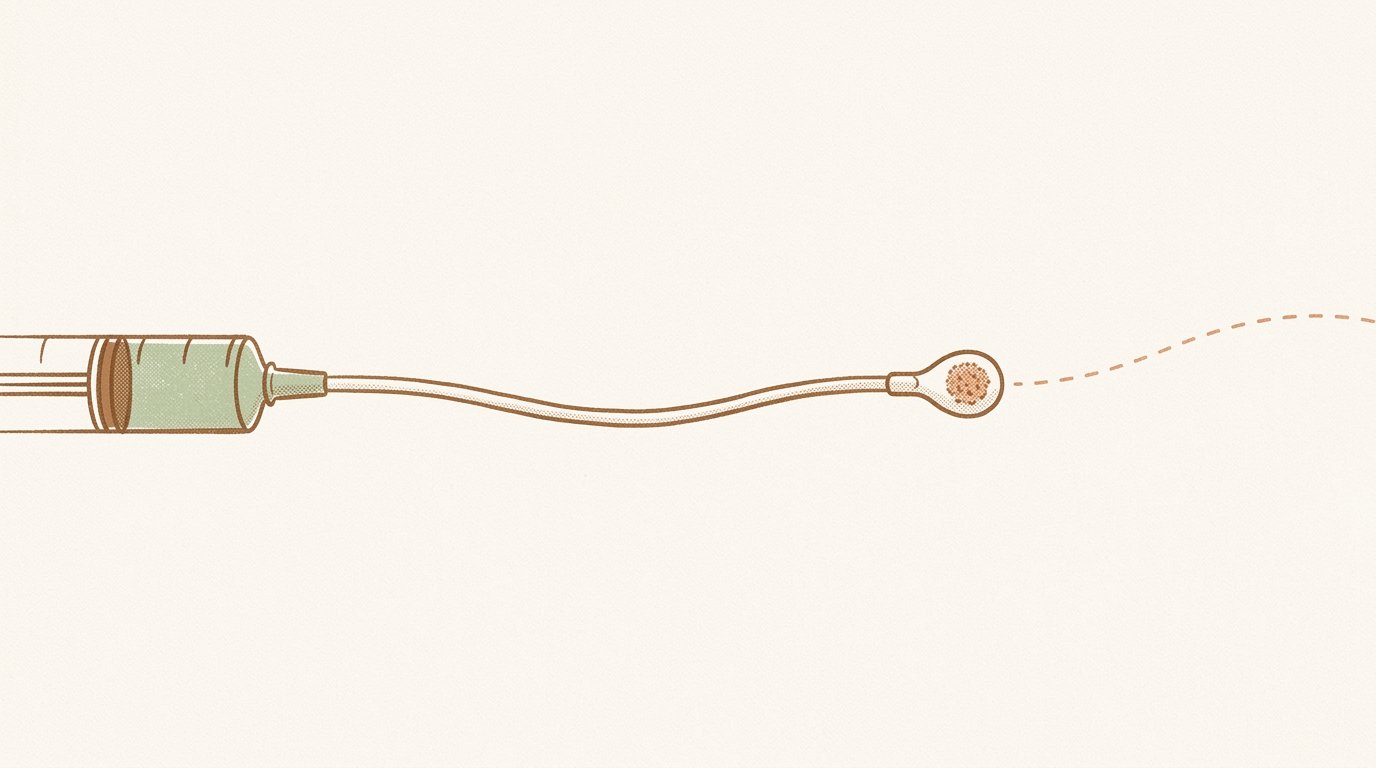
Composed still-life: syringe held by embryologist hands center-frame, catheter extending diagonally toward upper-right with embryo stipple at the bulb end indicating loading position. Focus entirely on precision and craft.


Using a small syringe, the embryologist draws the embryo and a small amount of culture media into the thin, flexible transfer catheter.
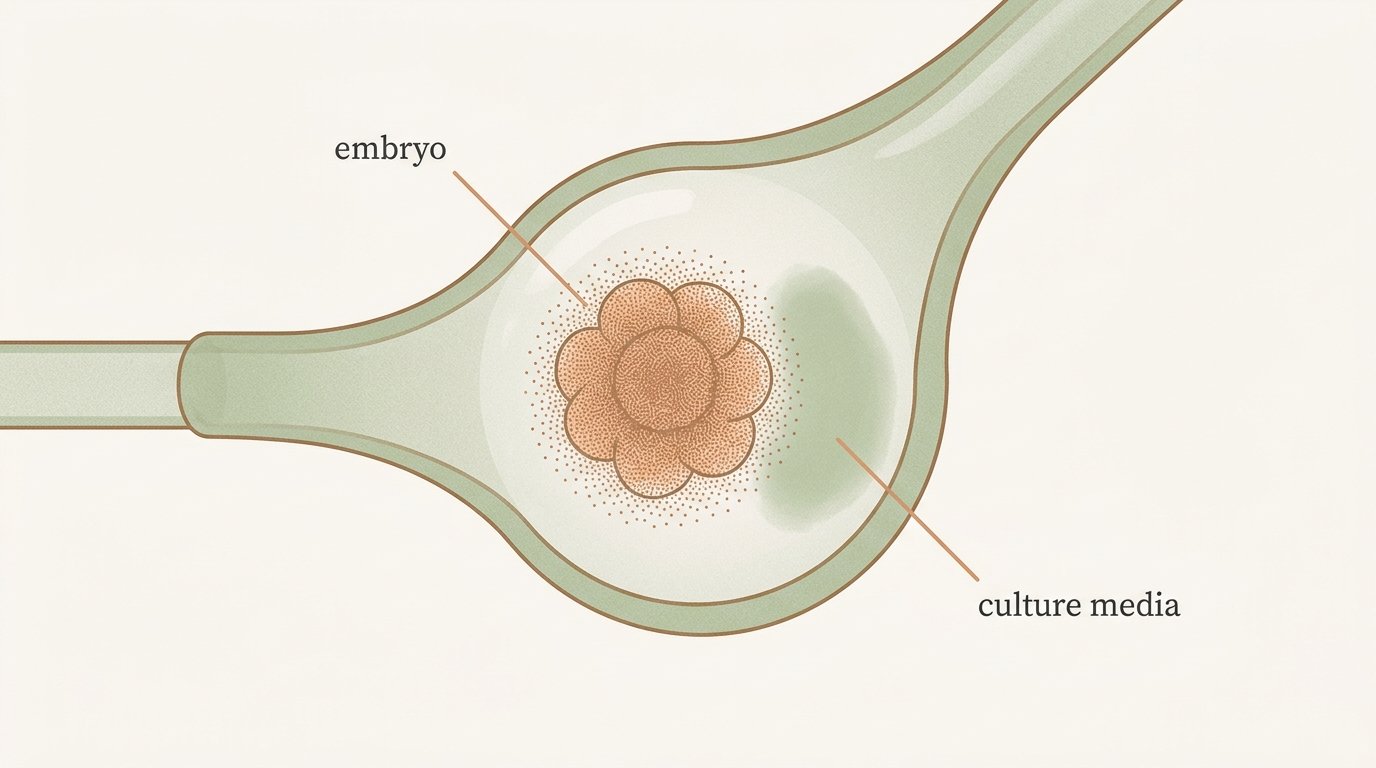
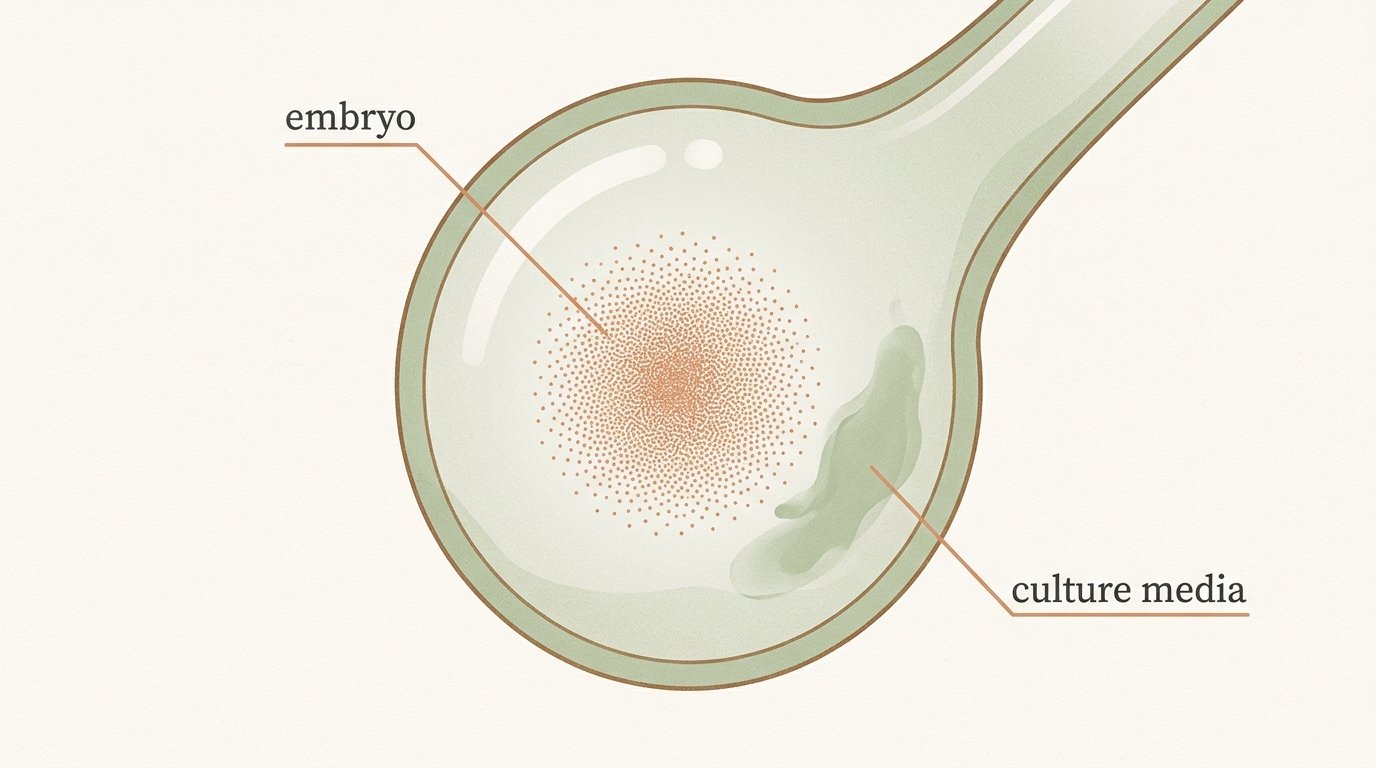
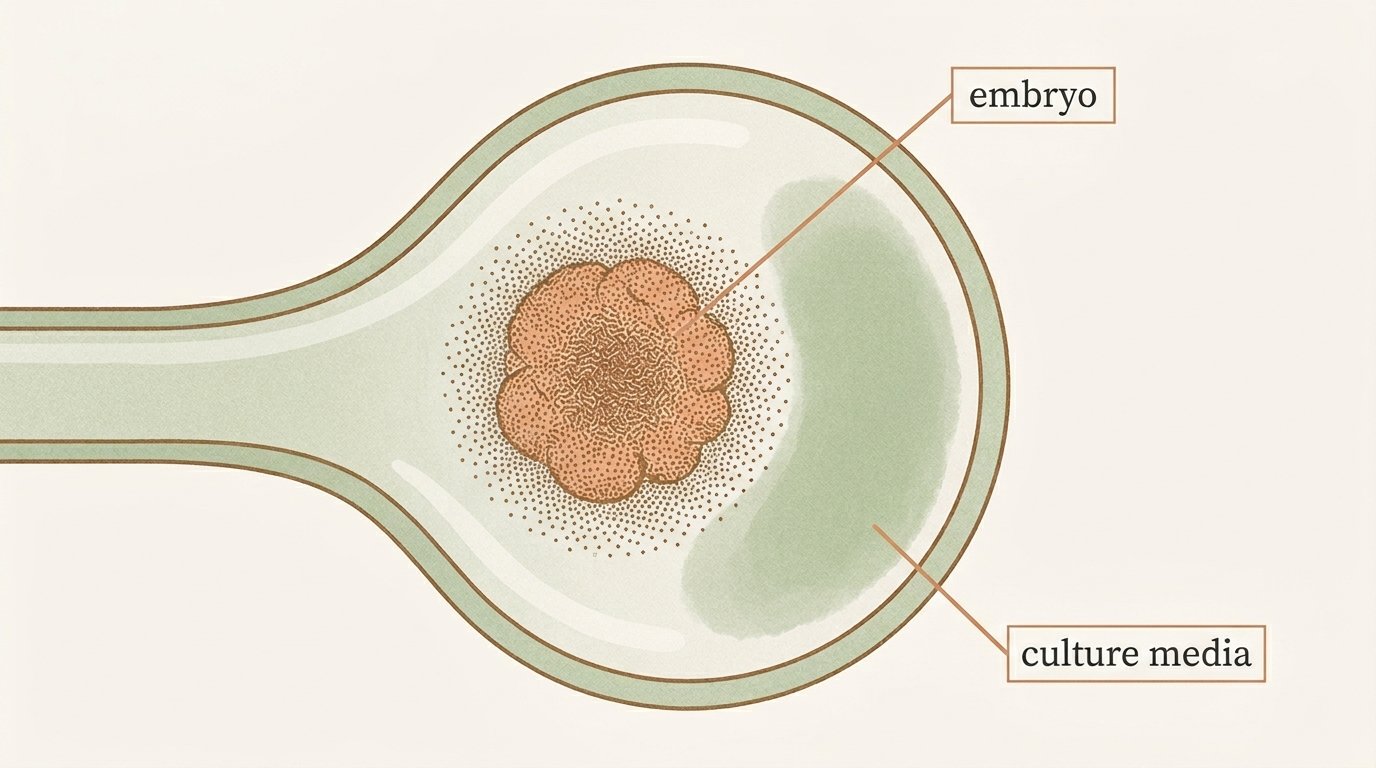
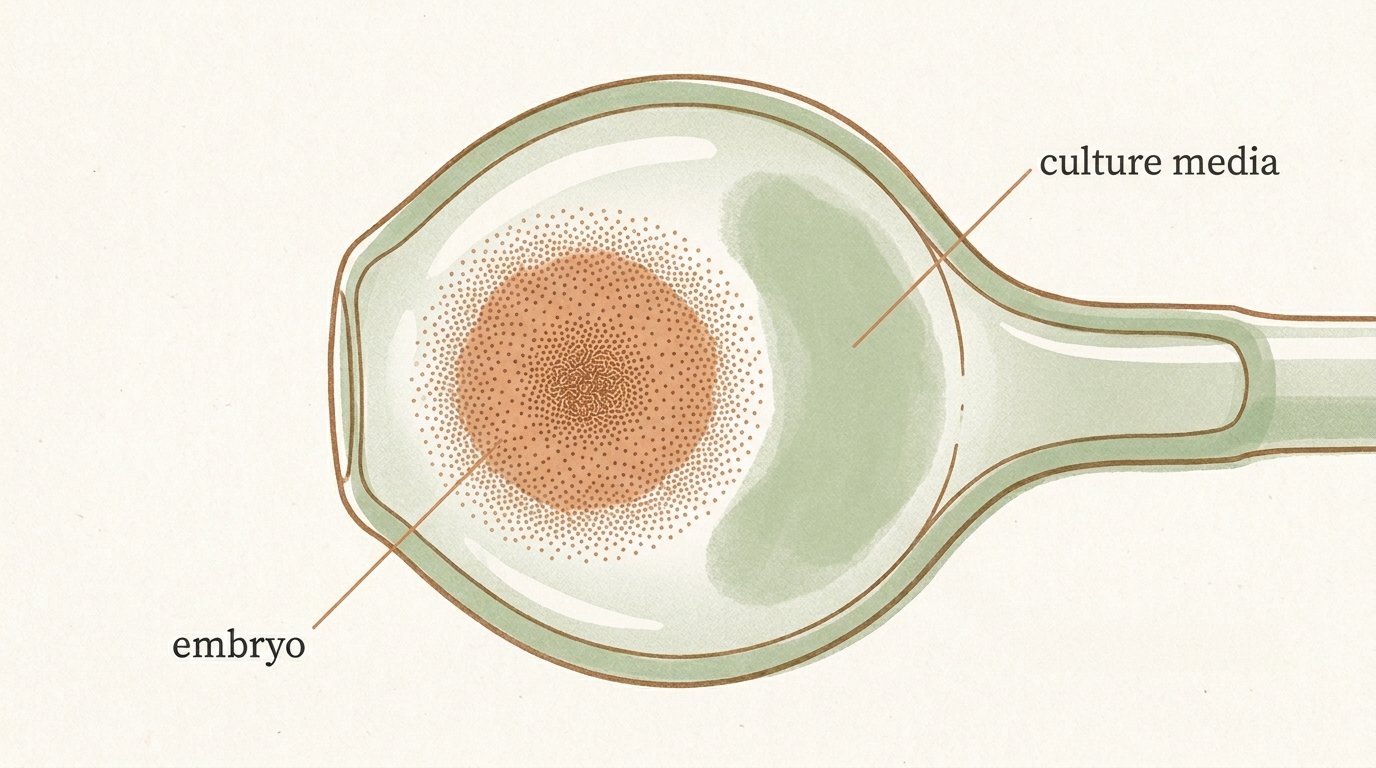
Extreme close-up on catheter bulb at 3x scale — embryo stipple cluster and culture media both visible through translucent bulb wall. Burnished Amber callout lines label both elements. Maximum instrument precision in this sequence.


(continuation — catheter fully loaded, embryo and culture media in the catheter)
Pull-back from Scene 9 — full catheter length now visible as a single complete instrument with slight S-curve, embryo at bulb end, syringe partial at left. A Burnished Amber dashed path anticipates Scene 13's threading.


(transition beat — instrument detail before procedure begins)
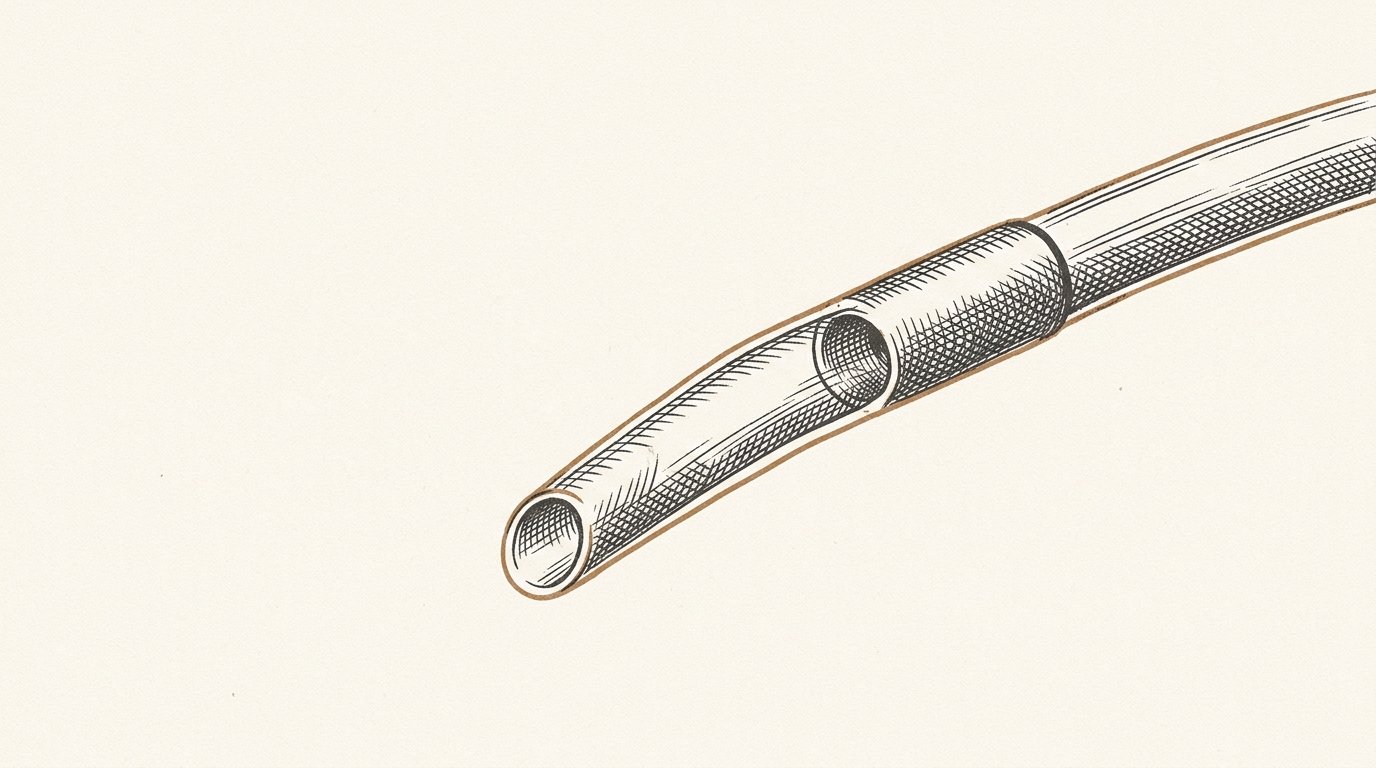
Pure instrument close-up — catheter tip angled 30 degrees from horizontal in right-center frame, maximum cross-hatch precision, no anatomical context. A visual breath before Scene 12. Editorial journal plate quality.


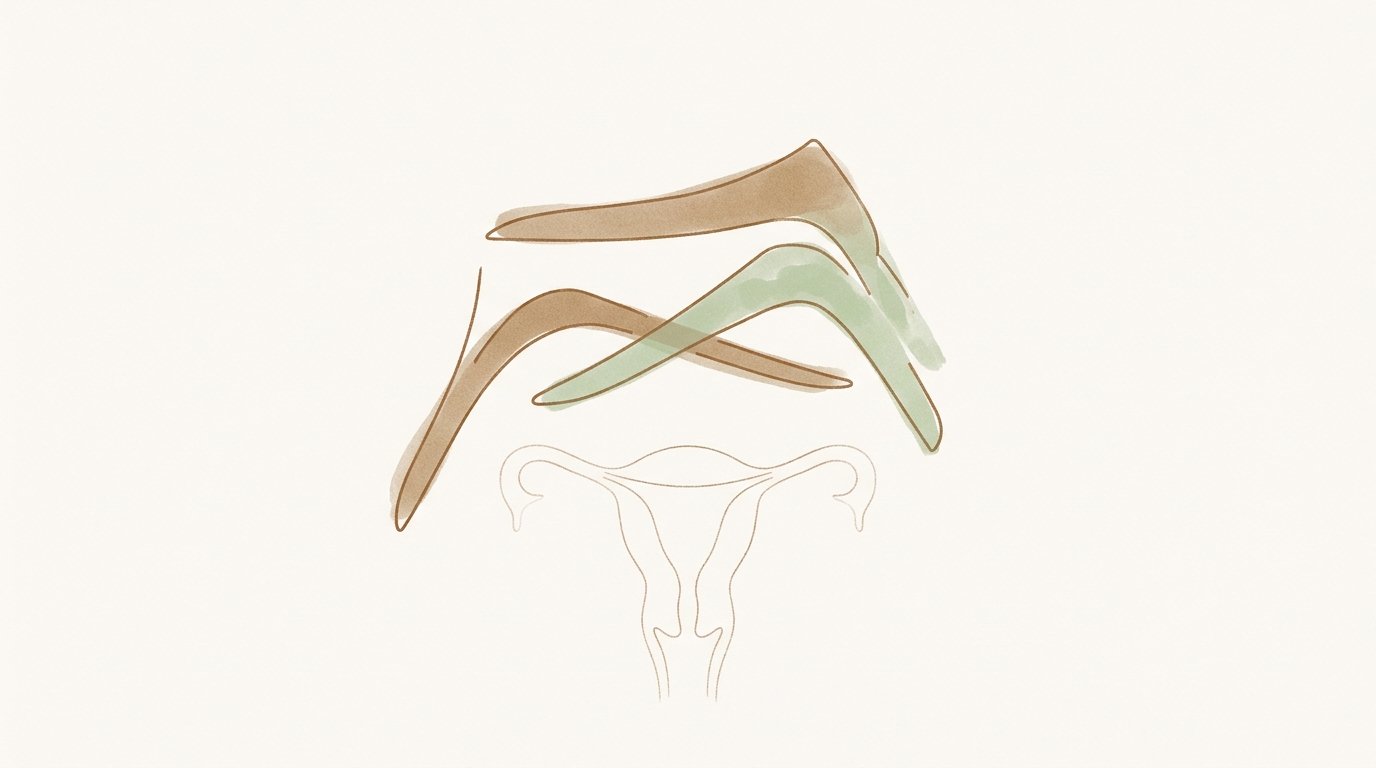
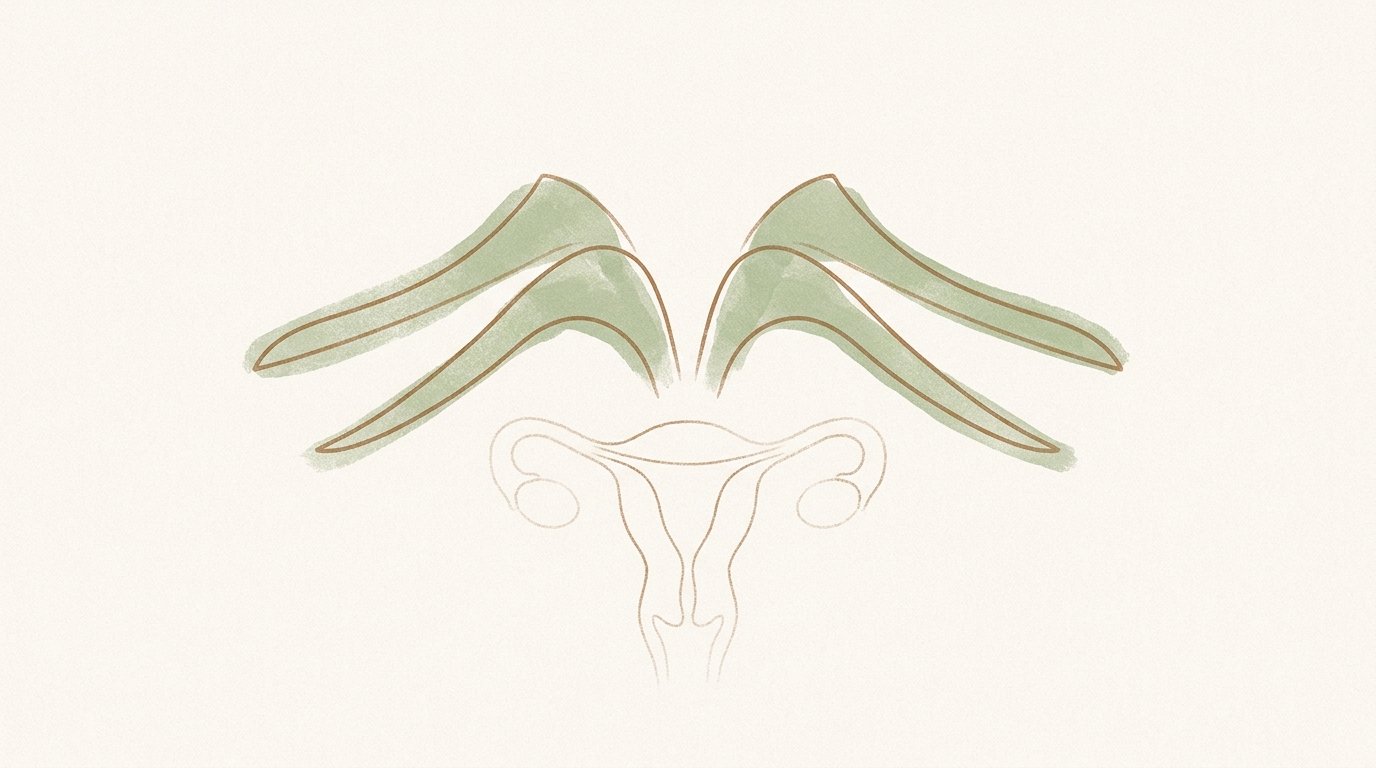
A speculum is placed into the vaginal canal to visualize the cervix.
Transitional beat — two abstract curved instrument silhouettes (speculum, suggestion only) in center, and below them a ghost uterine outline at 15% opacity beginning to emerge as if developing on a print surface. Threshold between preparation and procedure.


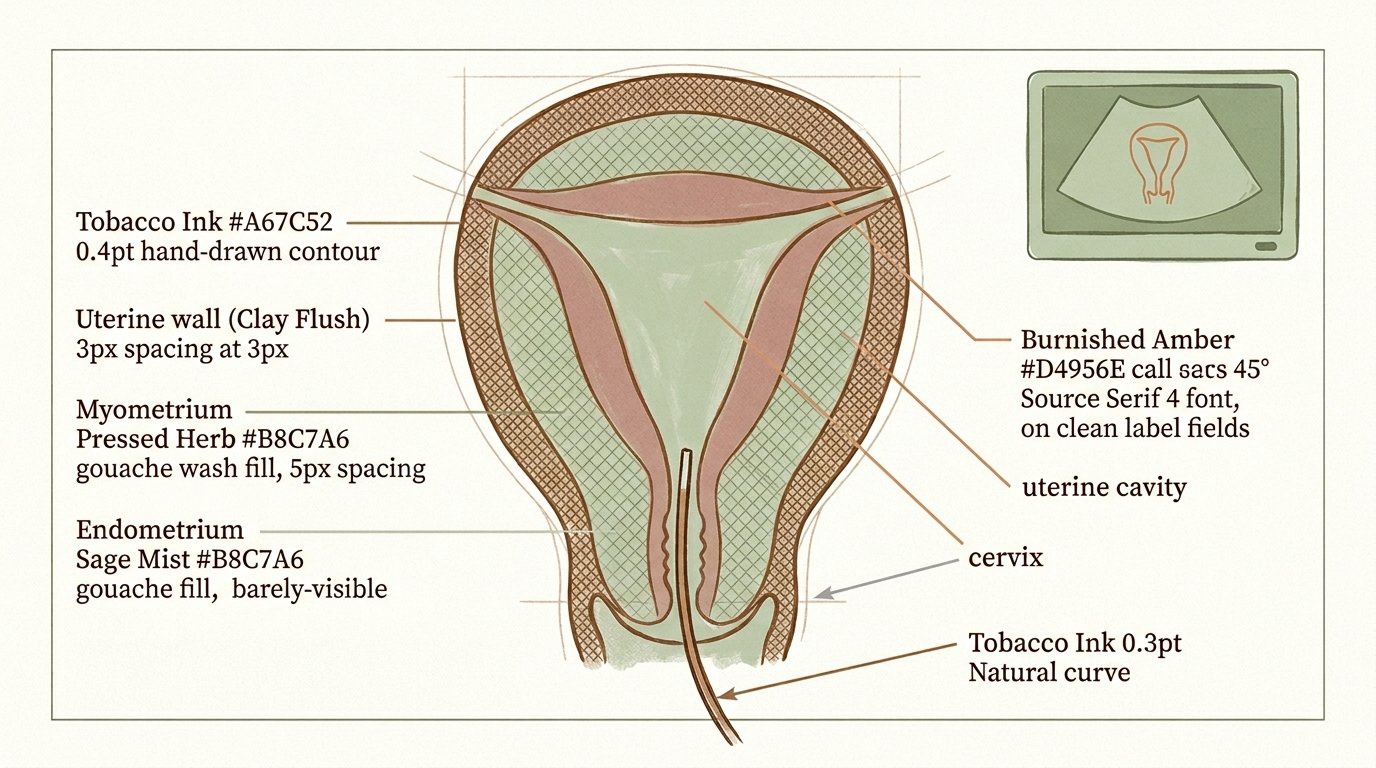
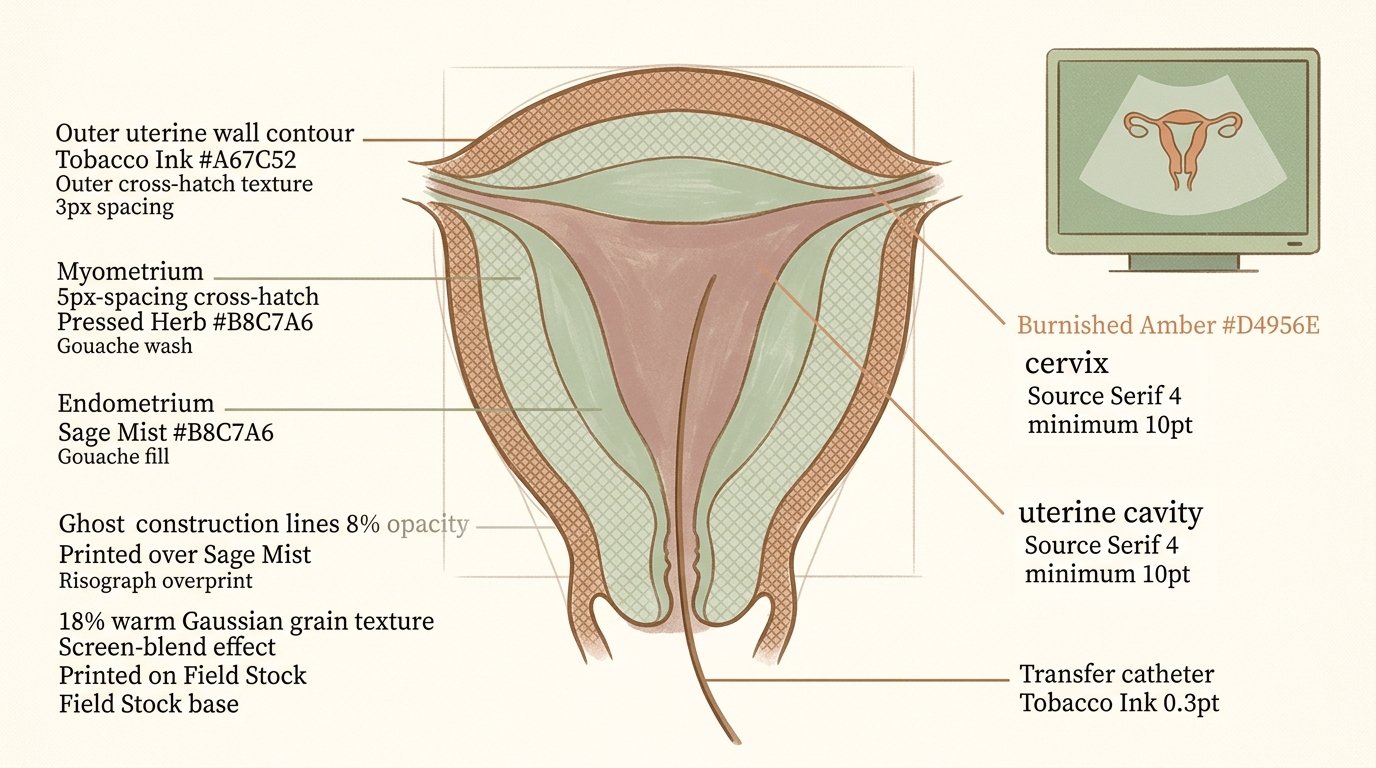
The clinician then threads the catheter through the cervix and into the upper portion of the uterus, often with guidance from an abdominal ultrasound.
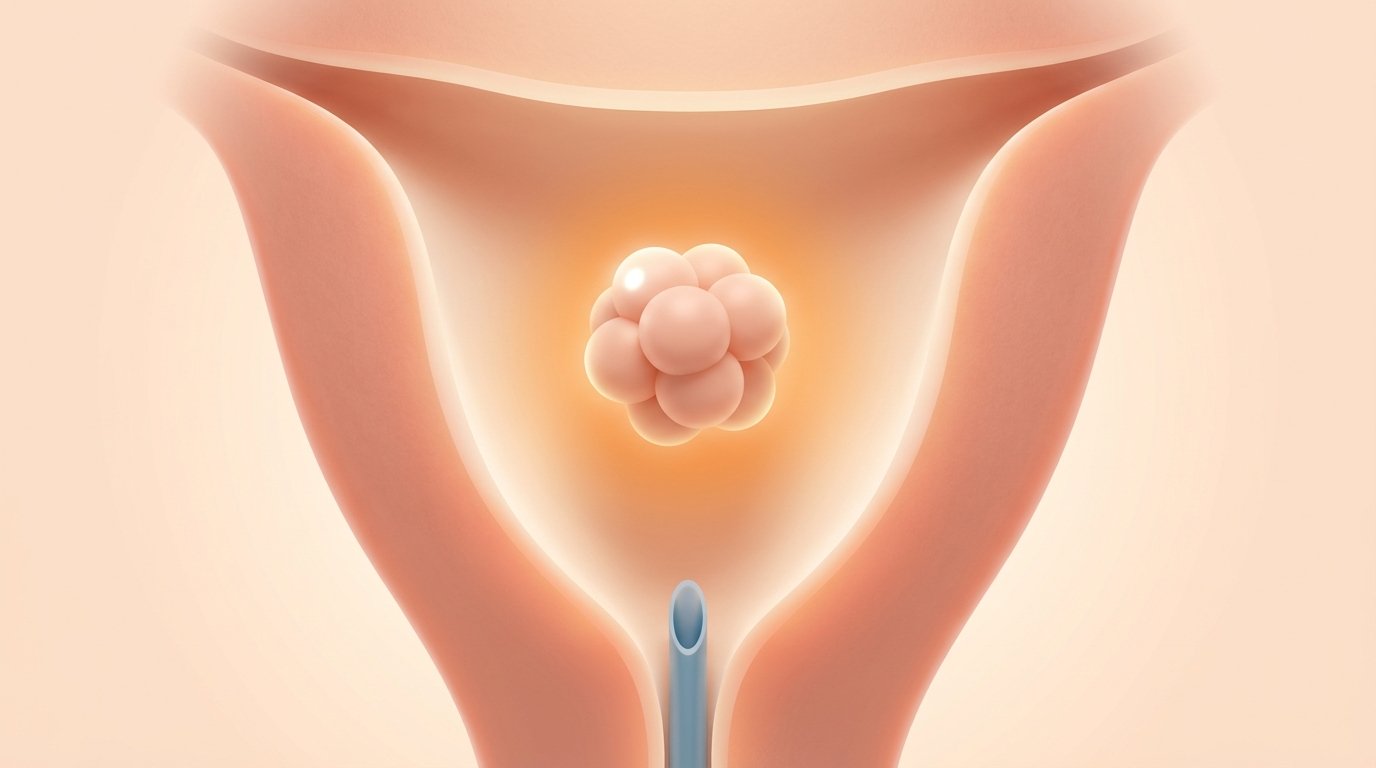
The signature anatomical scene. Full uterine cross-section with complete cross-hatch depth — catheter path entering from below threading through cervix. Ultrasound monitor upper-right. Riso overprint warm mauve tone on uterine wall fills. Two Burnished Amber callout labels.


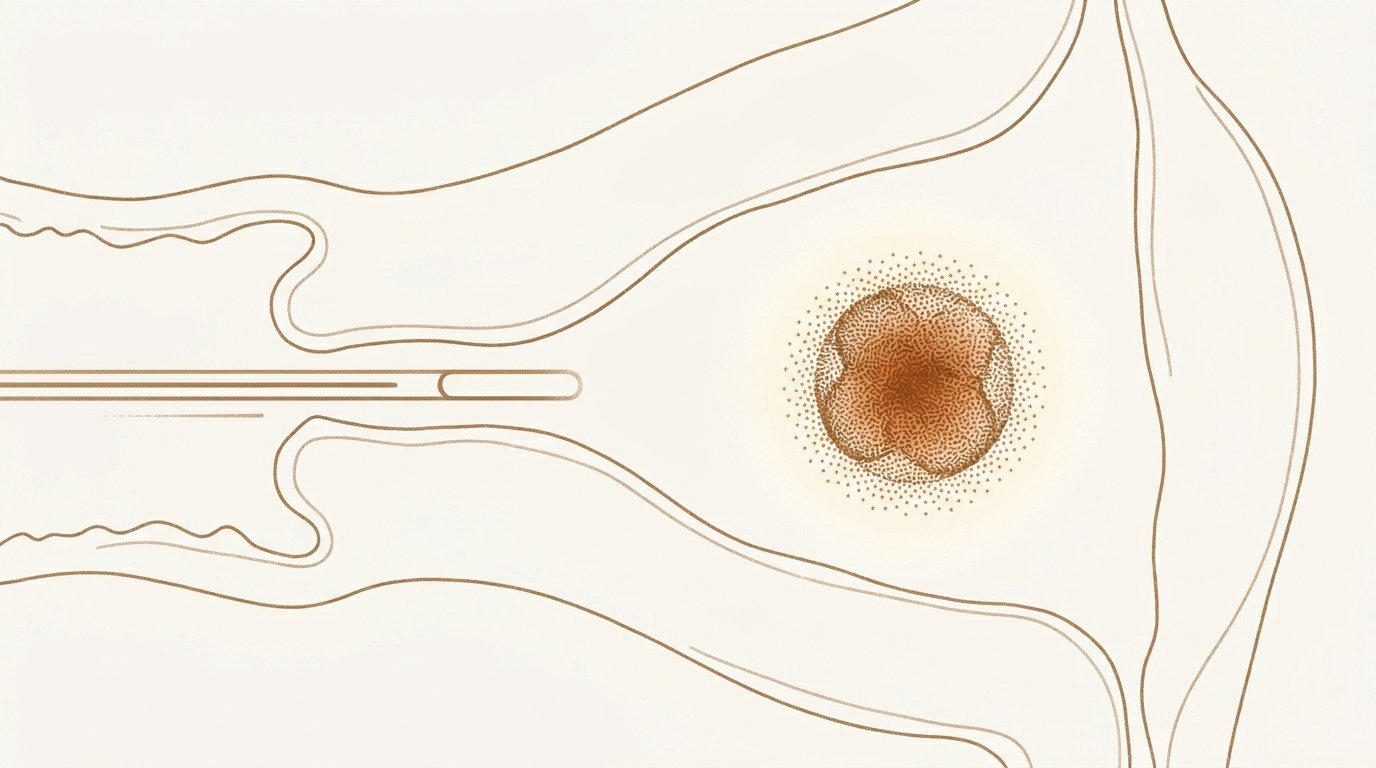
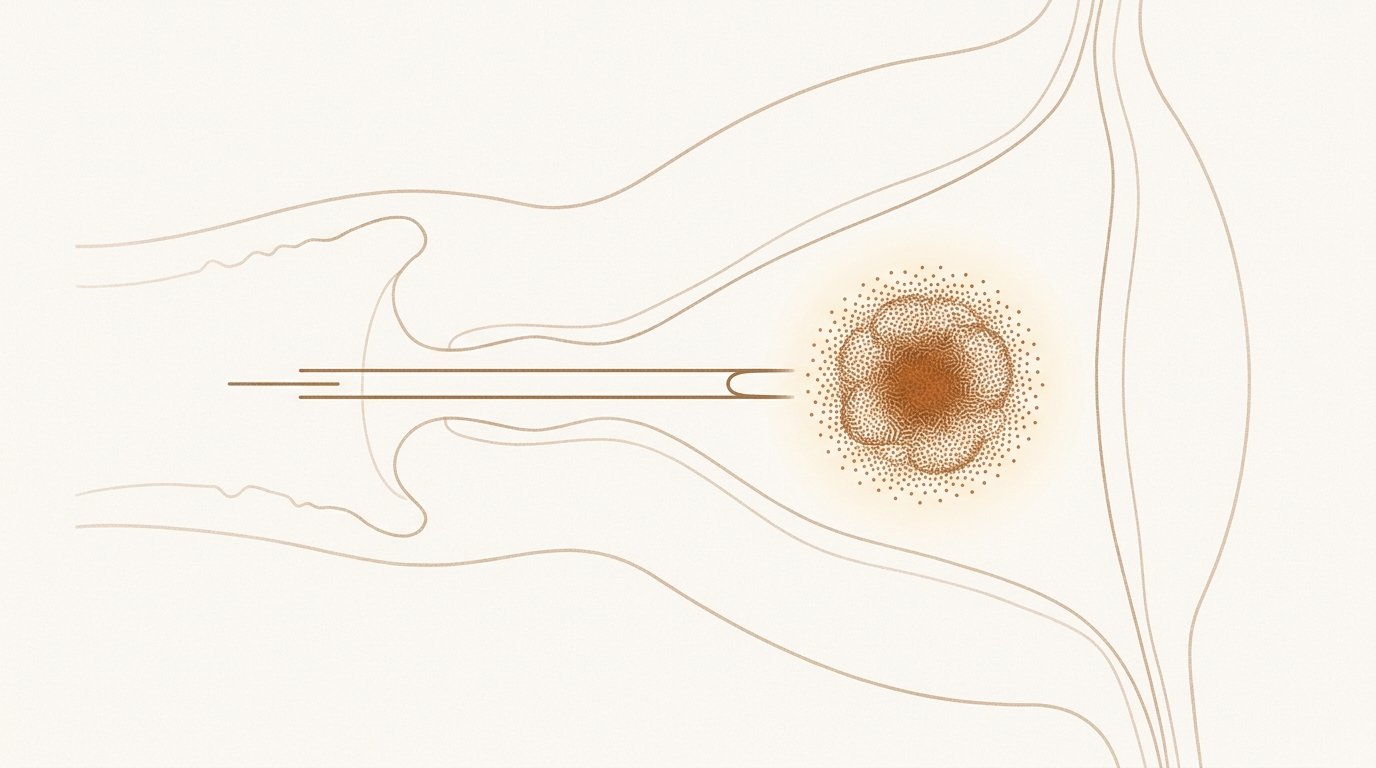
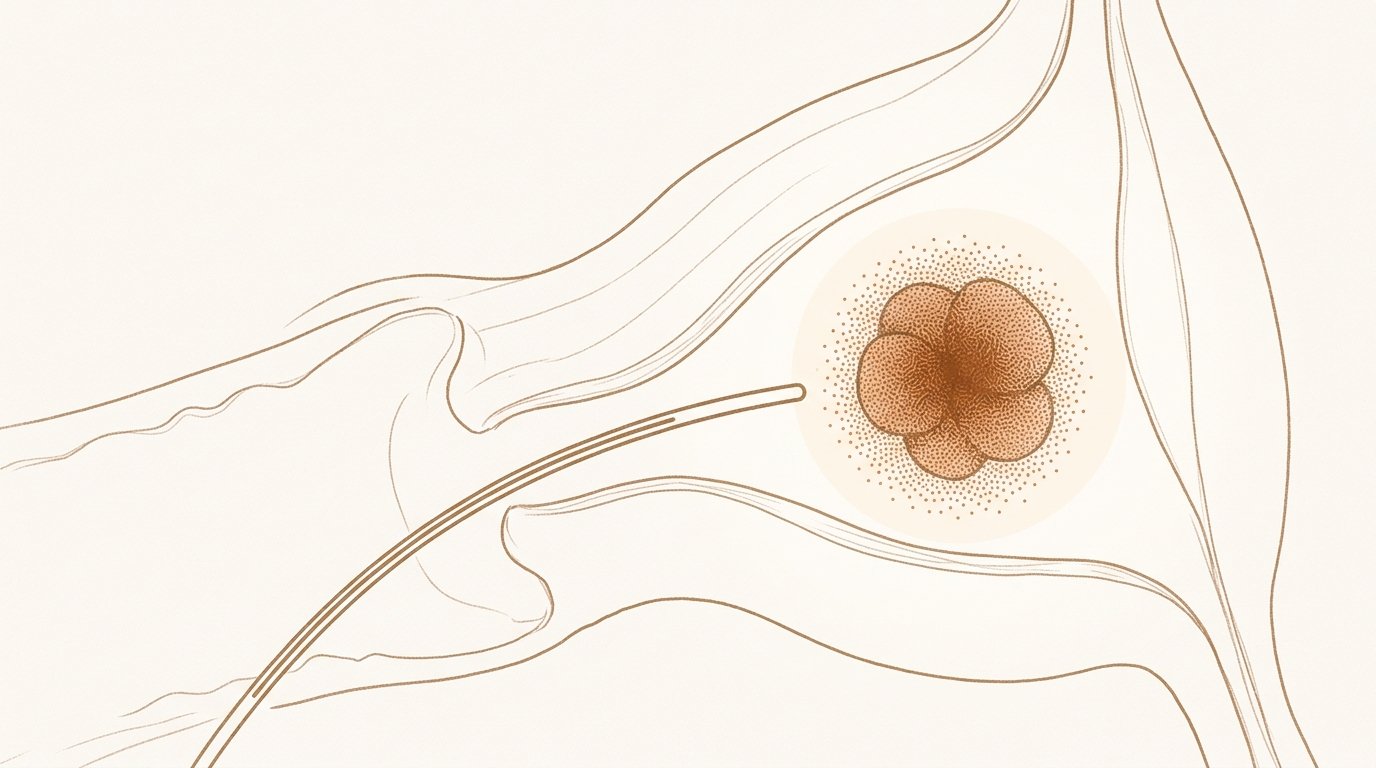
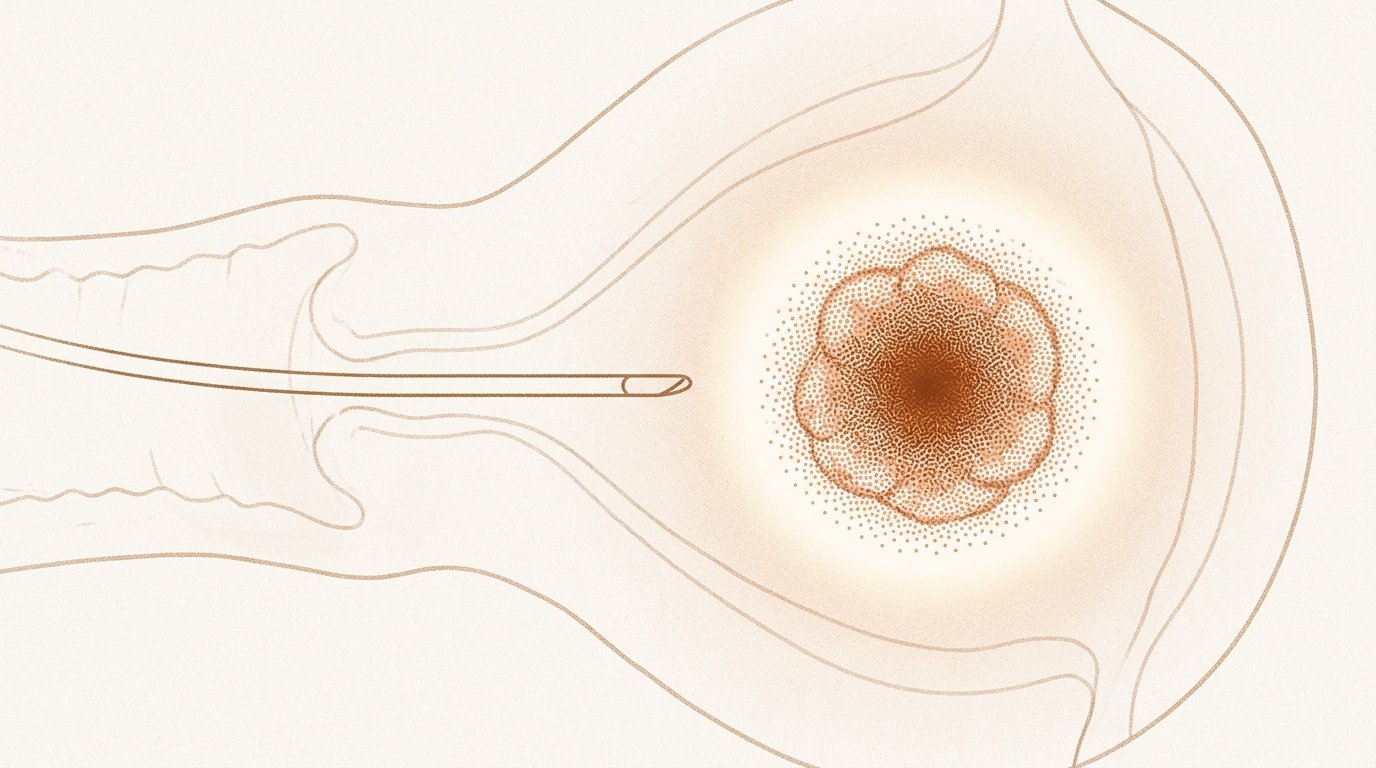
Then the embryo is released into the uterine cavity for implantation. The procedure typically takes less than 10 minutes.
Uterine cross-section reduced to 30% opacity ghost context. Foreground: the embryo stipple cluster emerging from catheter tip into uterine cavity — full Clay Flush stipple, Lantern Vellum halo at maximum intensity. The exclusive Riso emergent tone #C9834A appears only here at the embryo's dense center.


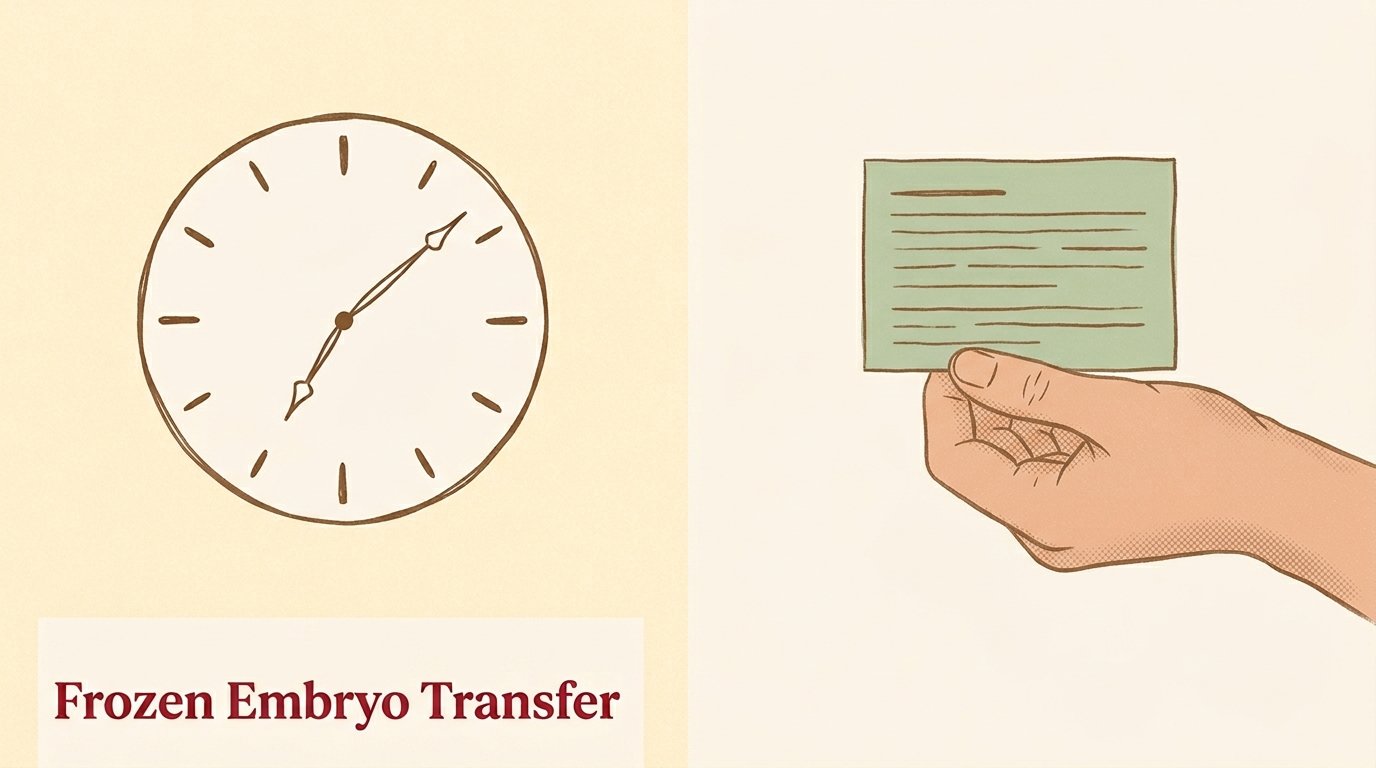
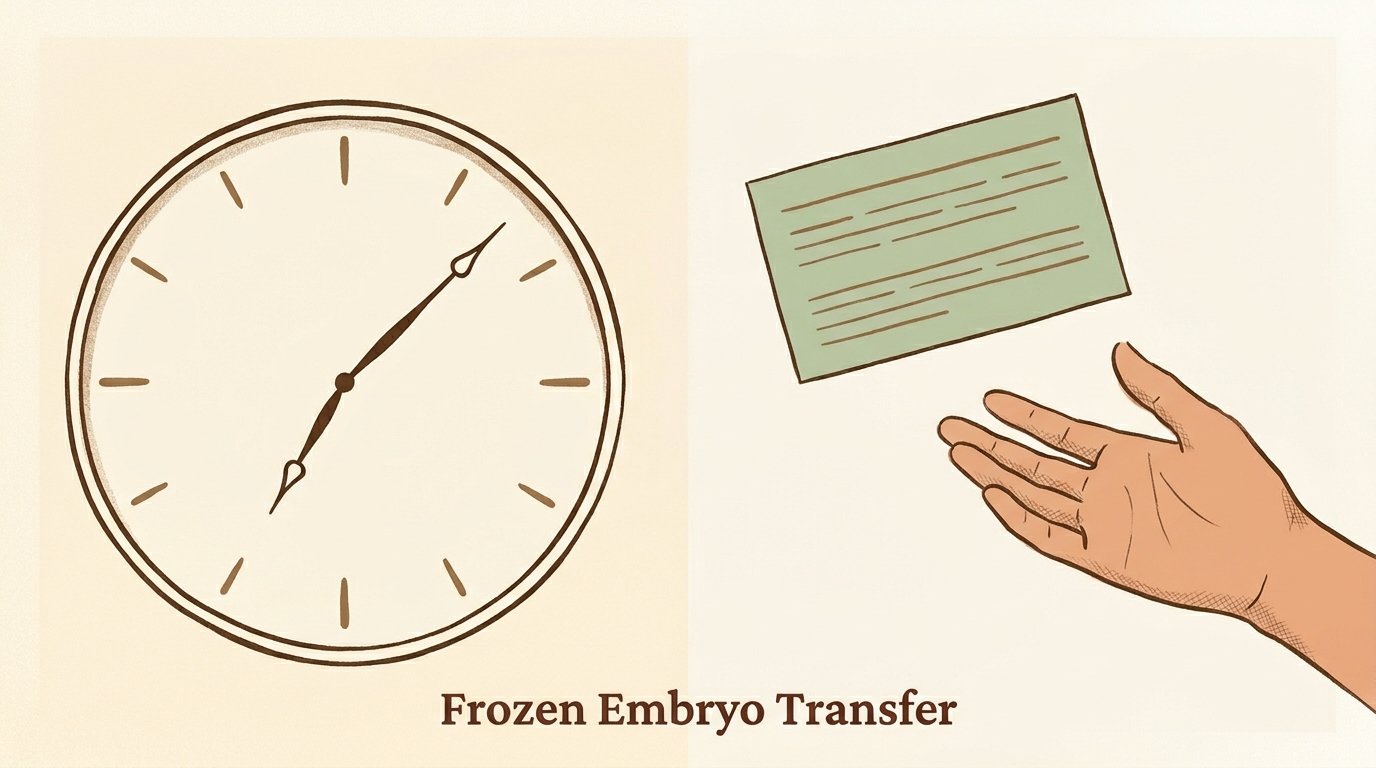
Following the embryo transfer, your medical team will provide comprehensive instructions on next steps leading up to the pregnancy test.
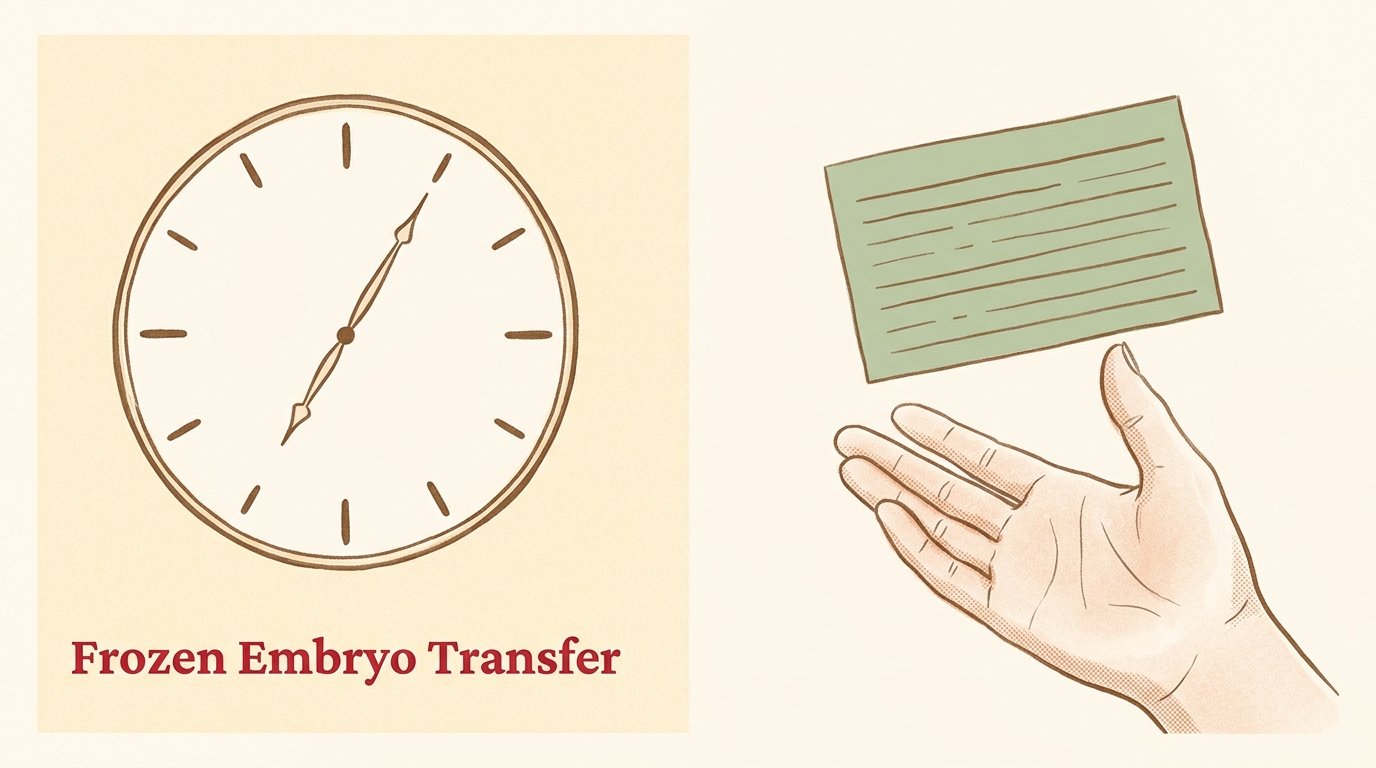
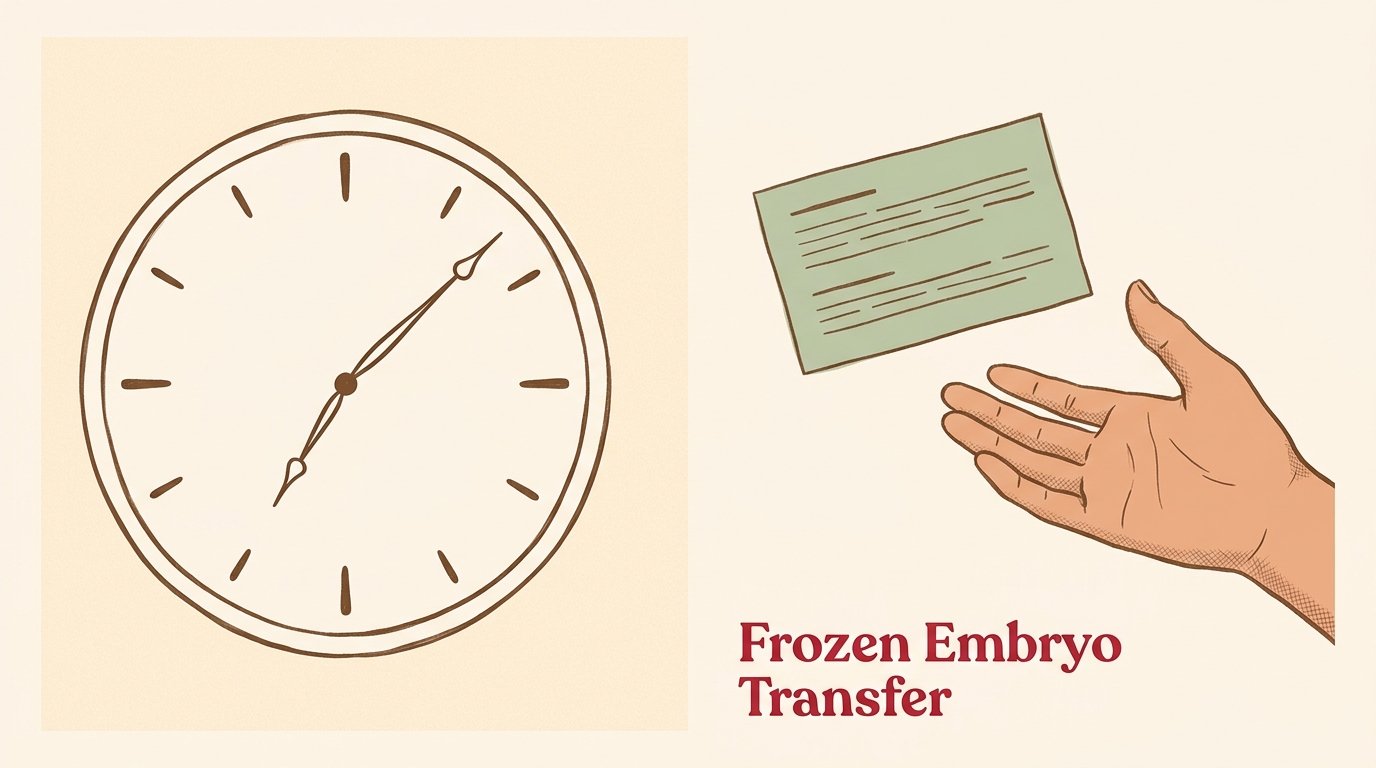
Hopeful close using the clock motif and diptych structure. Clock face on Lantern Vellum field left — no numerals, 12 Tobacco Ink tick-marks, hands at ~7 minutes past. Right: a hand-drawn instruction card and patient's open receiving hand. Lantern Vellum as dominant fill tone used only here.